Author: patrickddrogers

  • Tallinn qu’il fait beau icitte

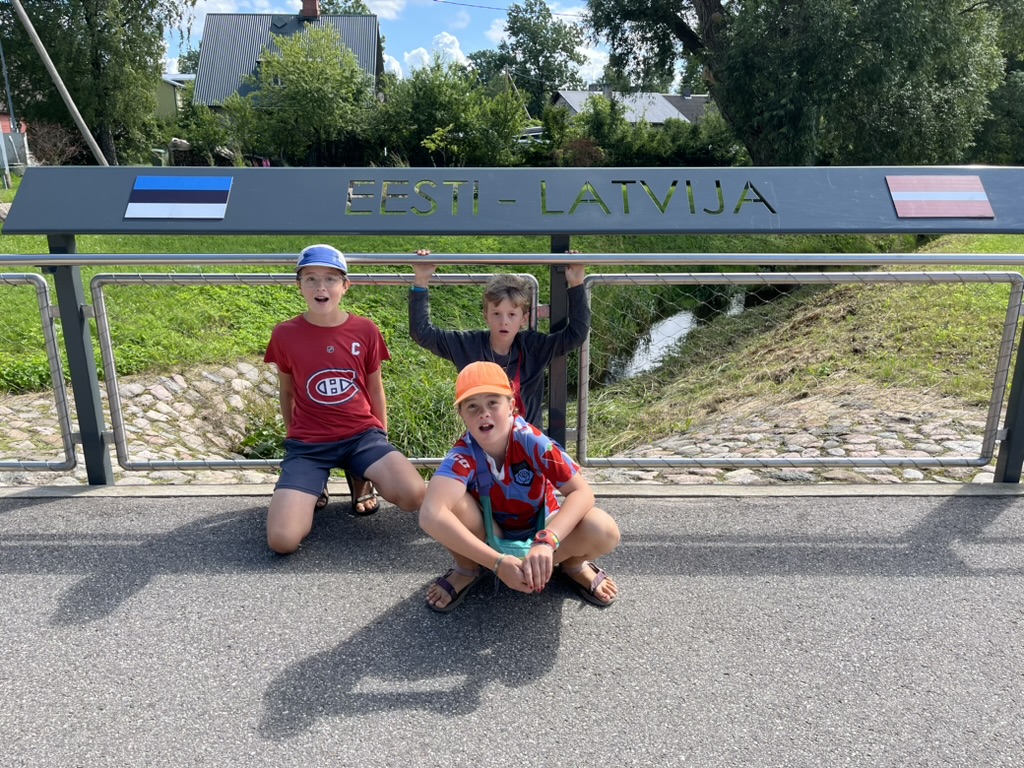
    The border between Valka and Valga.

    From Riga, we made our way to the old university town of Tartu, in the last of the Baltic states, Estonia. We somehow missed out on buying direct train tickets before they were sold out, so we caught a train to the rather sleepy border town of Valga before catching a Luxe Bus to Tartu itself. We thought the “Luxe” was just advertising, but were surprised to find ourselves on a swanky bus with individual screens packed with games (I angry-birdied the whole way) and movies. The kids, perhaps remembering back to the trauma of an eleven-hour flight with no screens, were ecstatic. Upon arriving in Tartu we immediately booked a Luxe Bus for the next leg of travel to Tallinn.
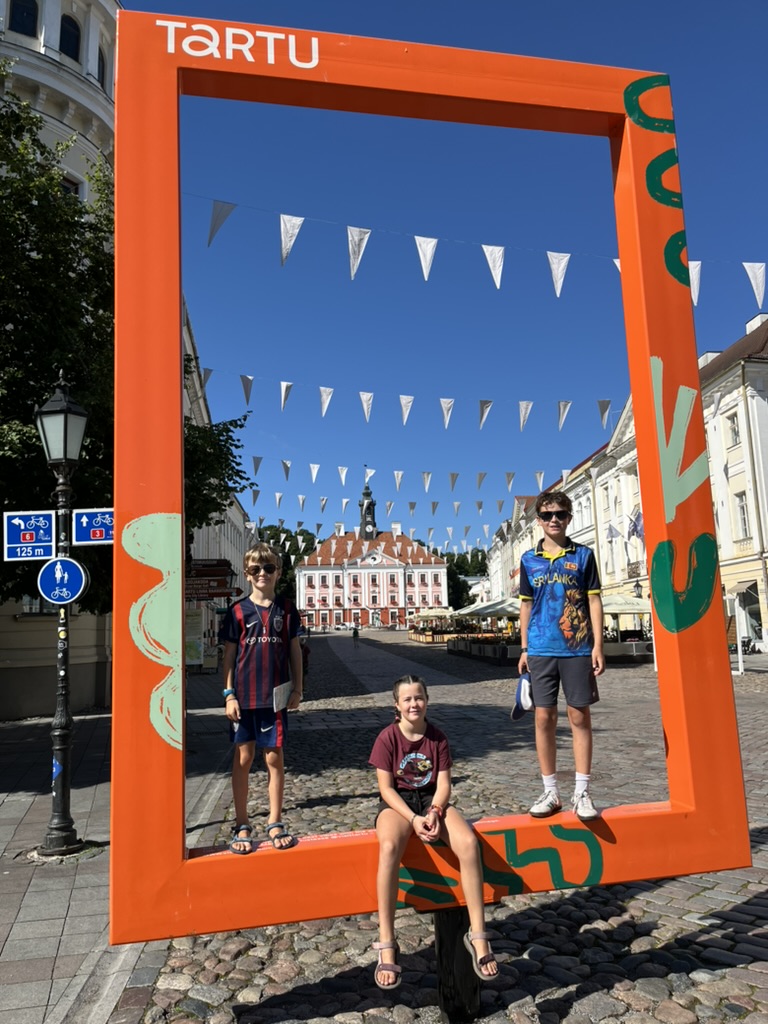
    I did my best to frame this shot.

    We had one full day in relatively small (Moncton-sized) Tartu. This was just enough to relaxingly wander the cute and compact old town by the river, as well as the leafy Toome hill, which included the spectacular ruins of an old cathedral. I had a couple of lovely runs along the river out to a large park with the best outdoor gym I have ever seen.
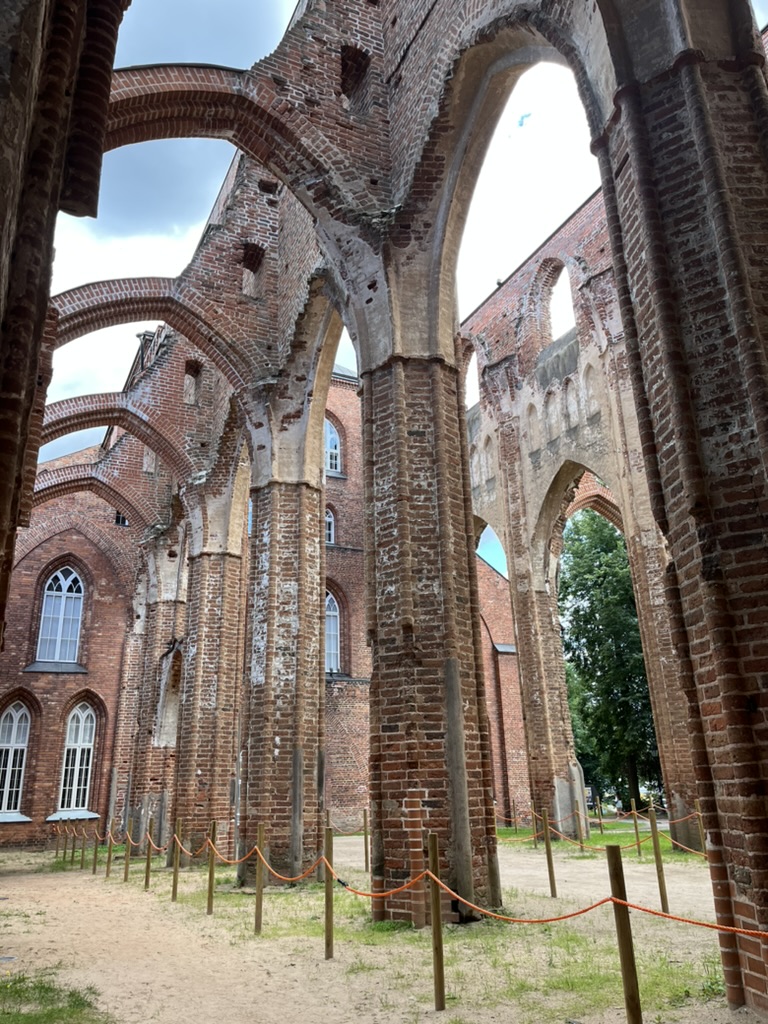
    I’m no architect, but what about a roof?

    After another wonderful Luxe Bus (Mission Impossible this time) we arrived in Tallinn. Years ago, when first brainstorming this trip, the Baltic states were one of the first spots to make it on our list of destinations. We loved our stops so far, and Tallinn was just a perfect way to finish things off. (Oui, oui, on peut beau dire qu’on s’est amusés. en Eesti).
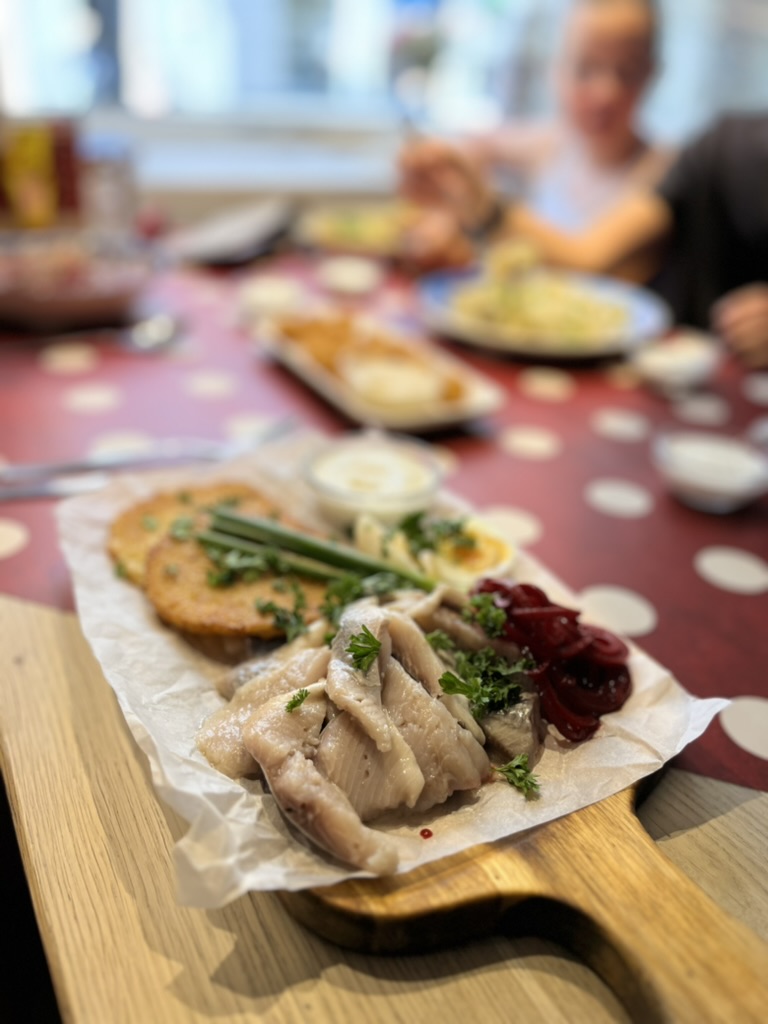
    Herring!

    Our apartment was just outside of the old town in a cute neighbourhood of wooden buildings. We spent our first day exploring the gorgeous old town, which was certainly touristy (there are enough souvenir shops to occupy one’s time), but still managed to feel relaxed and not too overcrowded.
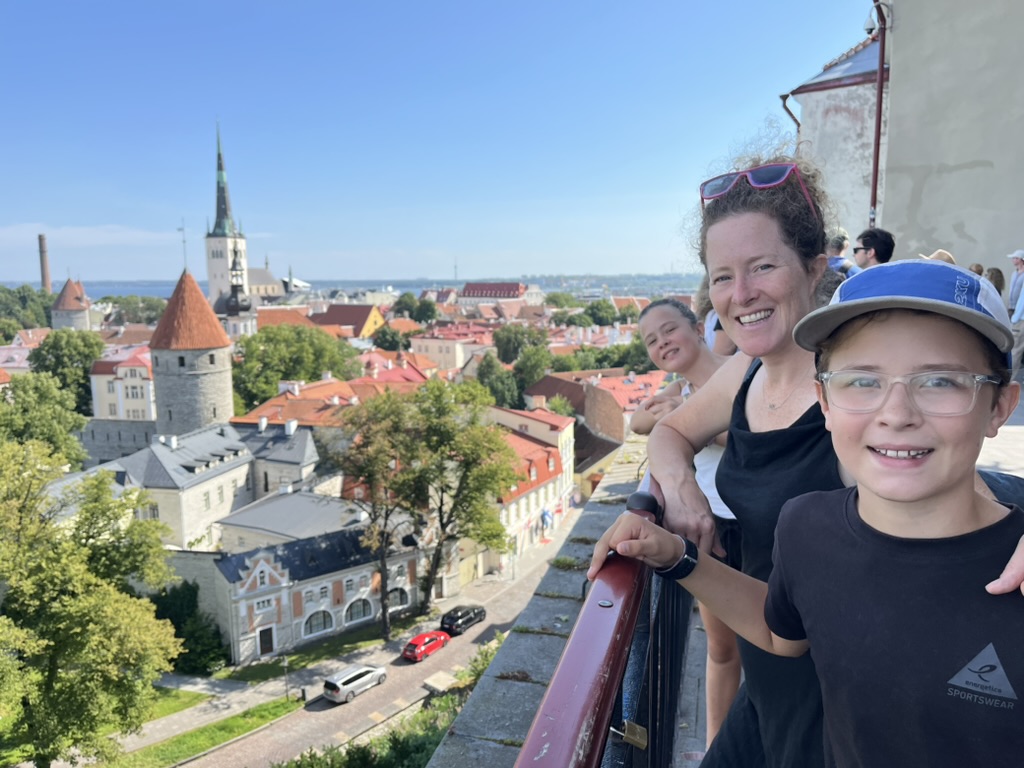
    Perhaps the most photographed spot in Tallinn.

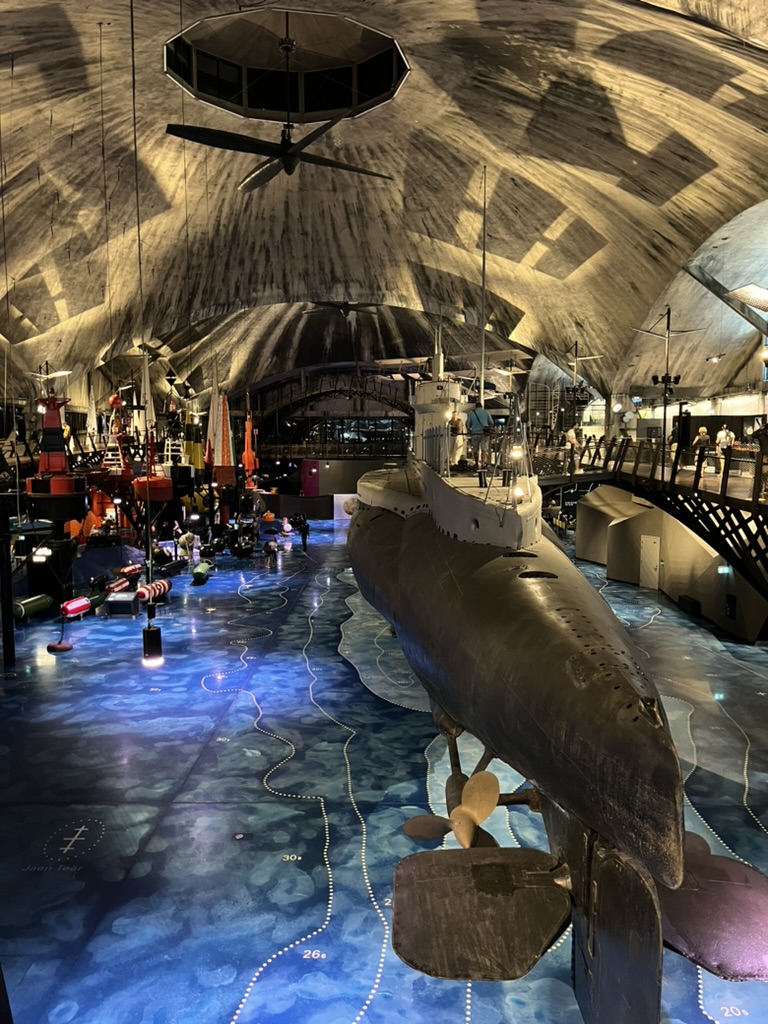
    On our second day, we grabbed lunch at the Balti Jaam market on our walk through the cute quartier of Kalamaja before arriving at the Harbour Seaplane Museum. This museum, housed in a creatively designed concrete seaplane hangar, was fantastic! There was lots to explore, including a bunch of interactive games, but the highlight was boarding a WW2-era Estonian (turned Soviet) submarine, housed inside the hangar. We spent hours exploring inside the museum only to head outside to find that there were also a bunch of ships on the dock and in the water that we could explore. But our hunger didn’t allow us to linger for too long.
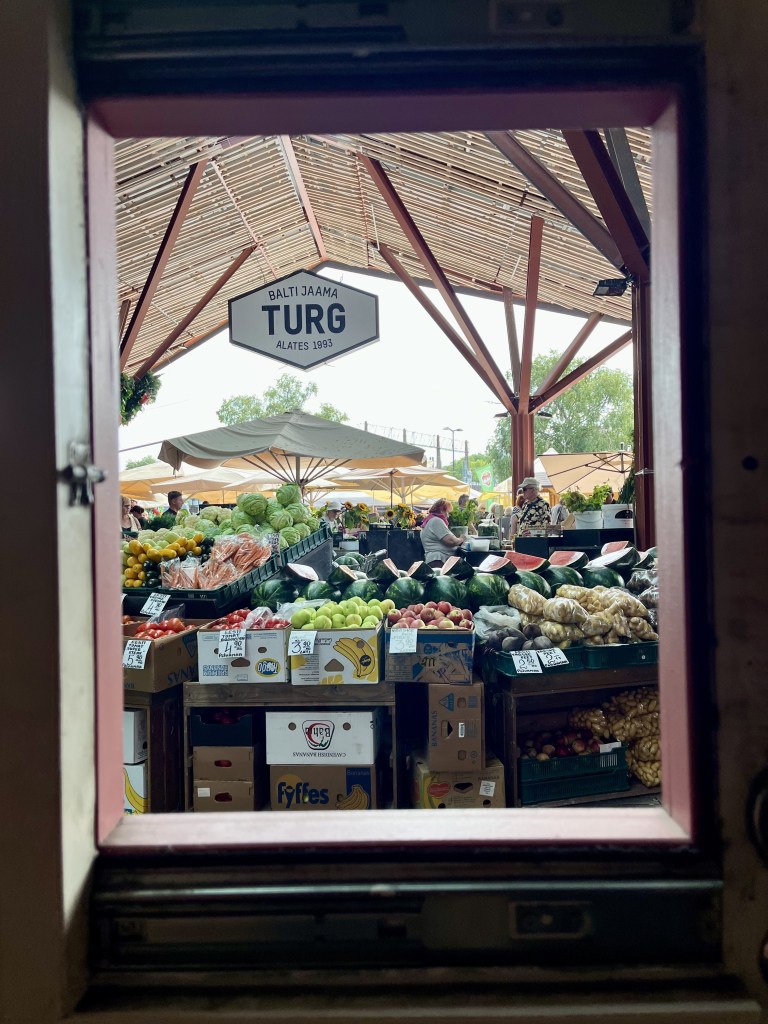
    The market.
    Inside the Seaplane Harbour museum.

    On our final day, we perused the souvenir shops one last time before heading to an escape room (since the one for Elsie’s birthday was such a hit). I am happy to let you all know that we did escape and that we destroyed the last of Lord Voldemort’s horcruxes!
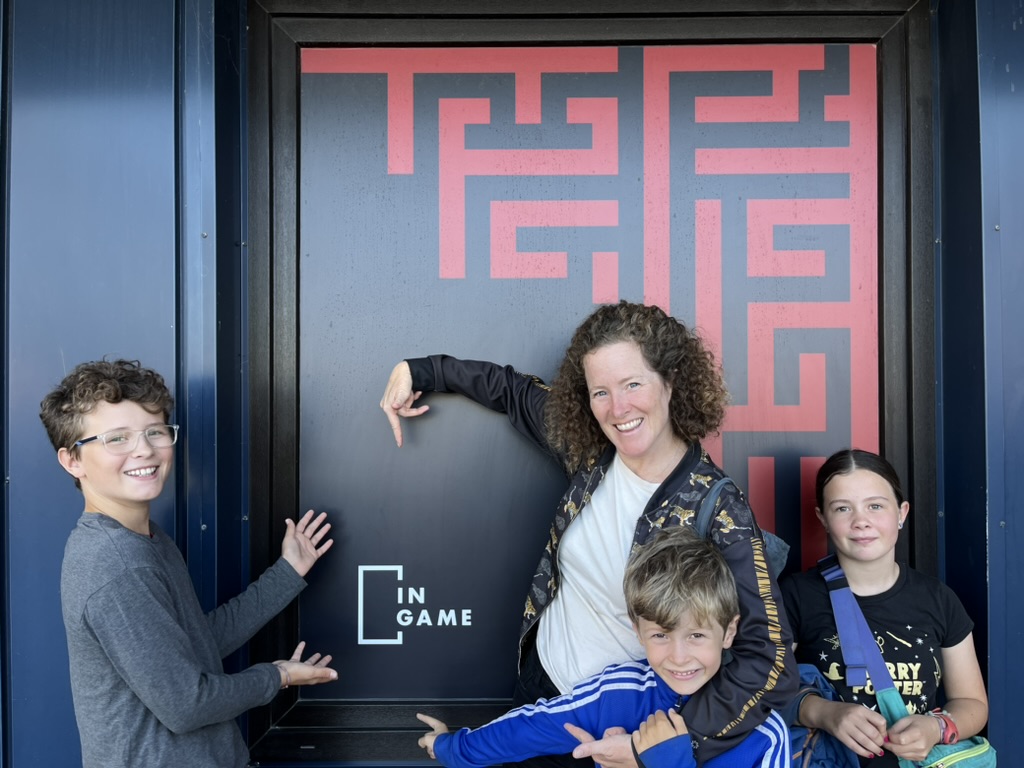
    We made it out!

    And… that’s it for me! I am typing this on a flight back to Montreal. The semester starts soon, and I wanted to give myself a bit of time to get things ready. But stay tuned! Claire and the kids have a couple more weeks of travel before heading back and you can read about it right here. (I opted not to move the blog over to the more accurate 4billetssvp.com. As an astronomer I am comfortable with historically inaccurate naming conventions).

    I am already reflecting on what a wonderful experience this seven+ months of travel has been for the family. But since the trip isn’t finished for everyone, I will save those thoughts for later!
  • Poland, Part 1

    After the Czech Republic, we’re set to spend a couple of weeks exploring Poland. Our first two stops were in Krakow, the old royal capital, and Wrocław, the city that’s hard to pronounce. Actually, It isn’t that hard. Just keep in mind that the “W” sound like a “V”, the “c” sounds like “ts,” the “ł” sounds like a “w” and the second “w” sounds like “f.” Easy: “Vrots-wahf…” just like it’s written!
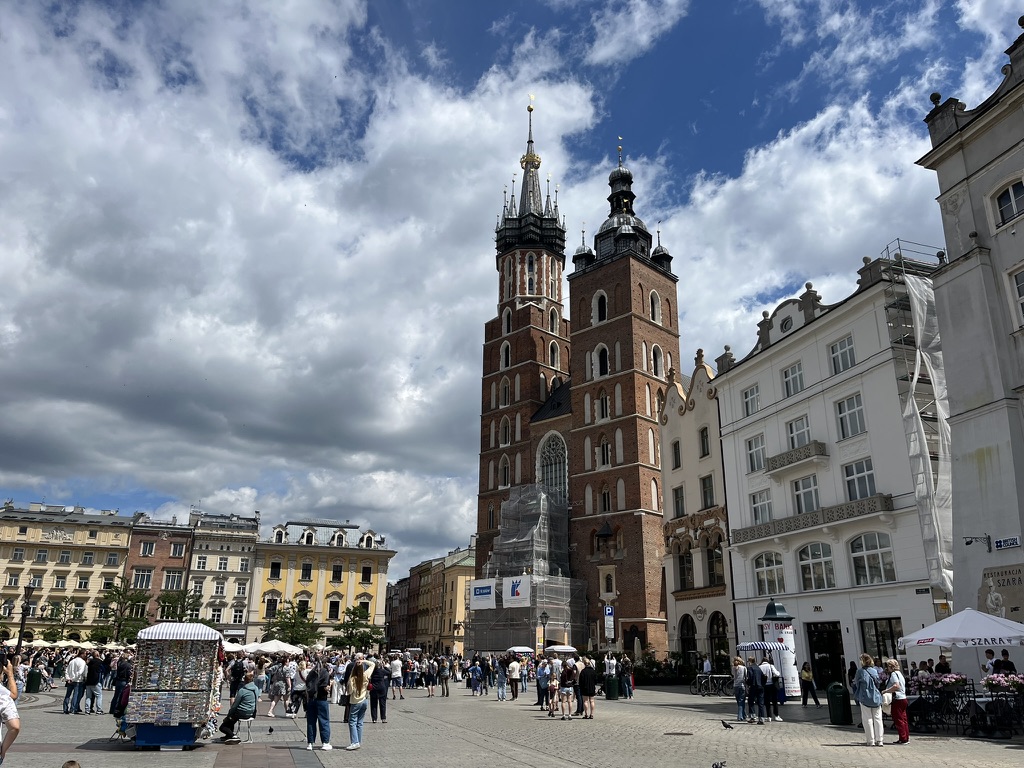
    As mentioned, Krakow is the old royal capital, and is host to the famous Wawel Castle. According to legend, there was a dragon who lived at the base of the hill, but since it was killed centuries ago we opted not to visit. (We’ve been in Europe long enough to become somewhat blasé about castles…). The city also has a beautiful old town (spared destruction in WWII) surrounded by a green belt where the old city walls used to be.

    At the top of the tower of St Mary’s Church, a trumpeter plays a call every hour, a call that ends abruptly. Legend has it that this ending dates to the Mongol invasion, when a trumpeter signalling alarm was shot through the neck by an arrow.

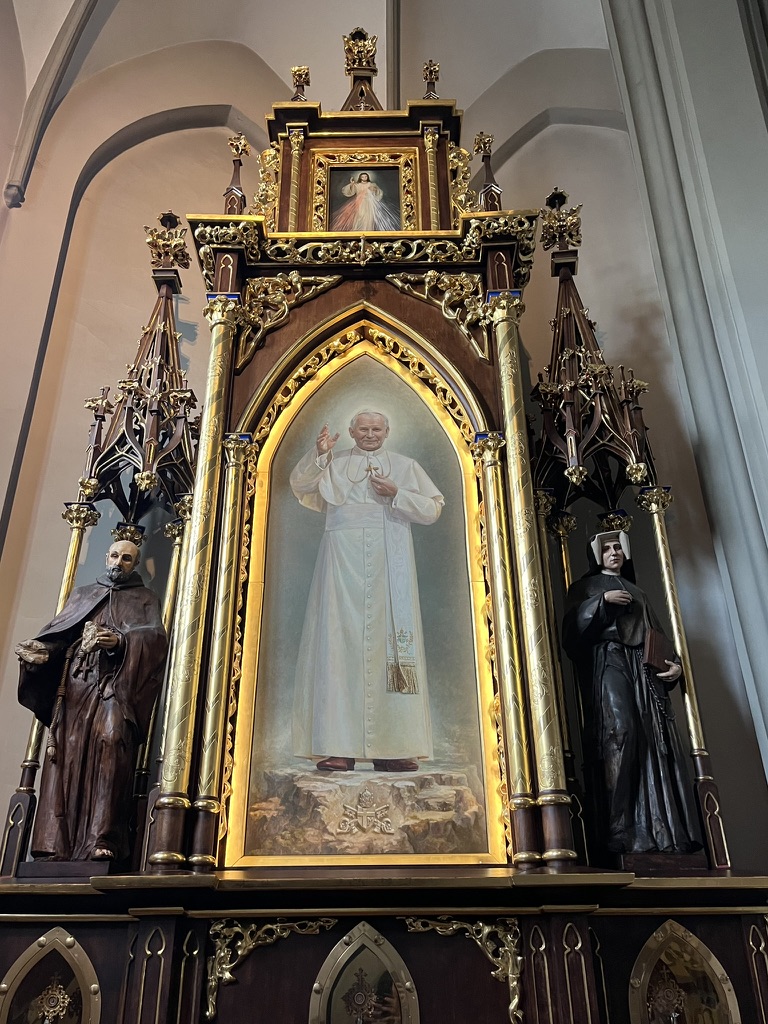
    We were staying just outside of the old town in the old Jewish quarter of Kazimierz, which reminds one a bit of the Mile End on steroids, with all of its hip restaurants. We spent a couple of nice days exploring the old town, Kazimierz, and Podgórze, the neighbourhood just south of the Vistula. There was lots of history to learn and explore: a monument commemerating the battle of Grundwald between the Poles and the Teutons, as well as Schindler’s factory, the Jewish ghetto, and the horrors of the Holocaust. There were also lots of churches to visit, and all of them had an image of Poland’s favourite pope: John Paul II.

    John Paul II, who famously visited Magnetic Hill.

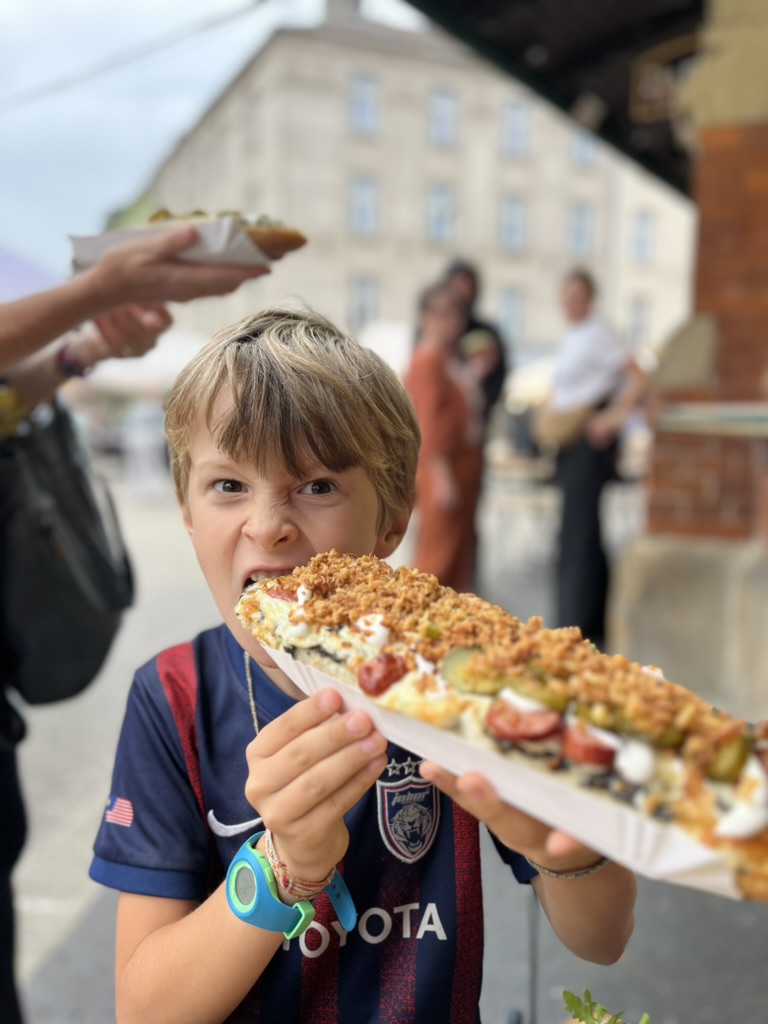
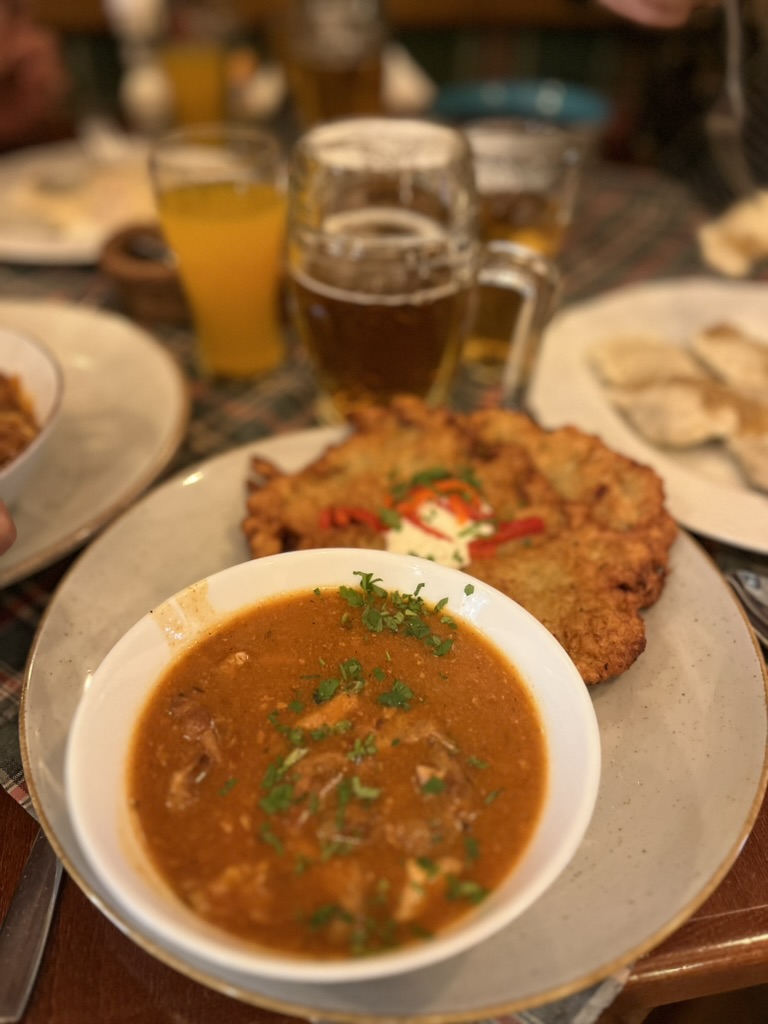
    As we explored, we worked up an appetite, which we satiated with loads of wonderful Polish food: zapiekanki (open-faced toasted baguette sandwiches), latkes and potato pancakes, borscht, lots of sauerkraut, and a ton of pierogi. We were also excited to find bagel carts in the old town, only to be disappointed to find the bagels to be not very fresh… St-Viateur doesn’t have to worry about this competition.

    A terrified zapiekana.
    Yum.

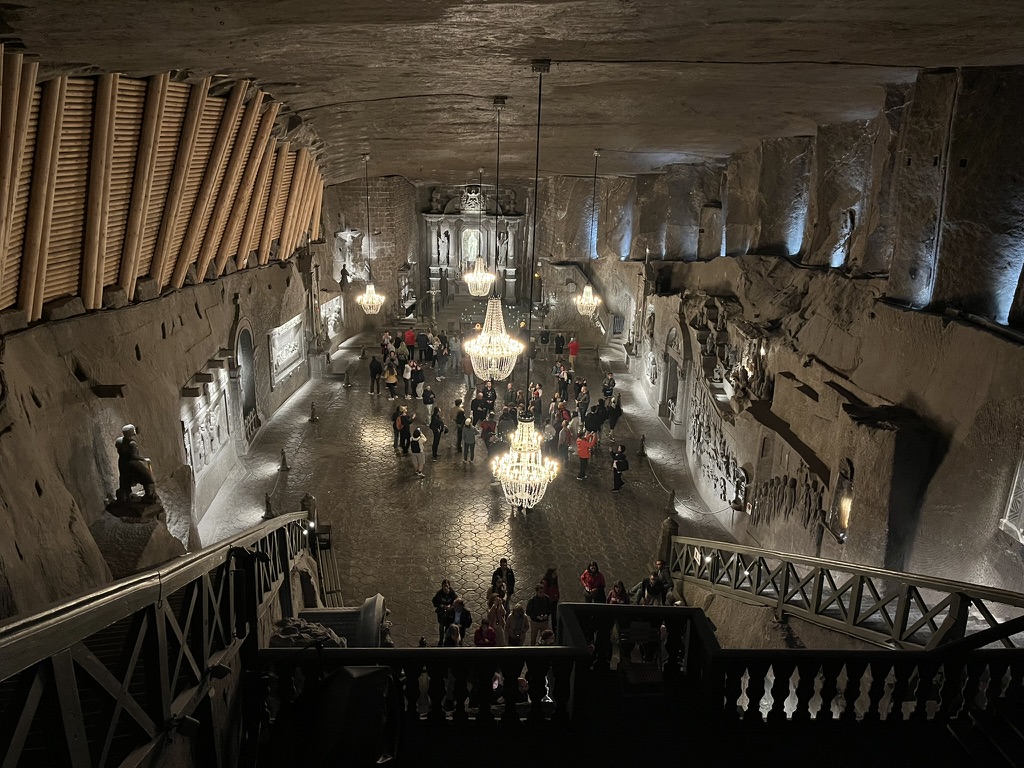
    On one of our days, we opted to take a bus ride to the nearby Wieliczka Salt mine. I was expecting it to be pretty cool, but wow, it really surpassed my expectations! The mine had been in operation for about 700 years, but now it makes all of its money by ferrying loads of tourists through the tunnels. And boy, there were LOADS of tourists. We walked through about 2 km of tunnels (less than 1% of the mine!) on our tour, past statues carved from salt, and exhibits that explained the history. There was even a full church (with a statue of JPII) inside! And in case you were wondering, yes we did lick the walls. Yes, they were salty.

    St Kinga’s chapel, carved in salt nearly 200 m below the surface.

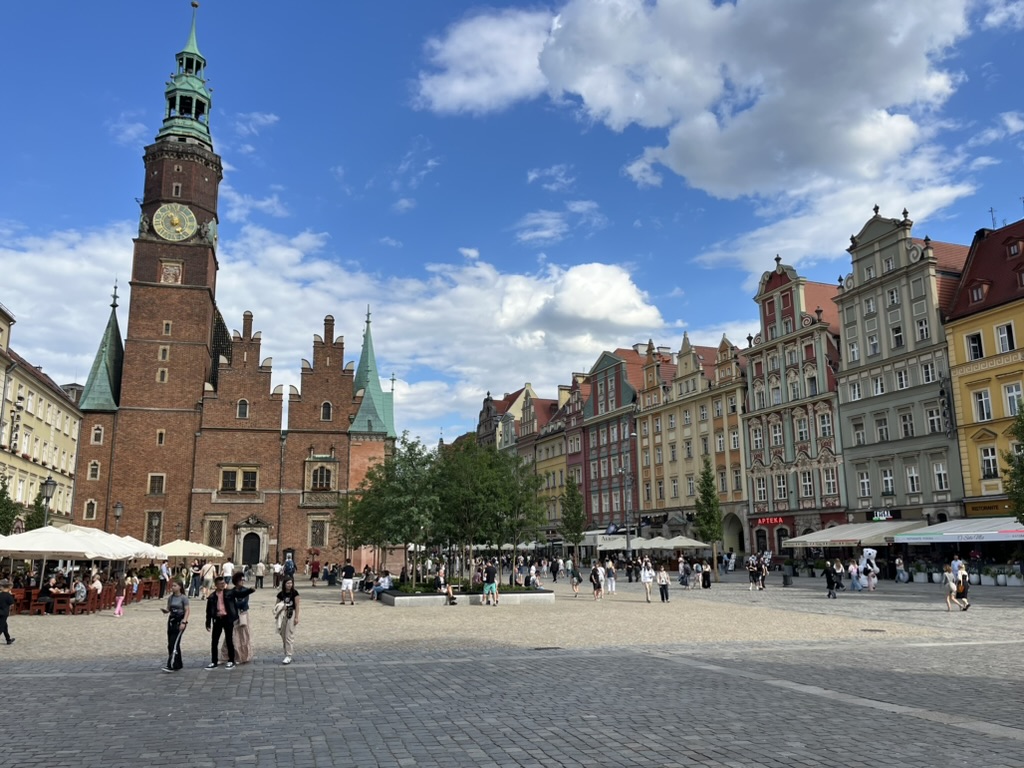
    Krakow is one of the big draws in Poland, but I think we ended up preferring smaller Wrocław. It may have been the nicer weather, or the fact that we were there on the weekend so that it was lively, but we enjoyed the smaller scale of the beautiful old town.

    Picturesque Wrocław.

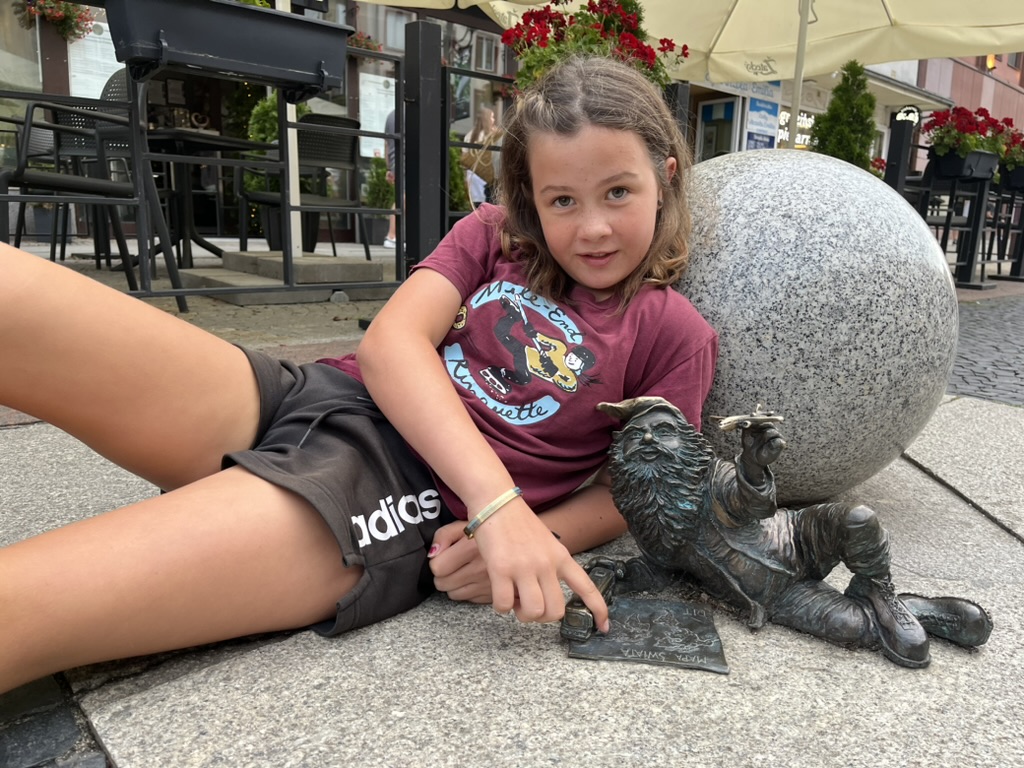
    On top of that, the city has a wonderful gimmick for tourists: hundreds of small bronze statues of dwarves are scattered throughout the city. Each one has a different theme connected to a nearby landmark or business. Apparently, there is a link to anti-communist graffiti and demonstrations back in the ‘80s. But now, you can buy a map of the city with the locations of the dwarves. So that’s what we did, and we spent two days on a scavenger hunt around the city. The kids loved exploring with such purpose!

    Elsie chatting with a fellow traveler.

  • Miam à Vienne

    (Ben)

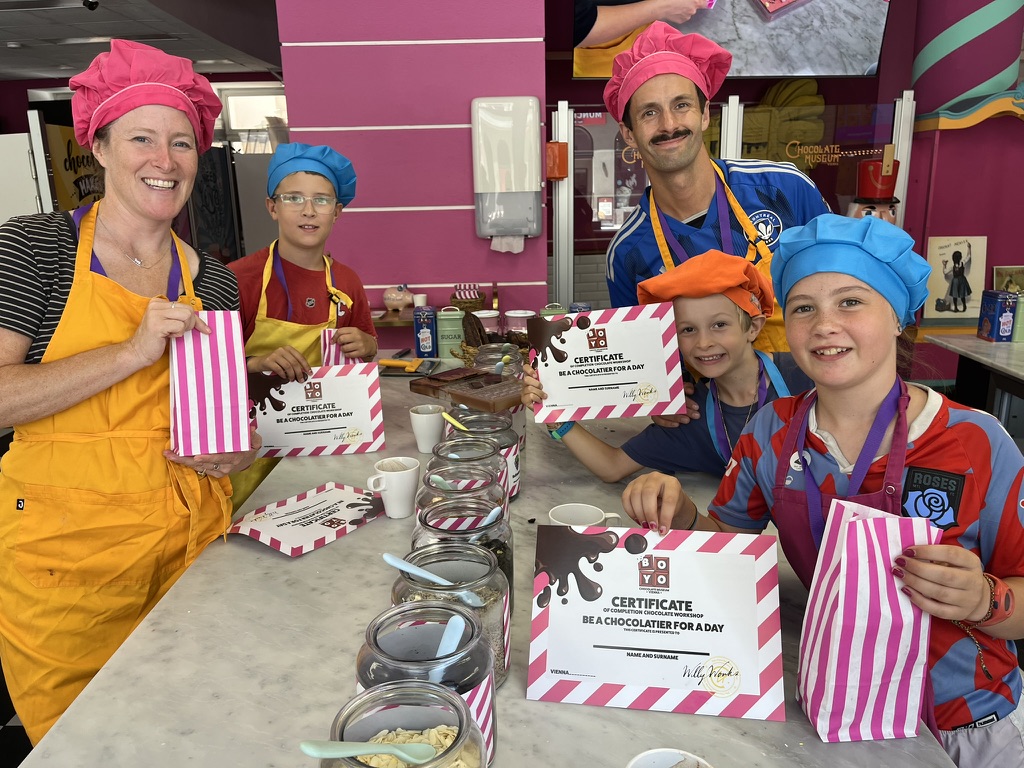
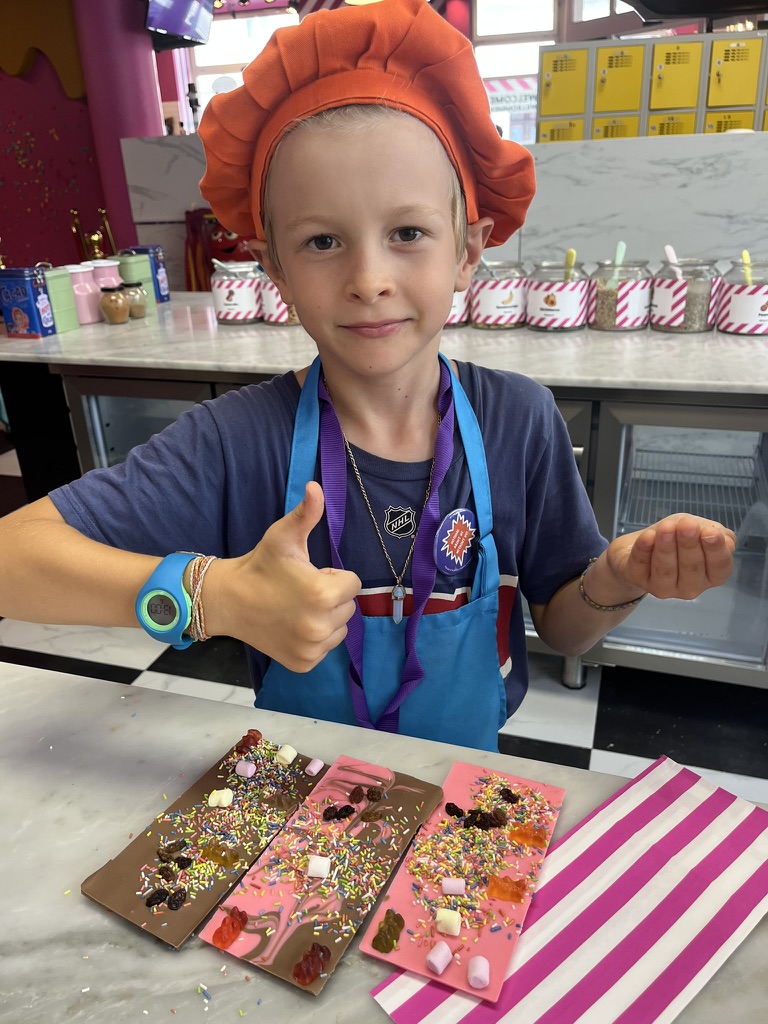
    On est allé à un musée de chocolat à Wien (Vienne). On a fait un atelier sur le chocolat. C’était tellement bien. Miam.


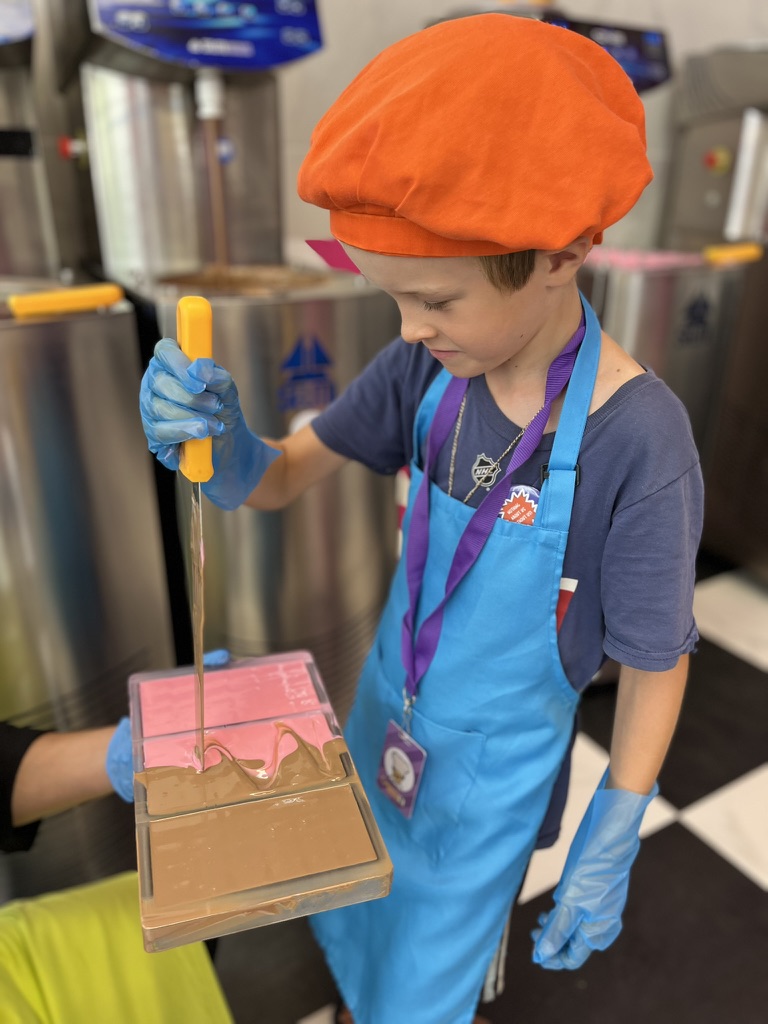
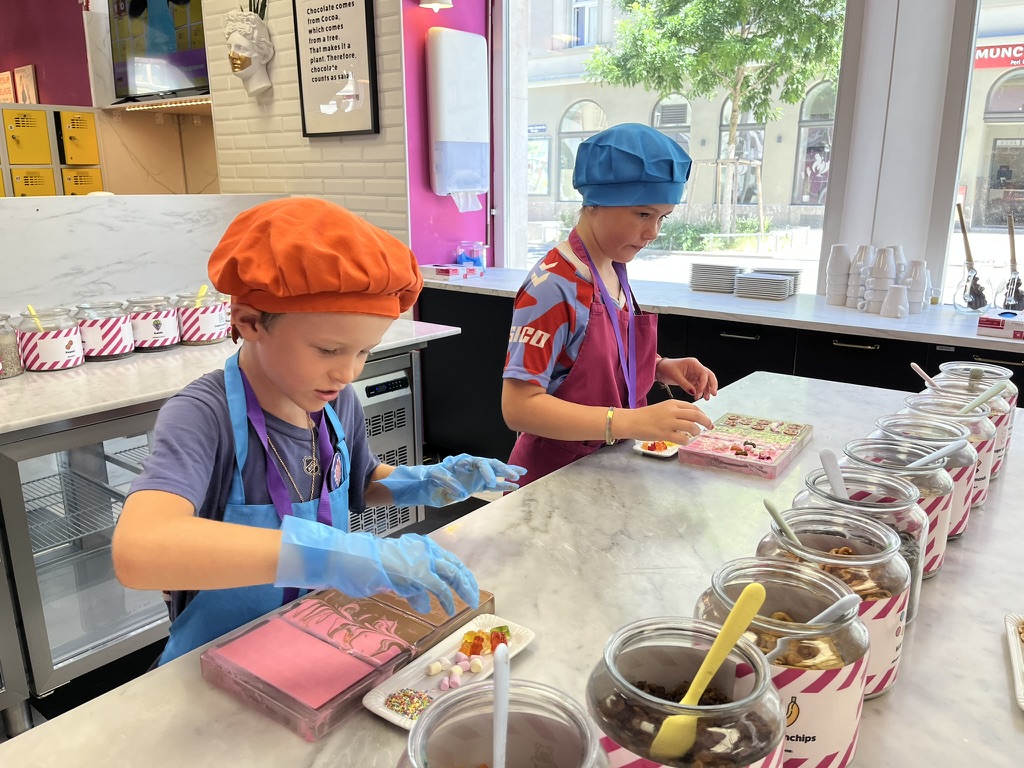
    On a fait 3 bonnes barres de chocolat avec du chocolat liquide (noir, au lait, ou blanc) qu’on mettait dans des moules. Il y avait beaucoup de différentes garnitures, comme des bananes sèches, des raisins secs, des jujubes, des graines de café, et des pretzels. Il fallait mettre les barres au frigo.


    On avait aussi fait du chocolat chaud, miam. Les ingrédients étaient du sucre, la poudre de cacao, la cannelle, du chili, et le lait en poudre. On a tout mis dans un pichet, en ajoutant de l’eau chaude, et on l’a mélangé avec un bâton spécial pour 3 minutes. (Dans les anciens jours, ils le faisaient pour des jours et des jours!).

    On a aussi appris d’où venait le chocolat.

    À la fin, on a sorti nos barres de chocolat du frigo et on a mangé du chocolat pendant des jours!

    MIAM!

  • Bratislava and Wien

    This one travel blog is shocking readers everywhere.

    We left Big, Breathtaking, Budaful Budapest behind and headed for smaller Bratislava, the capital of Slovakia. This was a short stop, just two nights, but ended up being quite pleasant.

    The streets near our apartment were rather quiet, but we soon found that all of the tourists were in the Old Town, a short walk away, through Michael’s Gate. The Old Town isn’t huge, but it’s got that oh-so-European cuteness of cobblestones and a big square with cafes and an old church. Quite lovely on a summer’s evening. We treated ourselves to some delicious Slovak fare in what claimed to be one of the largest restaurants in Europe.

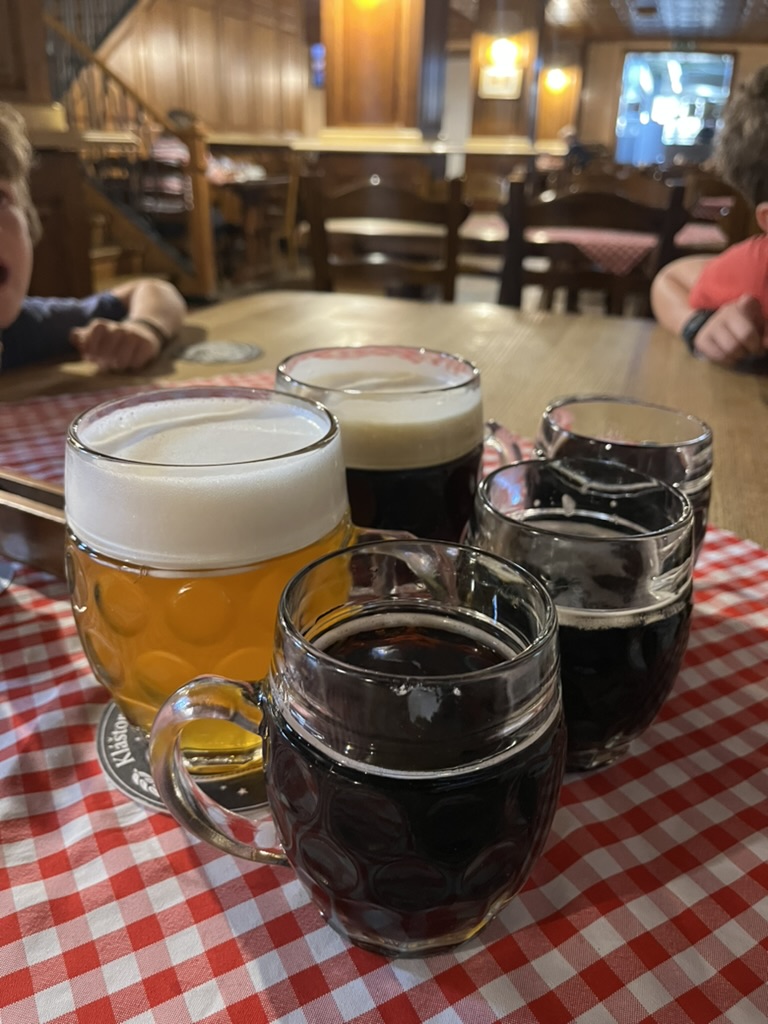
    Pivo and Kofola.
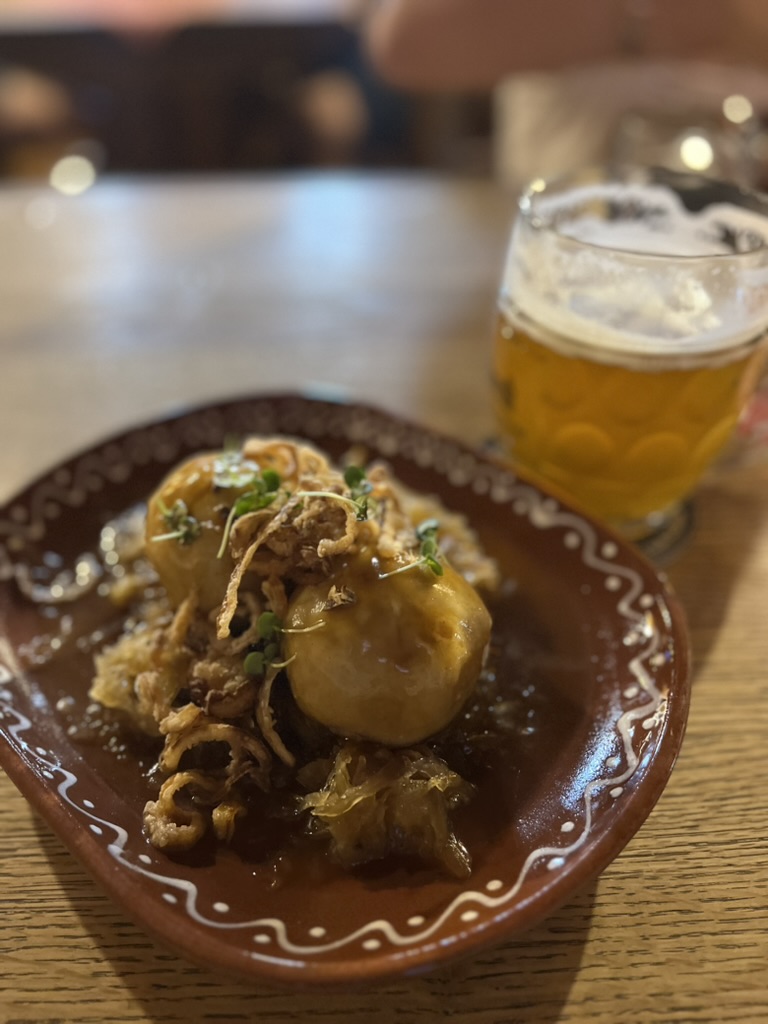
    Who knew cabbage could be so good?

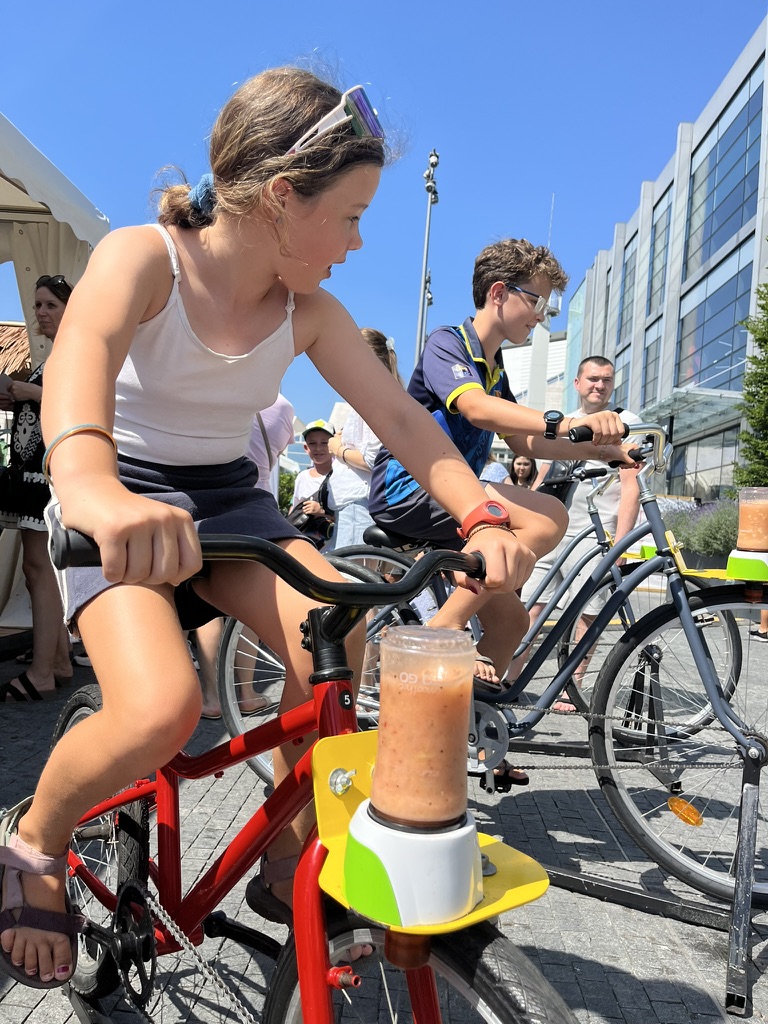
    Not only do tourists visit Brati, but we discovered that people actually live there too! In fact, the city exudes a sense of livability that we really appreciated. I found some great (cycling) running paths along the Danube that were busy in the mornings; we picnicked among the locals in a beautiful park with a giant splash pad one warm evening; and we enjoyed some AC in the packed mall one afternoon. There was something of an “active-living for kids” festival going on just outside by the river, so the kids got to hop on some stationary bikes and pump up the watts to make their own smoothies.

    Spinning and smoothies.

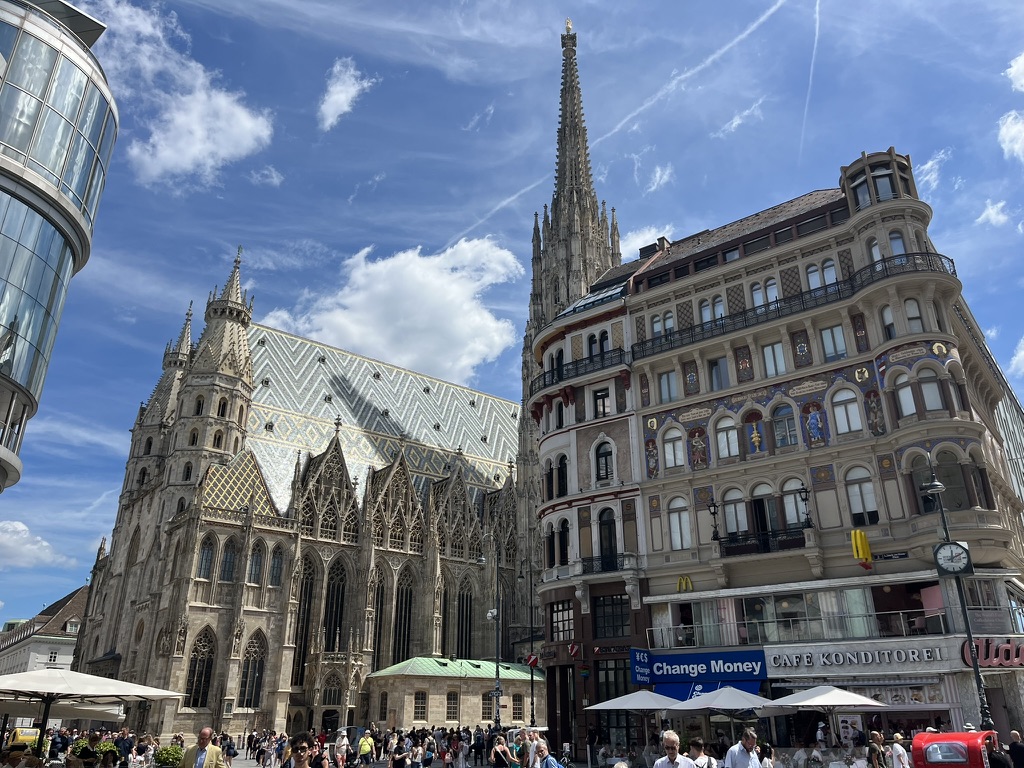
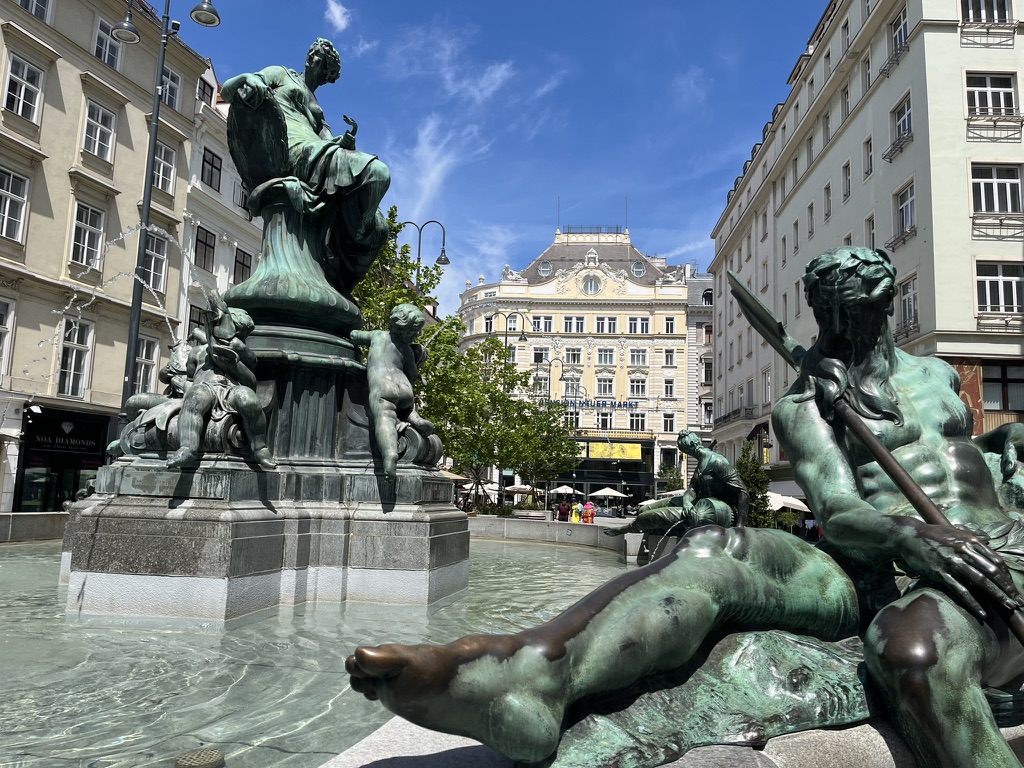
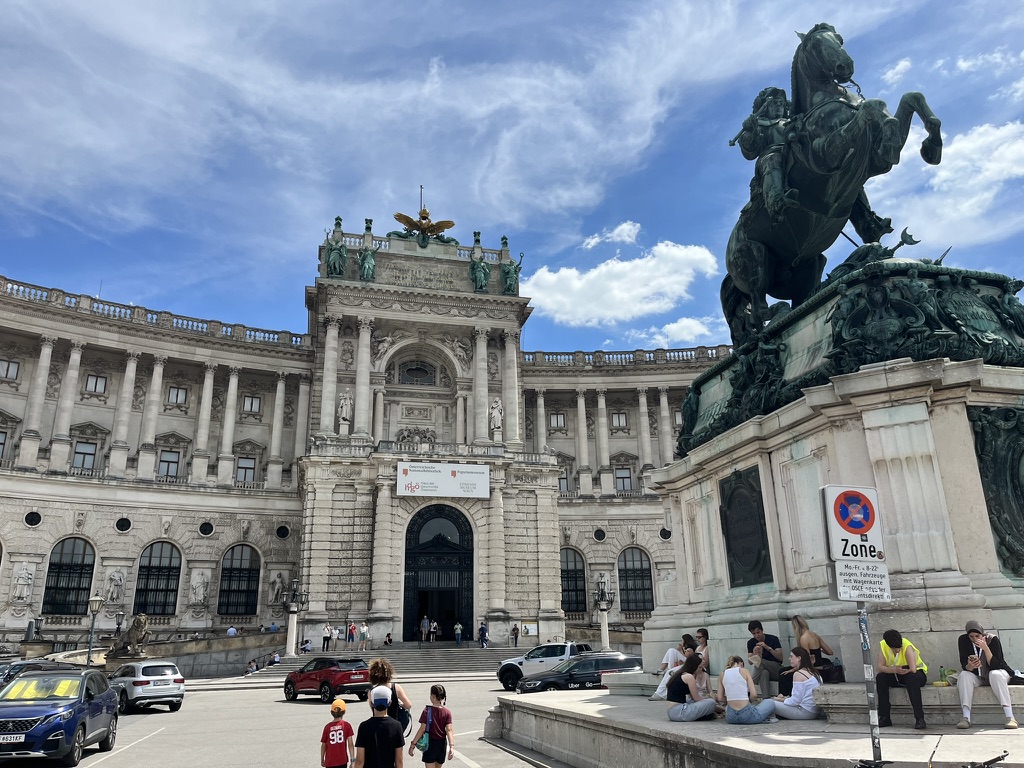
    Ah Vienna! We had four nights here, which allowed us to get a decent sense of the city, but it’s one spot where I could easily go back and spend more time. It doesn’t quite have the breathtaking geographical setting of Budapest or Prague. However, the city is clean and full of beautiful buildings everywhere you look, as well as lots of greenspace. At a certain point, I just had to stop taking pictures of everything.

    Stephenplatz was packed. We are no longer traveling in the off-season!
    Relaxing by the fountain on a hot summer’s day.
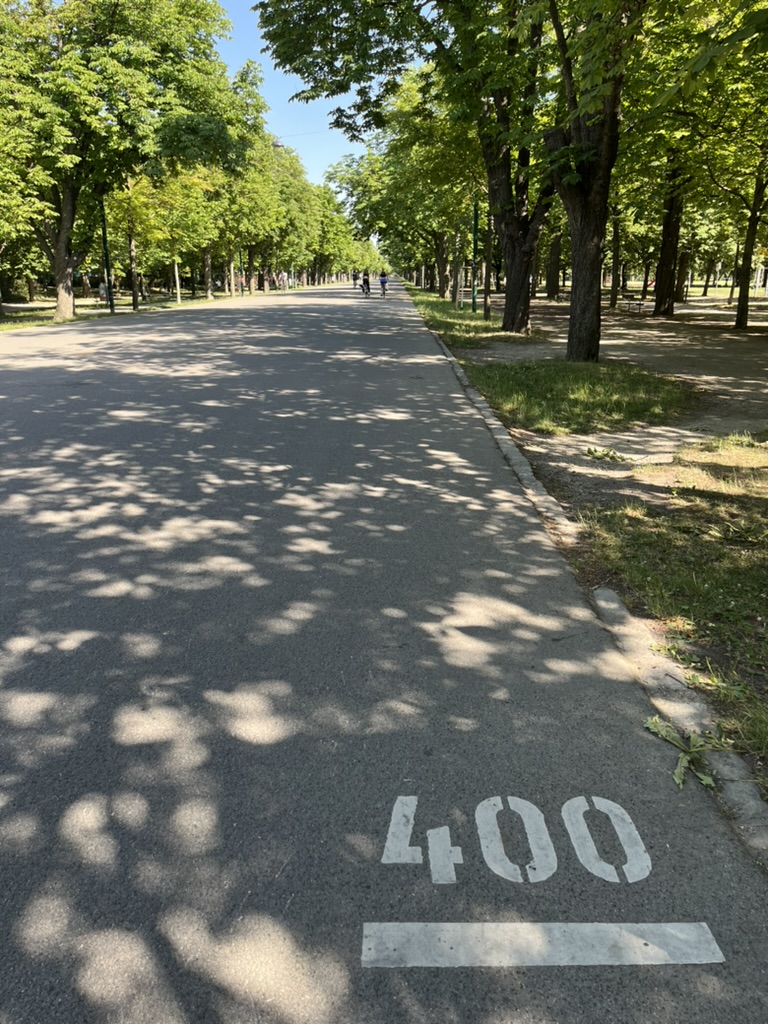
    The Prater, where Kipchoge broke 2 hours for the marathon (unofficially of course).

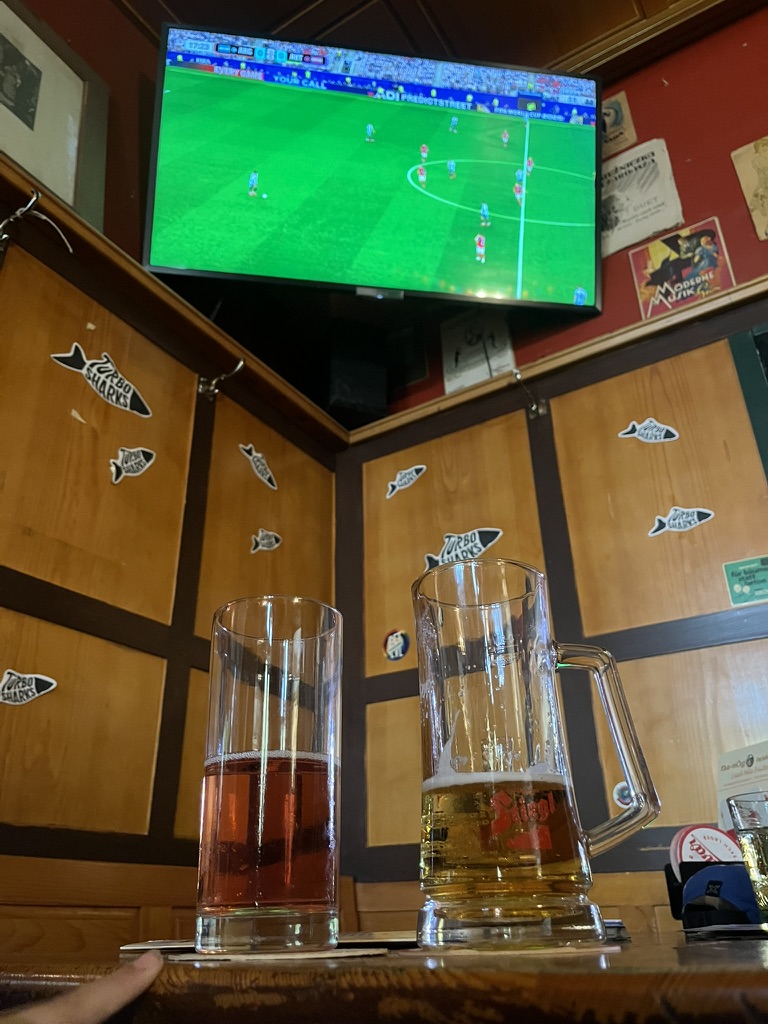
    We happened to be in town for the Austria vs. Argentina game, so we tried to find a spot to watch the game with locals, but it wasn’t easy! We first tried a public viewing space, but even a couple of hours before the game it had already reached capacity. We then wandered the streets, past innumerable bars that had no tables left, until we finally found a spot at the back of an Irish Pub. It was fun to get into the World Cup spirit among the crowd of red shirts.

    Österreich! Österreich! Österreich!

    Even though the school year is over, we decided that it’s still OK to learn stuff (right?). As you may remember, back in Turkey we visited the ruins of the Roman city of Ephesus. Well, the whole time that we were listening to our audioguide there, they kept going on and on about all of the wonderful artefacts that are now in the Ephesus Museum in Vienna. So we decided to stop in while we happened to be in town. It was very impressive to see all of the original statues, etc. and make the connection back to what we saw of the physical space at Ephesus. The museum also happened to be in an old Hapsburg palace, which made for a nice venue! (By the by, it’s worth mentioning that the Austrians did in fact have permission from the Ottomans to take all of those nice artefacts back to Vienna).

    The palatial setting of the Ephesus Museum.
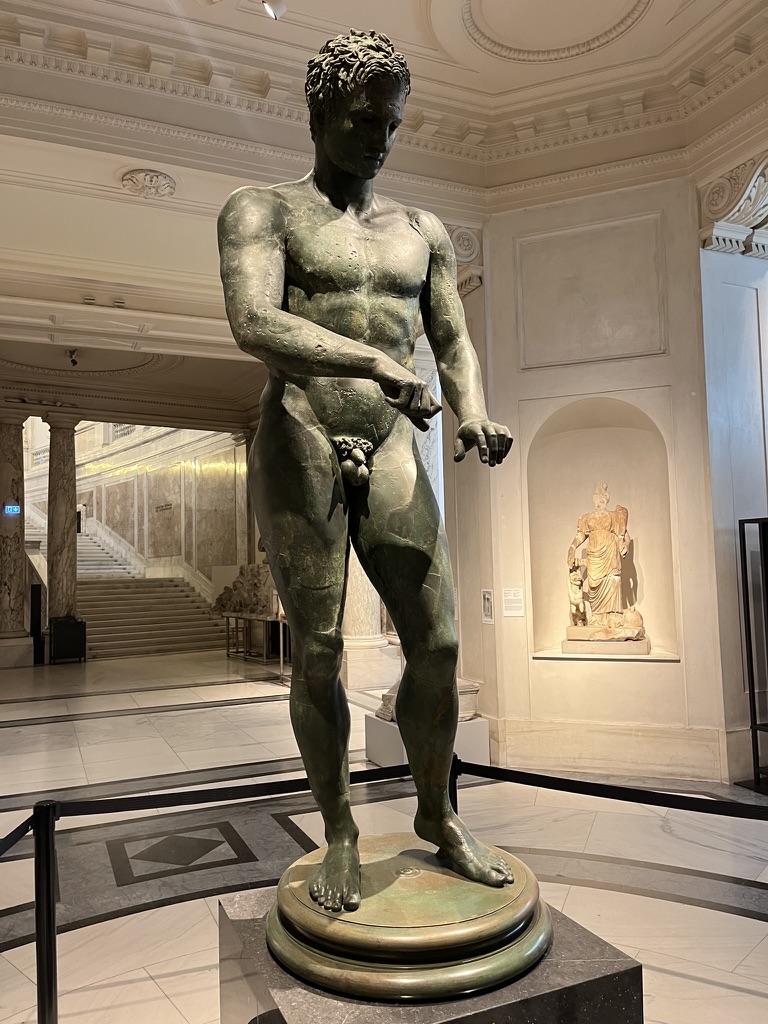
    The Athlete – recomposed from 214 fragments found under the rubble at Ephesus. Apparently he was scraping all of the oil and dirt off of him after a workout. I prefer a shower myself.

    Some of our more astute readers have noticed that we haven’t been talking about food as much as we did while in Asia, and we don’t want to disappoint our fans. On the gastronomical side, I can say that the city does in fact have very decent viennoiseries (go figure), and I already miss the abundance of sausage stands were an easy option for lunch . We also took the kids to a chocolate making workshop, of which Ben will tell you more about in an upcoming post!

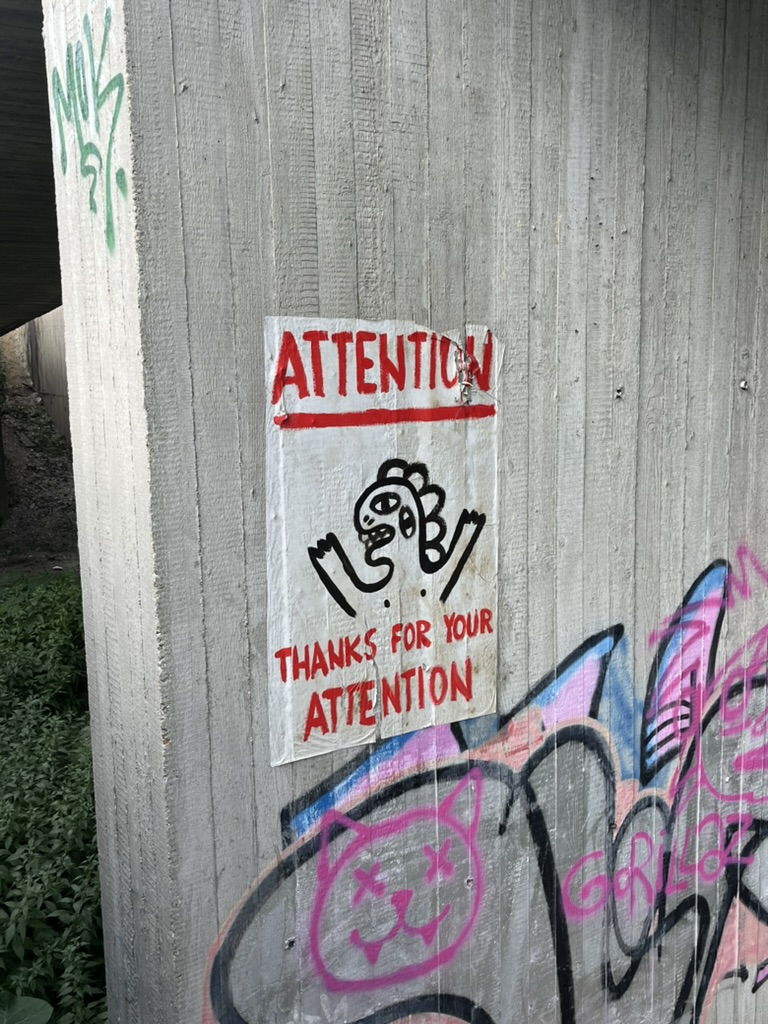
    Bratislava thanks you for your attention to this post!
  • Buda vs Pest

    Avant qu’on soit arrivé a Budapest on a lu que Buda et Pest sont séparés par le Danube, une rivière. Pest est plus grand et il n’y a pas de montagnes et Buda a des montagnes. Nous, notre appartement était à Pest.

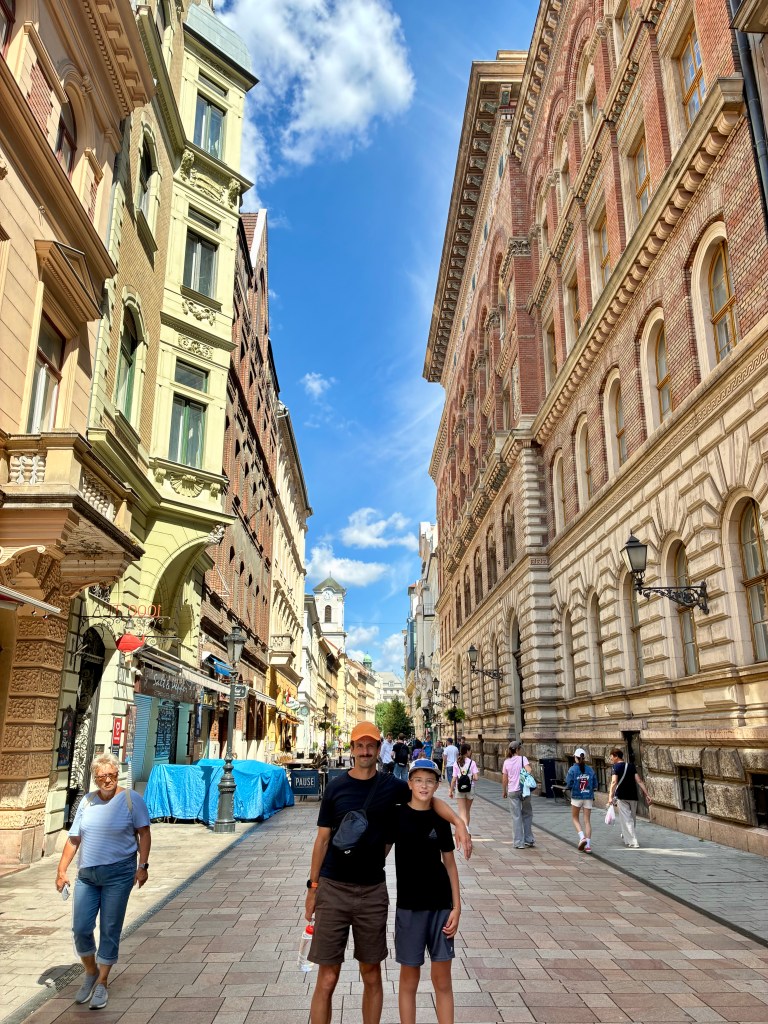
    À Budapest, on avait un HomeExchange à côté d’une rue piétonne. La rue piétonne est très grande et a beaucoup de magasins. On a utilisé cette rue beaucoup de fois, pour aller au parlement, visiter l’église et aller à un parc qui montrait le soccer.

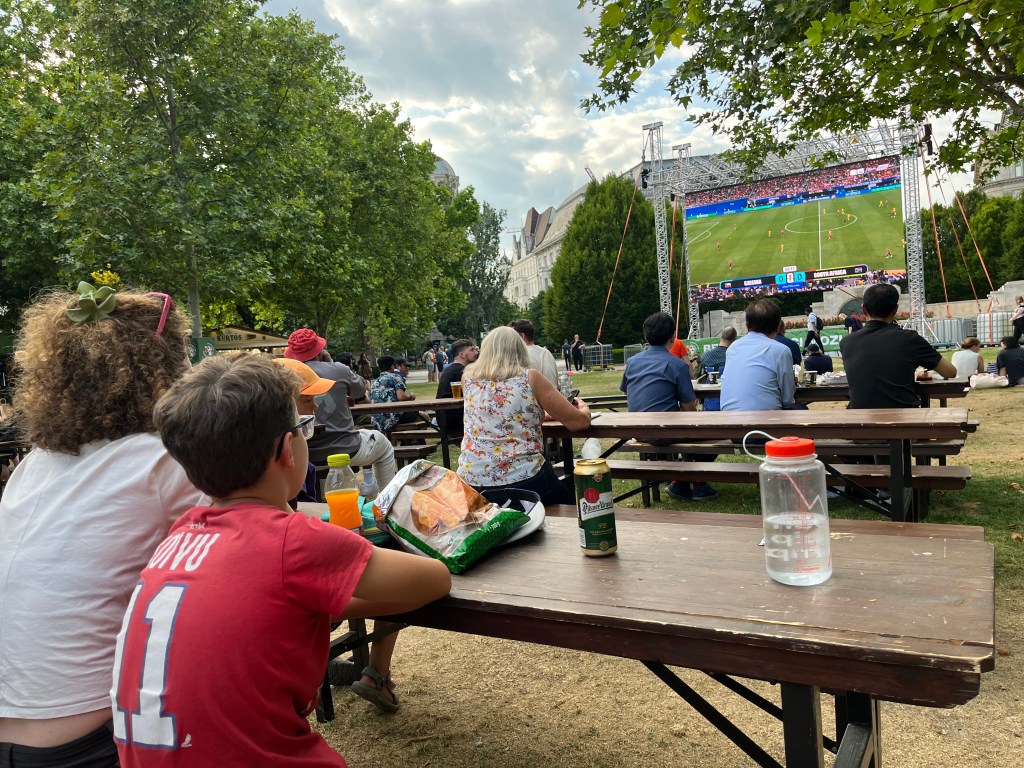
    On est allé voir un match de la coupe du monde dans ce parc, qui avait deux grosses télés. En plus, on pouvait le regarder gratuitement! Le match qu’on a regarder était la Tchéquie contre l’Afrique du sud. Au milieu du match on avait faim et il y avait des kiosques avec de la nourriture. On a regardé les prix pour un repas: c’était 30 dollars pour un hot dog! Donc ma mère est allé chercher des banh mi. A côté de nous il y avait des personnes qui venaient de l’Afrique du Sud et ils mettaient beaucoup d’ambiance dans le match.

    À Pest, il y avait de beaux édifices avec de la très belle architecture. De l’autre côté de la rivière, Buda avait quelques édifices avec de la belle architecture, mais Pest plus. Comme Budapest est la capitale, il y a un Parlement. Le Parlement, un très bel édifice blanc et rouge, est à Pest. On est allé le visiter une fois mais on l’a vu à tous les jours de près ou de loin! À Buda il y avait 1 édifice qui est touristique, il s’appelle le Fisherman Bastion. Il est très beau et d’en haut on peut avoir une très belle vu du Parlement. Buda est plus tranquille que Pest. Moi j’ai préféré Pest.

  • Sarajevo

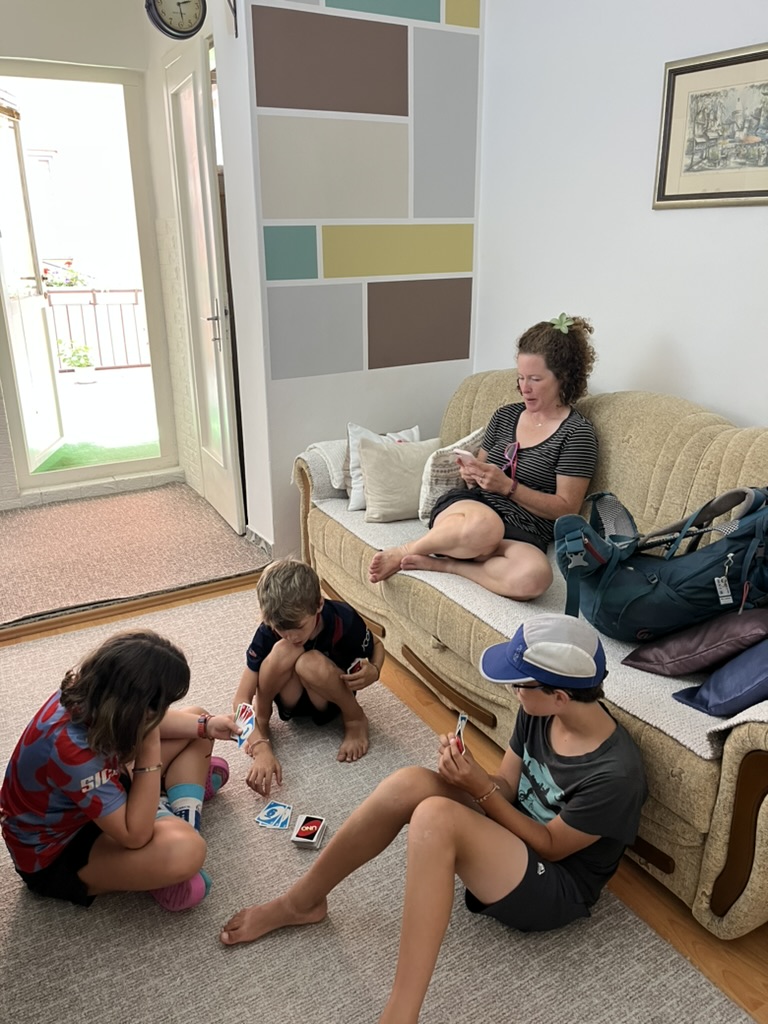
    We decided to slow down our pace a bit for our stop in Sarajevo. It helped that Sarajevo isn’t huge (population 350 000), and that our apartment in the old town was in the centre of the action. It also helped that our apartment was extremely cozy. So, we opted to alternate our exploring with some movie nights, suppers on our garden terrasse, as well as a couple of (well-deserved) naps for me.

    Taking it easy in our cozy apartment.

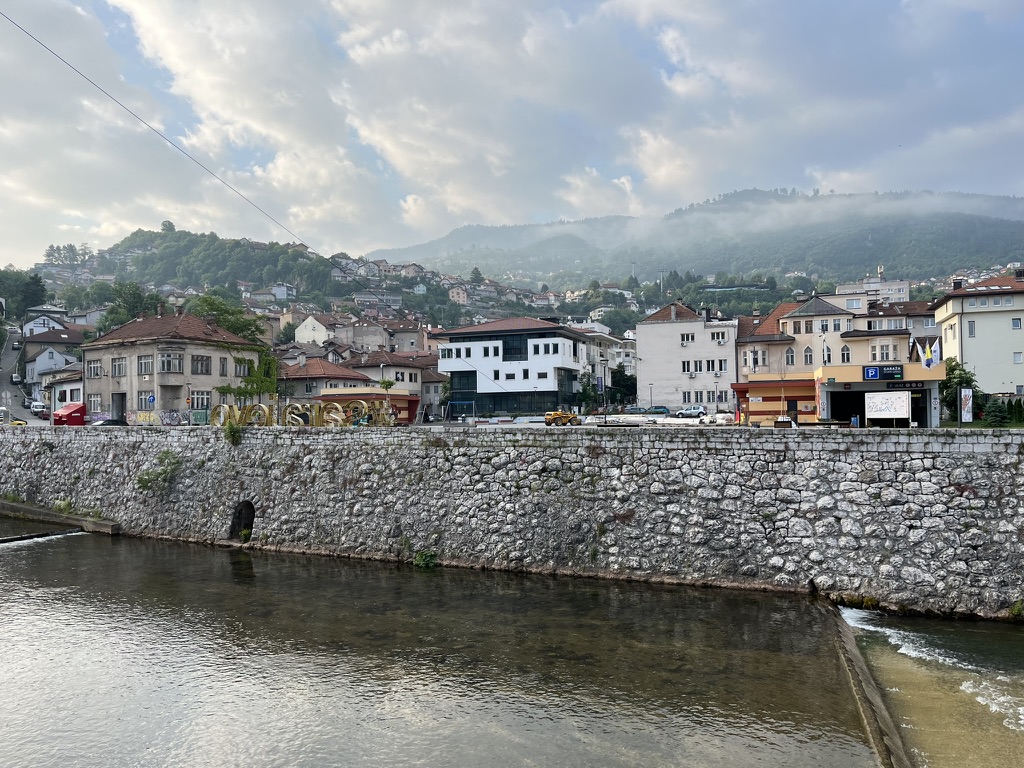
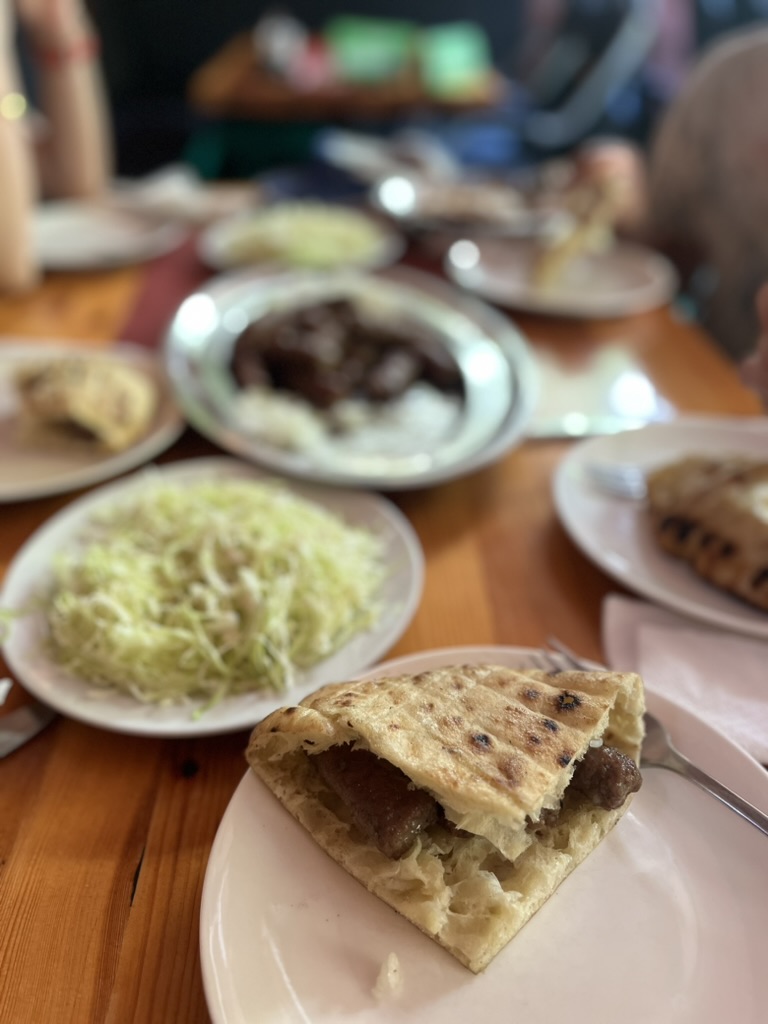
    I’m not sure exactly what it was about Sarajevo (Henri dirait sûrement que c’était intangible), but we really loved the vibe. The city’s geography is simple, as it stretches out along the Milajcka river and is beautifully nestled by the surrounding hills. The architecture of the old town jumps interestingly from Austro-Hungarian to Ottoman. It was certainly touristy, but somehow managed to remain relaxed. The food was good as well, from the famous ćevapi (worth trying, but a bit heavy for me) and back to some familiar fare that we had in Turkey (baklava, and manti). It all made for a good, tangible vibe.

    Morning run along the river.
    A feed of ćevapi.

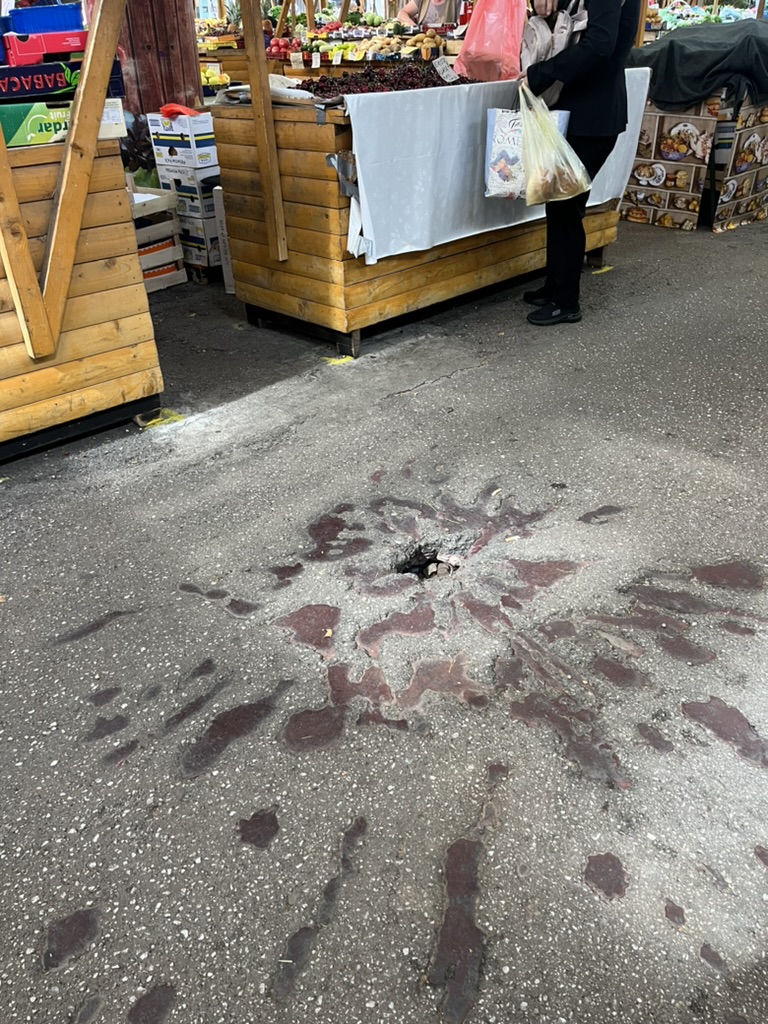
    Sarajevo, of course, has had some rather violent history in its recent past. Just a block or so from our apartment was the very spot where the Archduke Franz Ferdinand was assassinated, setting off the chain of events that led to Word War I. We’ve been taking in a lot of history over our trip, and the topic of wars and violence has certainly come up, but most of these have been in the distant past. But Sarajevo was under siege (92-95) recently enough for me to remember seeing it on the news, and that felt different. Many buildings still have visible scars from the war, and there are also the “Sarajevo roses” around town. These are locations in the pavement where the damage from a mortar has been filled in with red resin to mark the spot where at least 3 people were killed. If you look carefully (or check google maps), it’s easy enough to find these around town, in front of a church, in the fruit market where we bought stuff for supper.

    A rose in the market.

    There are a number of museums about the war. After spending a bit of time at The Memorial to the Murdered Children of Besieged Sarajevo (1992-1995) in Veliki Park, which commemorates the over 1600 children who died during the siege, we opted to take in the Childhood War Museum. The museum was really well done, and I think it was the right option for our family. It consisted of a collection of objects from the war, each one belonging to a child who survived, along with text describing the accompanying story. Some of the stories were of happier moments, while others were rather dark… I think the presentation left our kids informed, but not traumatized, which was the goal. But as a parent, it wasn’t easy to read through some of the accounts and imagine my own kids living through that.

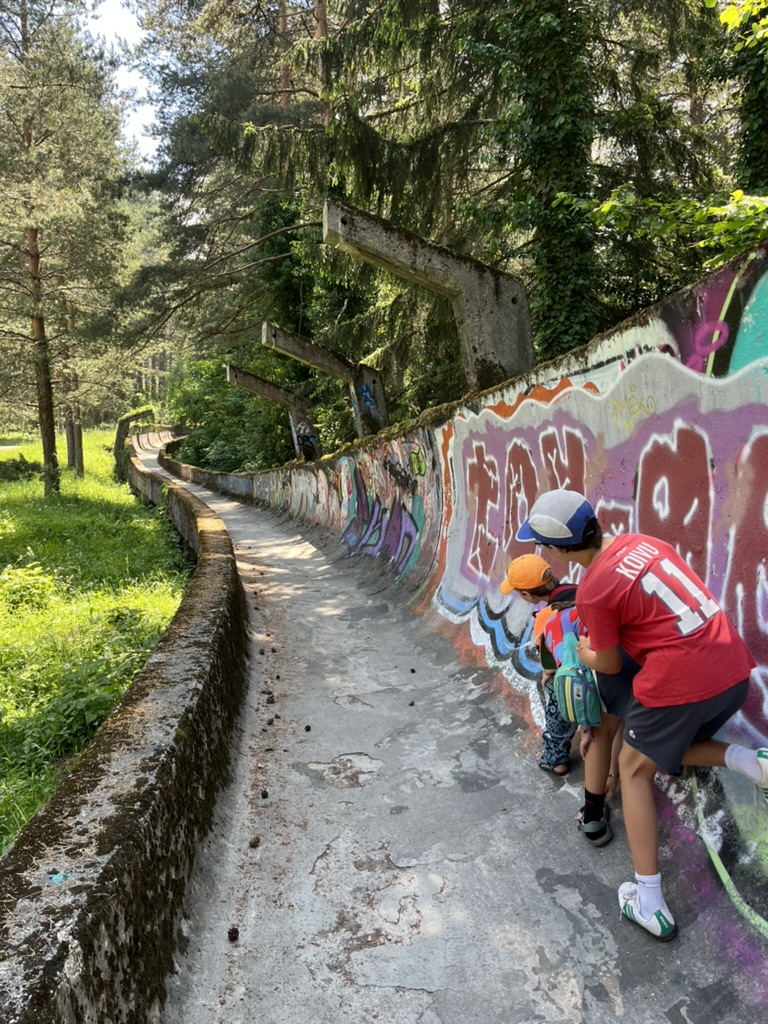
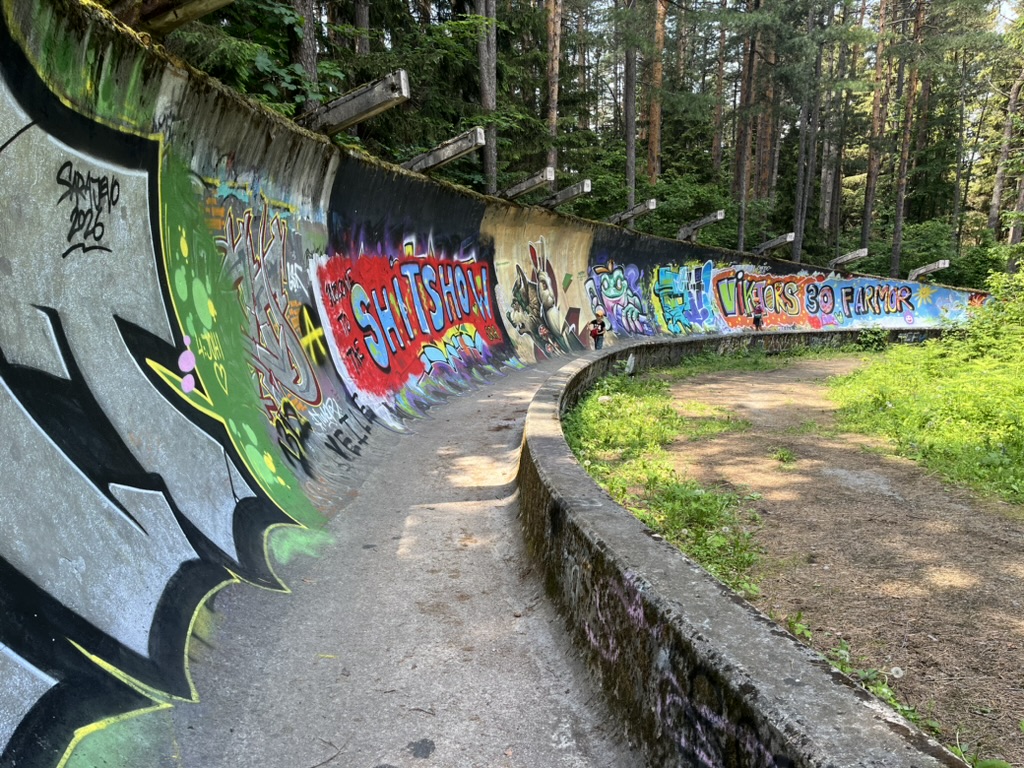
    On a lighter note, it’s common knowledge that 1984 was a very good year. Among other historic events that year, Sarajevo hosted the Winter Olympics. We skipped the cable car and hiked from the city up to the top of nearby Trebavić peak. Not only was the view nice, but along the way we got to walk along the Olympic bobsled track. Not beside, but actually on the now graffiti-covered track, which is lined with QR codes linked to stories from the games. The kids loved running along the track, imagining being in the sled. I found walking along thrilling enough. No need for the ice and the high speeds.

    The innovative 3-child sled-less bobsled.
  • Delphi

    (Henri)

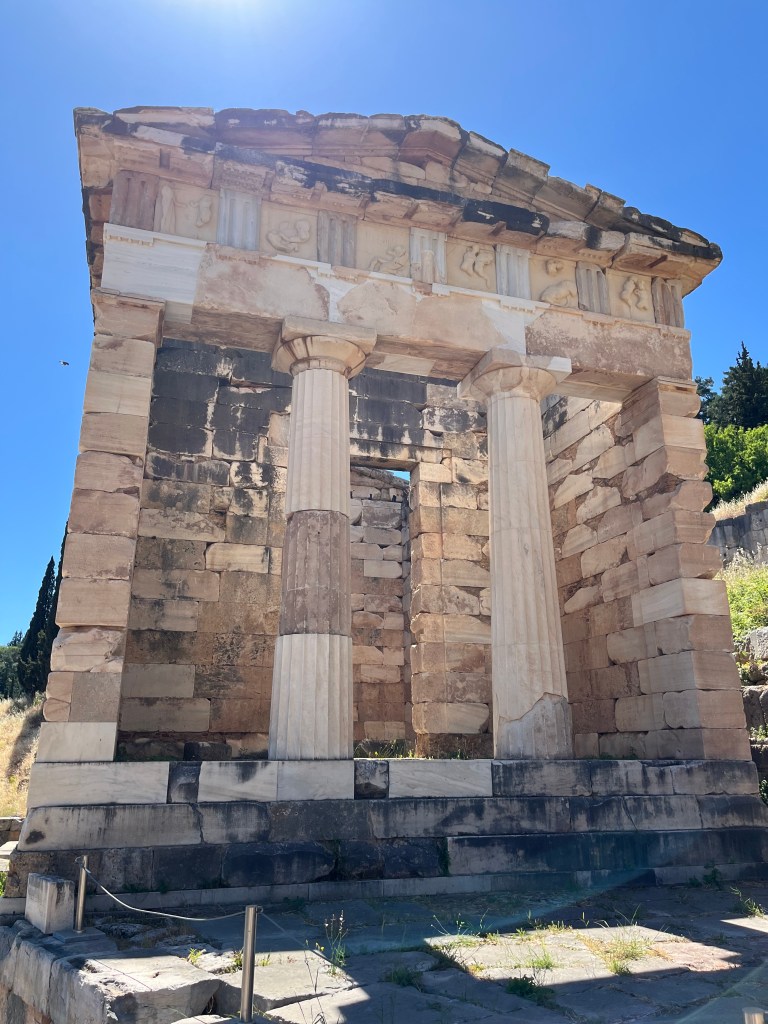
    Le temple d’offrandres des Athéniens

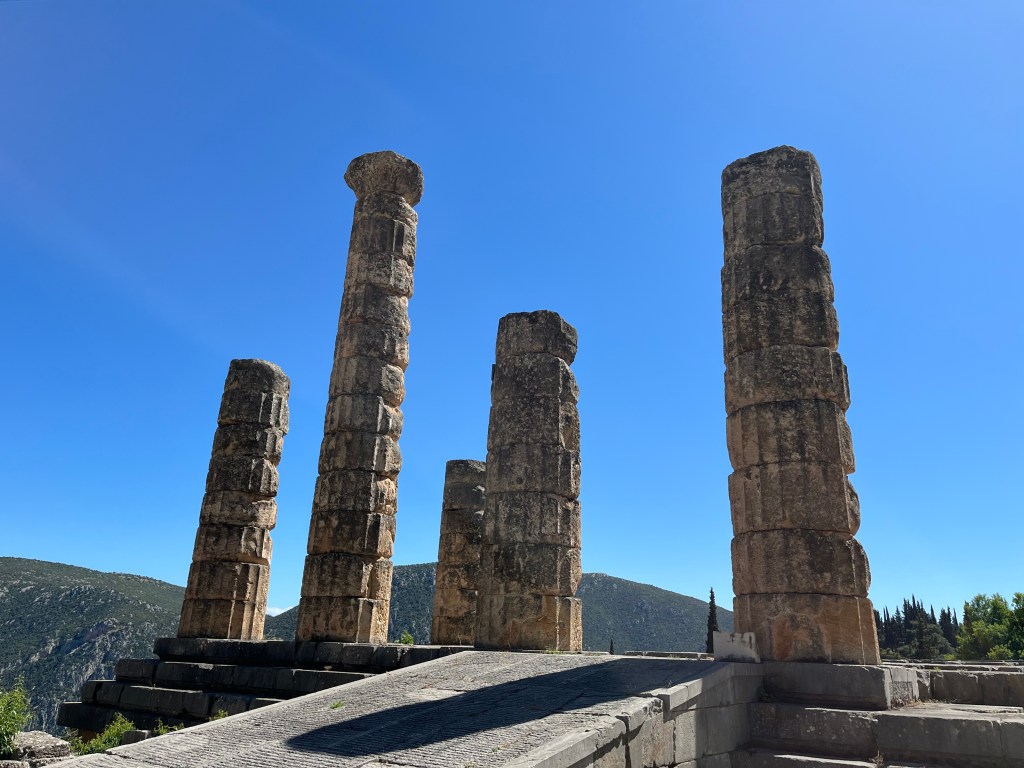
    Quand on est arrivé dans la petite ville de Delphi on a eu le temps d’admirer le beau paysage pour deux secondes avant d’aller vers le temple d’Appolon où se trouve l’Oracle de Delphi. Notre premier plan était d’y aller le deuxième jour mais quand on a su que c’était gratuit pour le jour international du musée on s’est précipité au temple. Le temple (comme tous les autres) avait un odeon et… un temple.

    Le temple de l’Oracle

    Des gens de partout venaient pour consulter l’Oracle à qui tu demandais quelque chose et l’Oracle te répondait d’une façon plus ou moins claire. Tout en haut était un ancien stade qui était assez grand mais un petit peu détruit. On a fini avec le musée. On l’a visité rapidement mais ça contenait des belles affaires. Le soir on a mangé à un beau restaurant. À la fin ils nous ont offert deux desserts gratuits.

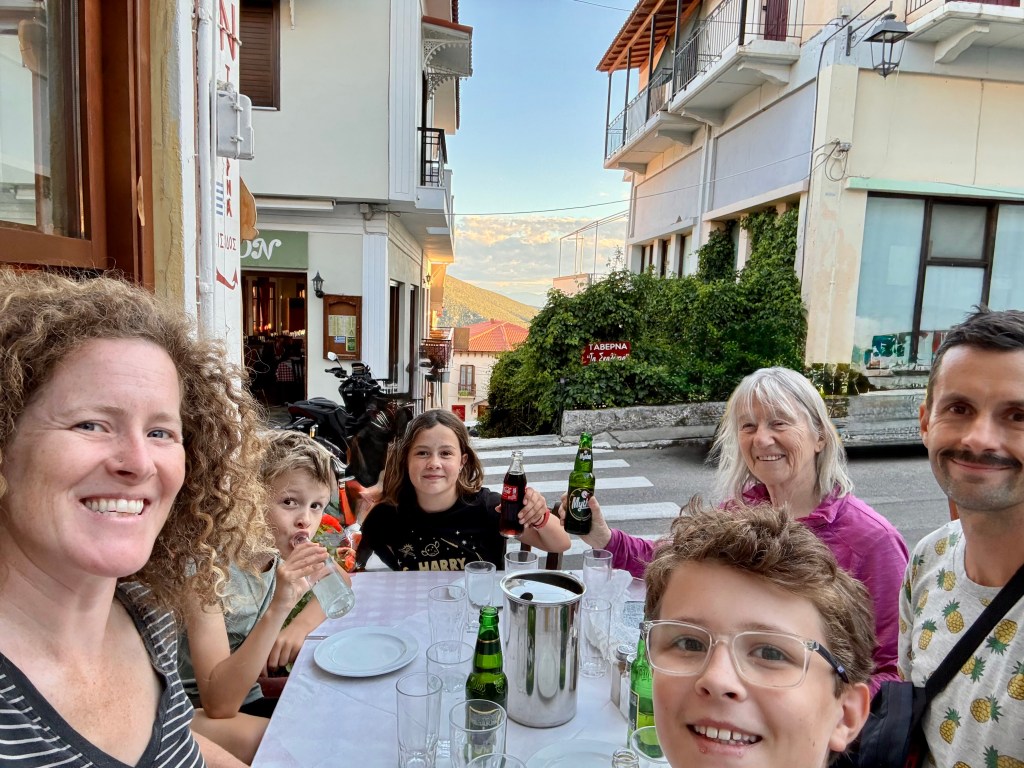
    Notre souper à Delphi

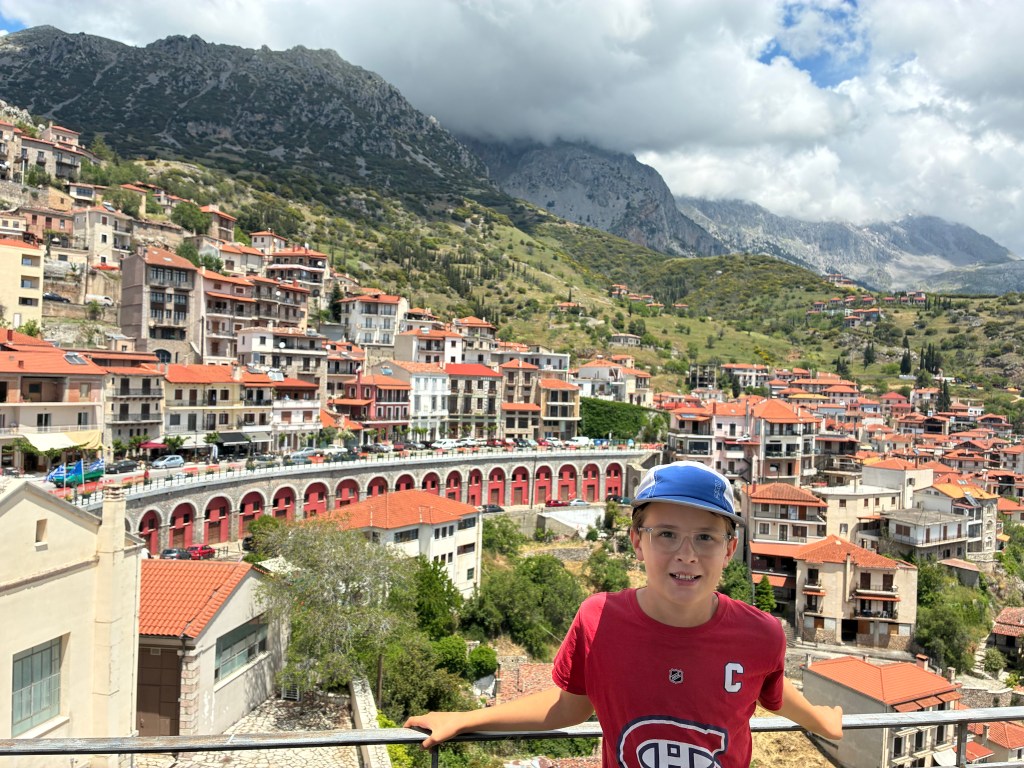
    Le lendemain on a pris l’autobus pour Arahova la ville à côté à environ 11km. La ville était semblable à Delphi mais toutes les maisons étaient pareilles. La ville était très petite donc on l’a traversée en prenant des détours comme monter des marches pour aller voir une église qui, finalement,était fermée. On a aussi monté en haut d’une tour d’horloge de où la vue était spectaculaire.

    Pour revenir, on a marché jusqu’à Delphi dans des petites routes. On a dû grimper par-dessus des clôtures mais on a dû revenir sur nos pas quand la route qu’on suivait s’est arrêtée. Après ça,on a juste suivit la grande route pour revenir.

    Arahova
  • Rhodes

    The next stop on our Greek Odyssey was the island of Rhodes. Claire and I both wanted to make it there on this trip, but I honestly didn’t know that much about it beyond the fact that there was some sort of medieval history to the place, maybe a castle or something? That, and I liked the sound of the name. But that was enough, so we left Kos on a high-speed ferry that took us along the beautiful Turkish coast and made our way to the island to spend four knights nights there.

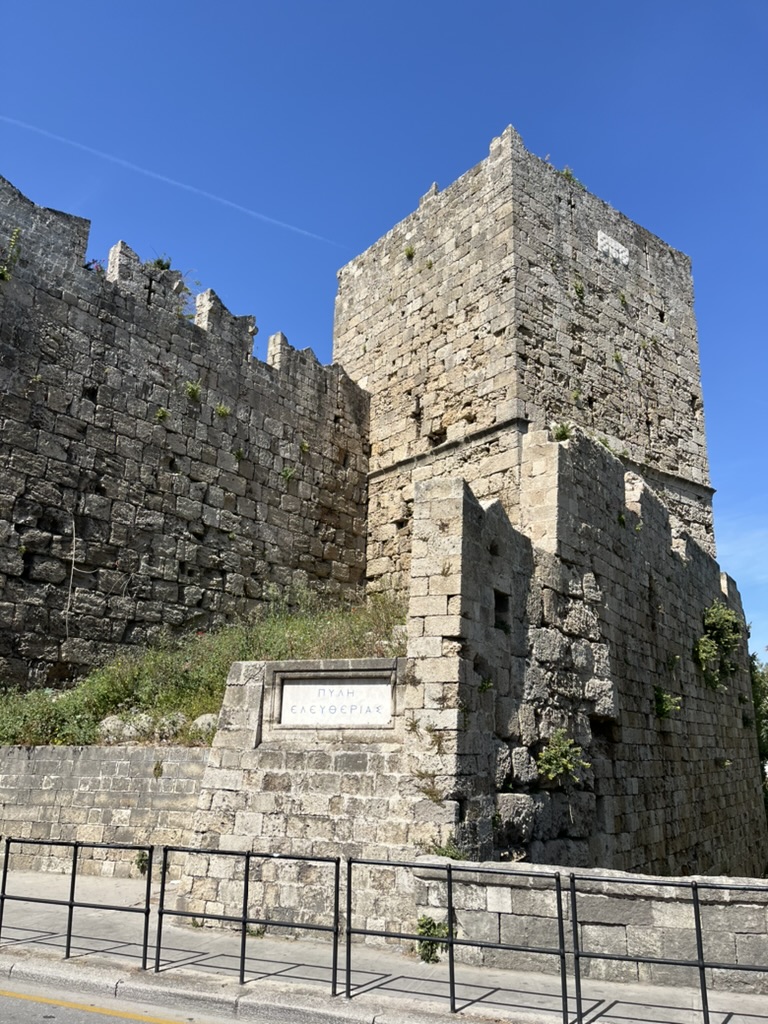
    As with much of this part of the world, there is a lot of history to discover. But the big draw of the island is the old walled city, fortified by the Knights Hospitaller in the early 1300s, defended by them until 1523 when the city was taken by the Ottomans, and then restored during the post-1912 Italian occupation and in modern times. And boy, was it impressive to walk through the gates, past the massive walls, and stroll the cobblestone roads of old Rhodes (where the knights once rode).

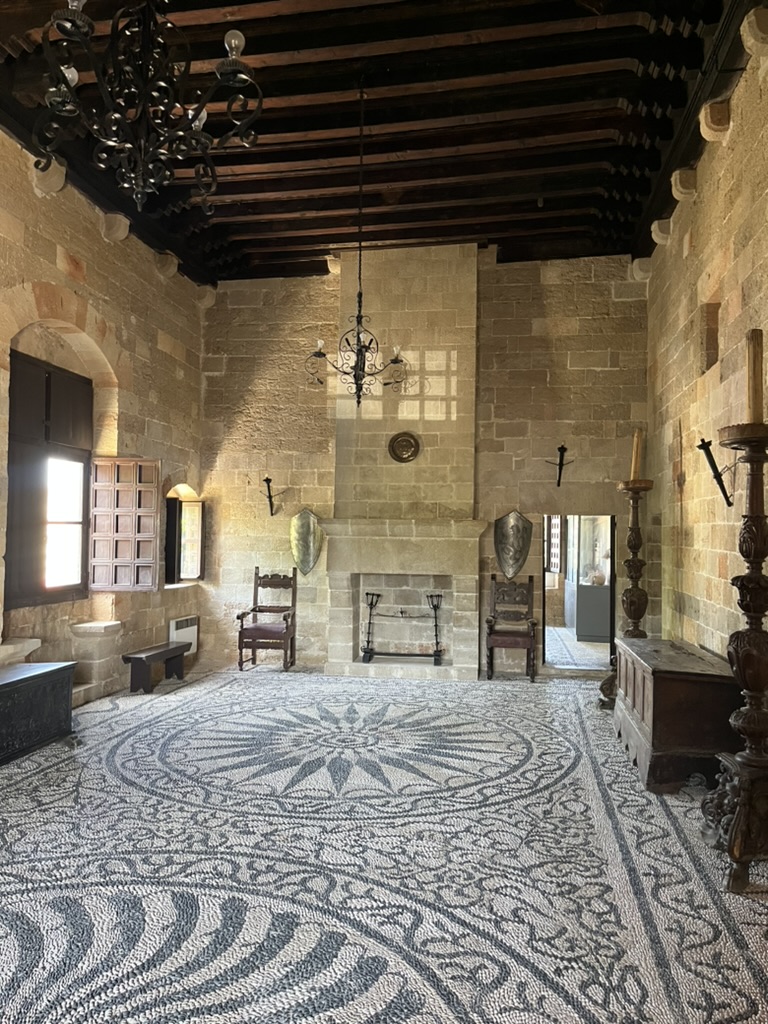
    We spent a couple of afternoons exploring the old city. Although it certainly attracts large crowds of tourists (especially when a cruise ship pulls into port!), the majority of these seem to be drawn to the souvenir shops and the terrasses in the squares, content to sit with their pints (or boots) of beer. After perusing the shops ourselves, but foregoing the pints, we found it surprisingly easy to find some quieter corners full of history, such as the Hospice of Saint Catherine, a small museum in which we found ourselves alone to explore (for free!). It’s looking pretty good these days, after having been damaged, and subsequently restored, in the 1480 siege, the 1481 earthquake, and the WWII bombing!

    The restored interior of the Hospice of Saint Catherine. As recently as the 1980s. there were squatters living here.

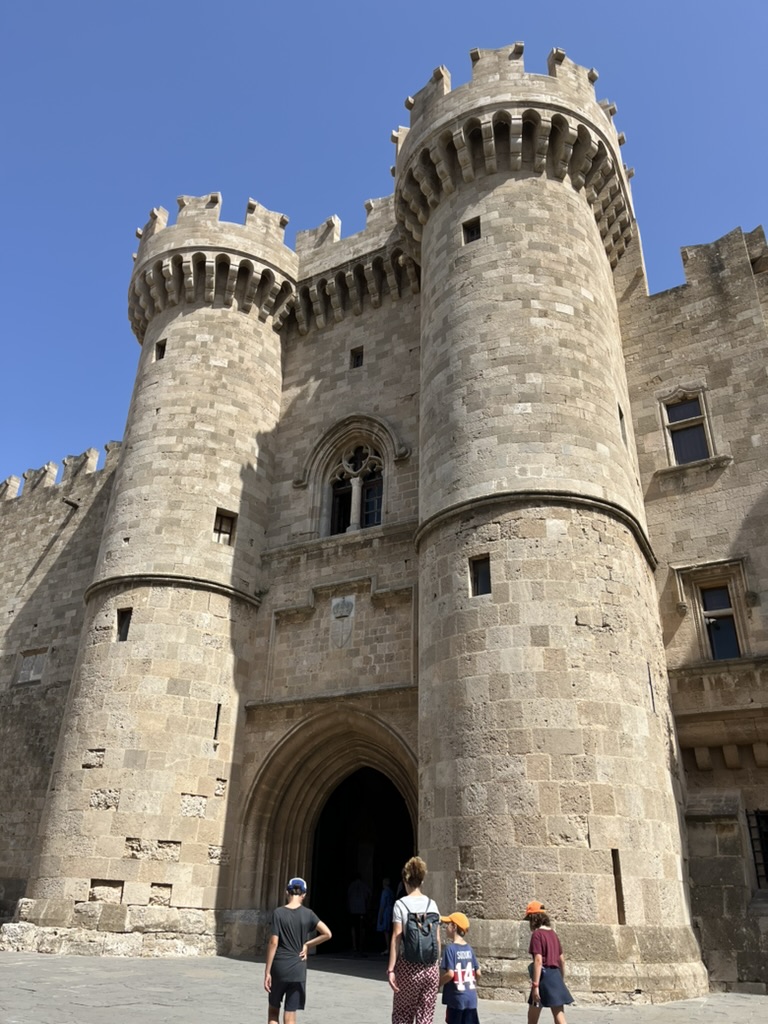
    We also splurged and paid the entrance to the big castle in the centre of the city, also known as the Temple of the Grand Master. Restored by the Italians in the 1930s, it was really impressive to see the rooms inside. Although I love history, I have to confess that I’ve never really been into the medieval period, at least not beyond what’s covered in Monty Python’s Holy Grail. So, it was quite fun to learn more about this with the kids, and to try to fit some of the pieces of the historical puzzle together with what we had already seen in places like Istanbul. (On that note, though we loved the historic sites in Turkey, the entrance fees were often rather exorbitant, especially given how much they’ve gone up in a few years and that we had to buy four tickets. The sites in Greece have been more reasonably-priced, and the kids have all been free.)

    Entering the Temple of the Grand Master.

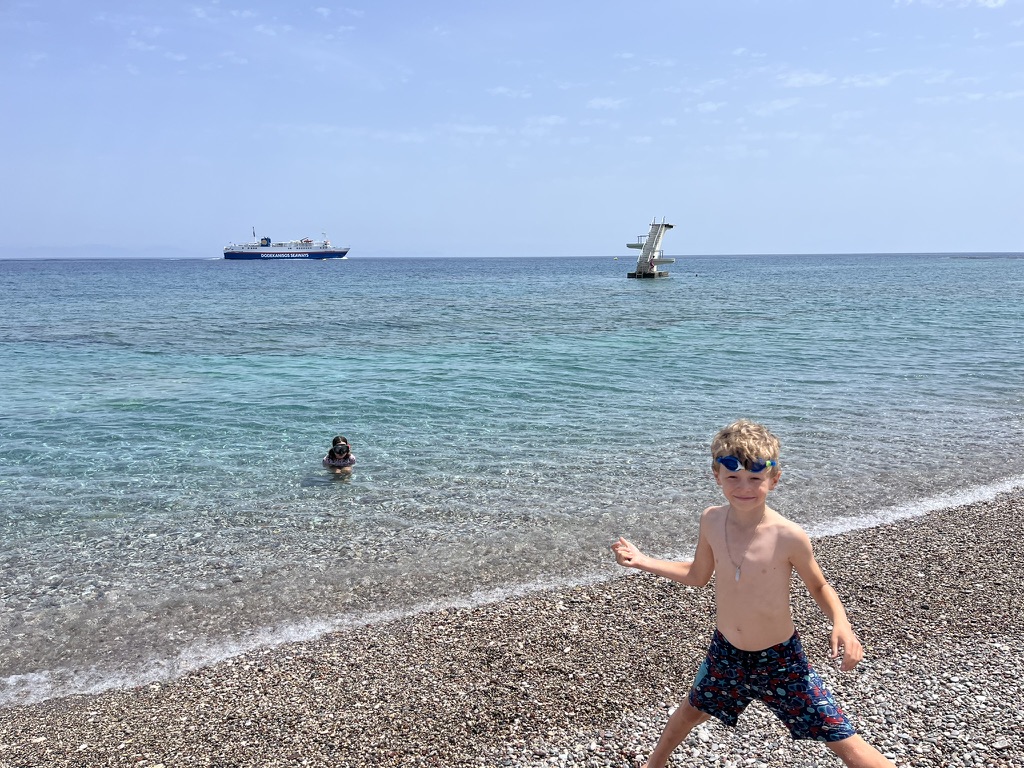
    I don’t want to give you the impression that we spent all of our time learning though, like some family of nerds. We also hit up the beach, which was a short walk from our apartment in the new town, and worked on our tan. We finally had some hot days, and though the water was still quite cool, it was also spectacularly clear. As a bonus, there was a permanent diving platform a short swim out from the beach.

    Elli beach, with clear water and diving platform.

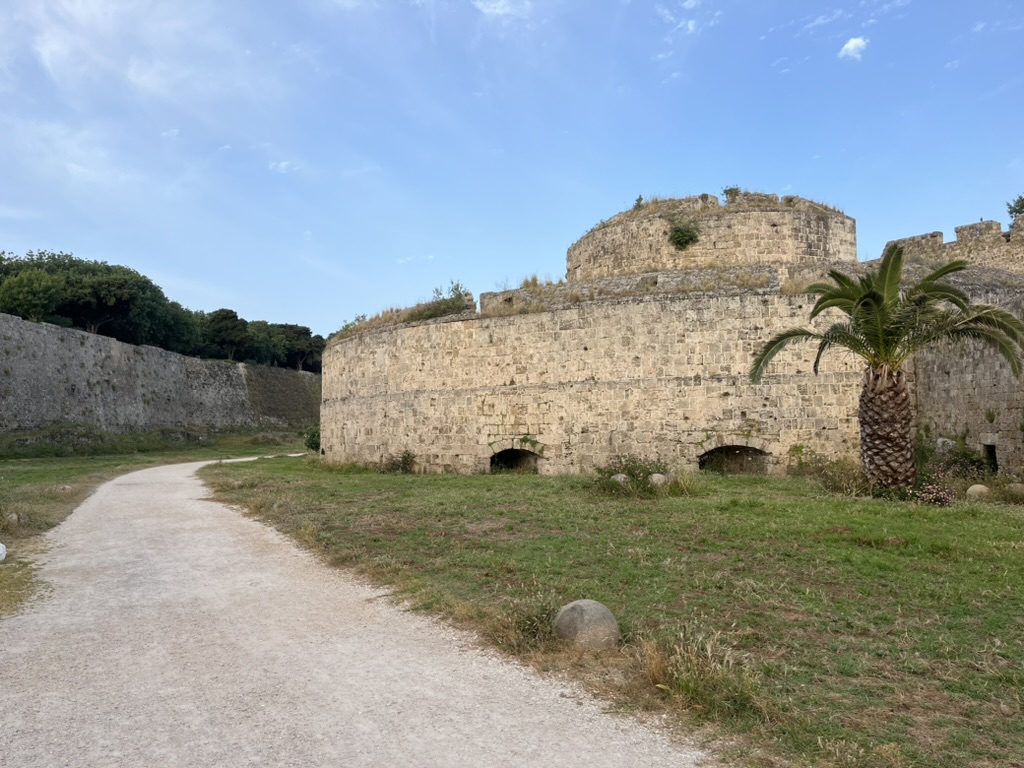
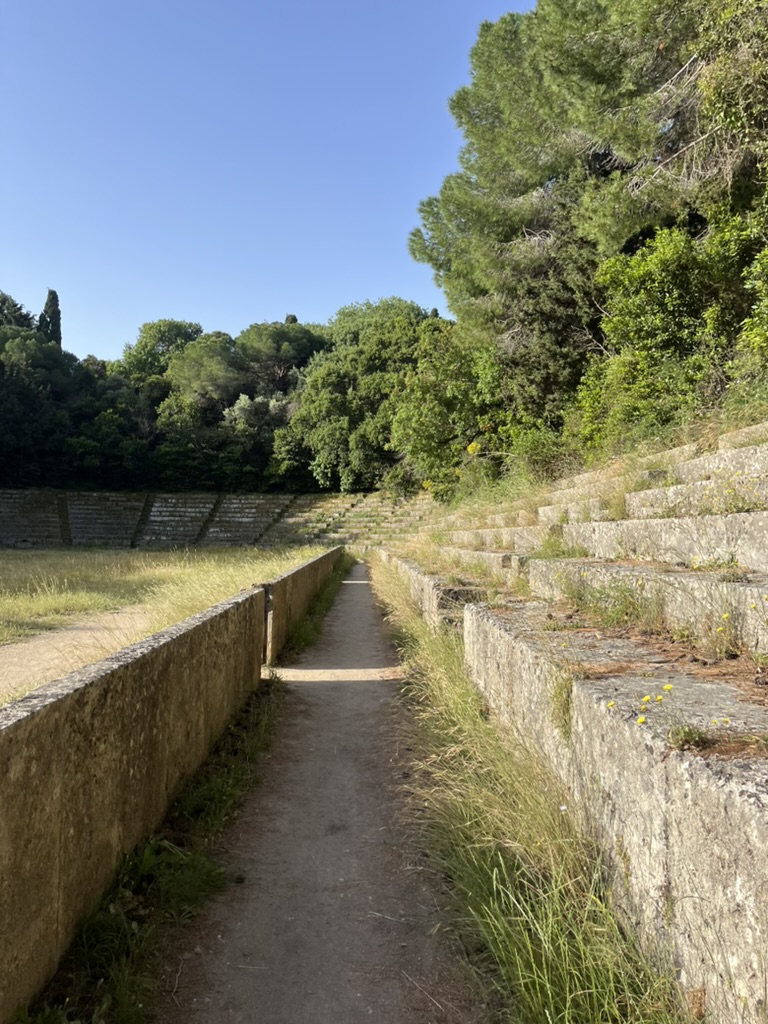
    I also managed to get out for some beautiful runs, along the coast, through the moat of the old city, and even up to the ancient Acropolis where I had the pleasure of running alone around a stadium that was built over 2200 years ago.

    It’s pretty quiet at 7am along the moat.
    There weren’t as many spectators as in 200 BC.
  • What the Ephesus!

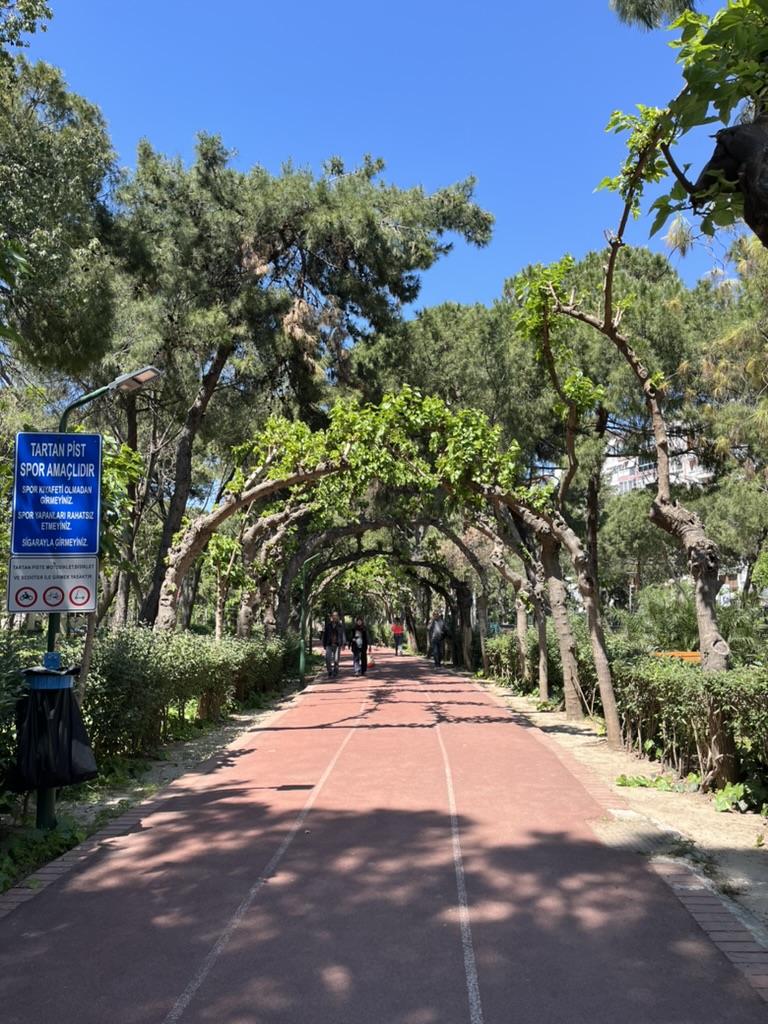
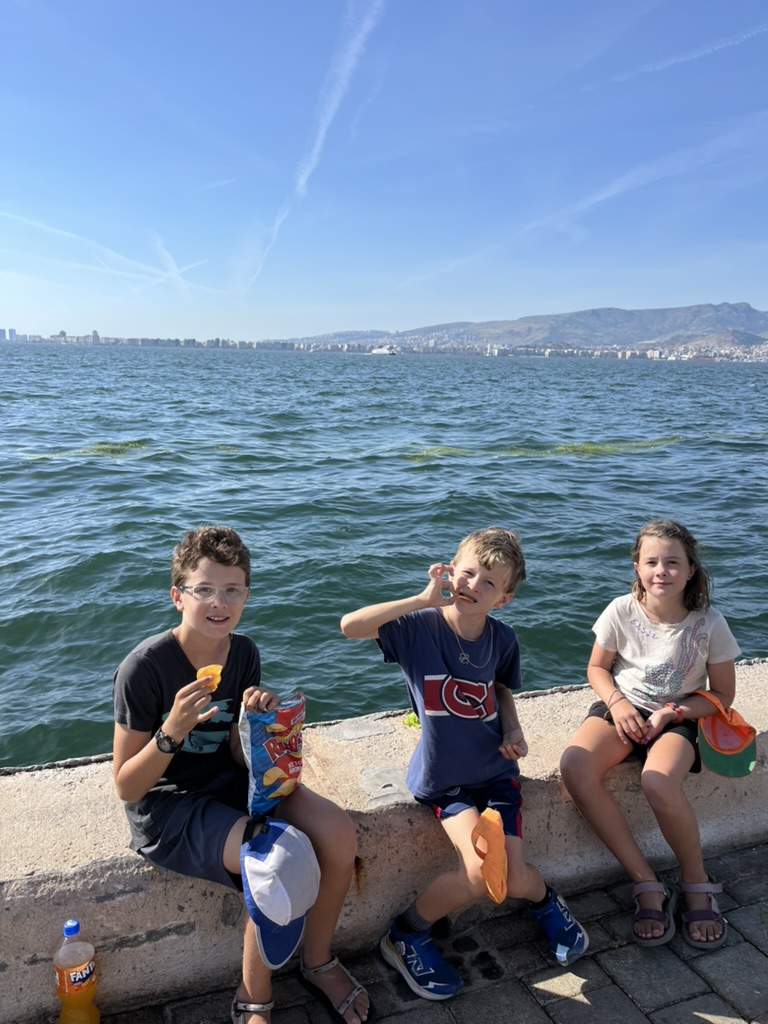
    In between the ruins of Pergamon and those of Ephesus, we had a stopover of a couple of nights in non-ruined Izmir, one of Turkey’s biggest cities (known as Smyrna back in its Greek days). We arrived on a beautiful, sunny, and hot afternoon. It’s been cooler weather in Türkiye, so we took advantage and spent the afternoon in the expansive green space of the Kültürpark (where I was thrilled to find a well-maintained 2km running track) and then by the seaside, where we could feel the warm Mediterranean air, and practically taste our upcoming adventures in Greece (in addition to the taste of the ketchup chips we were eating).

    Izmir’s Kültürpark. Some inspiration for Parc Lafontaine?
    All of the most advanced societies enjoy Ketchup (Ketçap) chips.

    Our stay in Izmir wasn’t very long, so I can’t say we explored much of the city. Since our second day was a cool 10 degrees and rainy, the kids got some homework done in the morning, we then explored a nearby older neighbourhood of bazaars and coffee shops, and spent more time in the park. I, of course, went running in a singlet and shorts, passing locals sporting winter coats.

    Our next stop was Selçuk, base-camp for exploring the famous ruins of nearby Ephesus. Ephesus was a very important Greek, and then Roman city, and also the spot where John and Mary went after Jesus’s crucifixion. To avoid touring the site in the 10 degree rain that was forecast, we opted to head there directly upon arriving in town. This turned out to be a great decision (if I may pat my own back here); the weather was perfect, and an afternoon was the right amount of time to dedicate to the site.

    From town, we had a reasonably pleasant 3 km walk to the site. By the time we passed the long lineup of cars waiting to get in, and reached the parking lot packed with tour buses and cars, we could tell that this wasn’t going to be the same quiet experience we had touring the Acropolis in Pergamon! After paying the hefty entry fee, and collecting our audio guide (well worth it), we headed into the site.

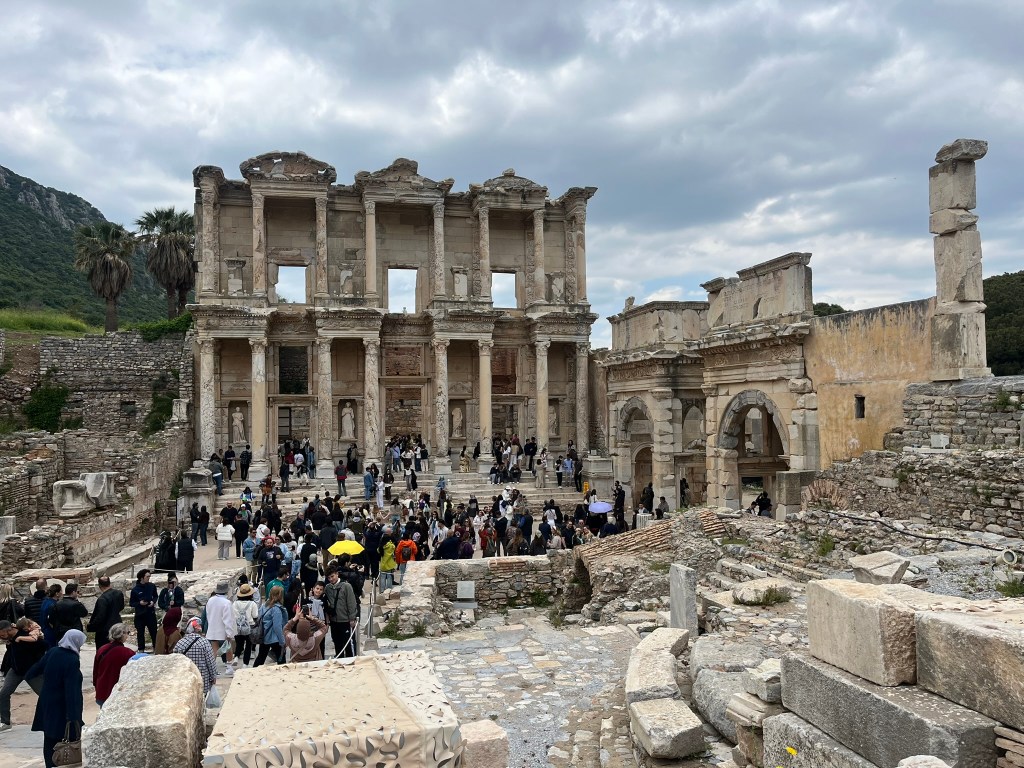
    Despite being in the shoulder season, the site was packed with tour groups, history buffs, and those just seeking to do a photoshoot! But despite the crowds, and the fact that only a fraction of the ancient city has been uncovered, Ephesus is just such an impressive site, filled with so much history that it will certainly be a highlight of our trip.

    The library and the crowds.
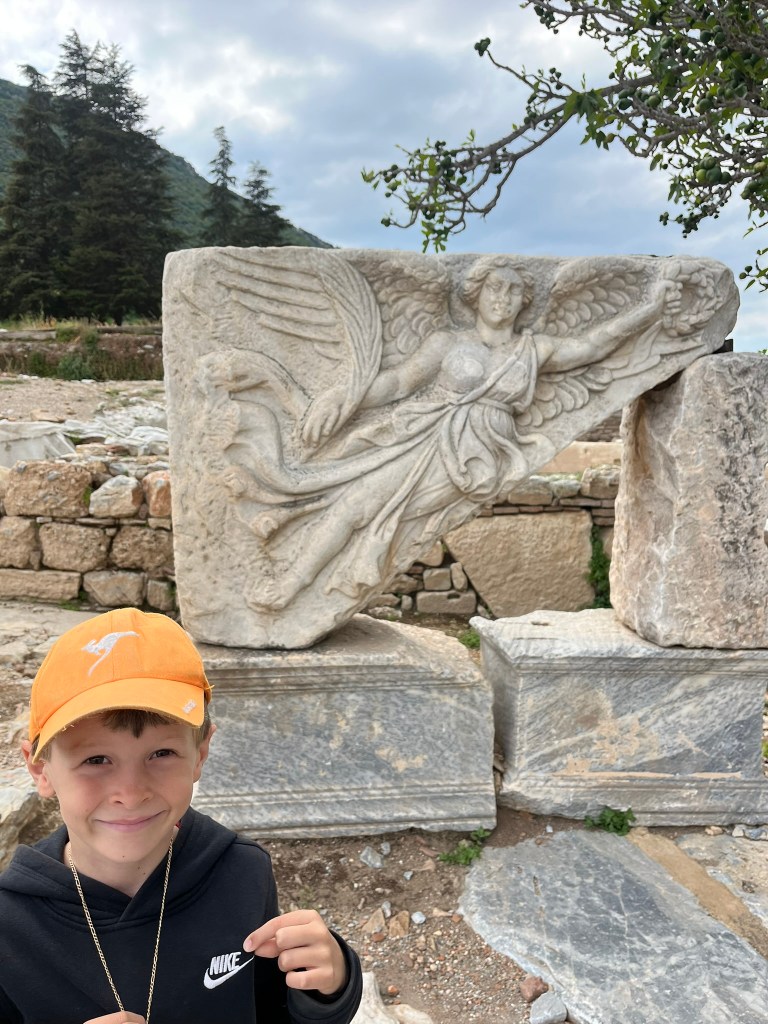
    Victory!
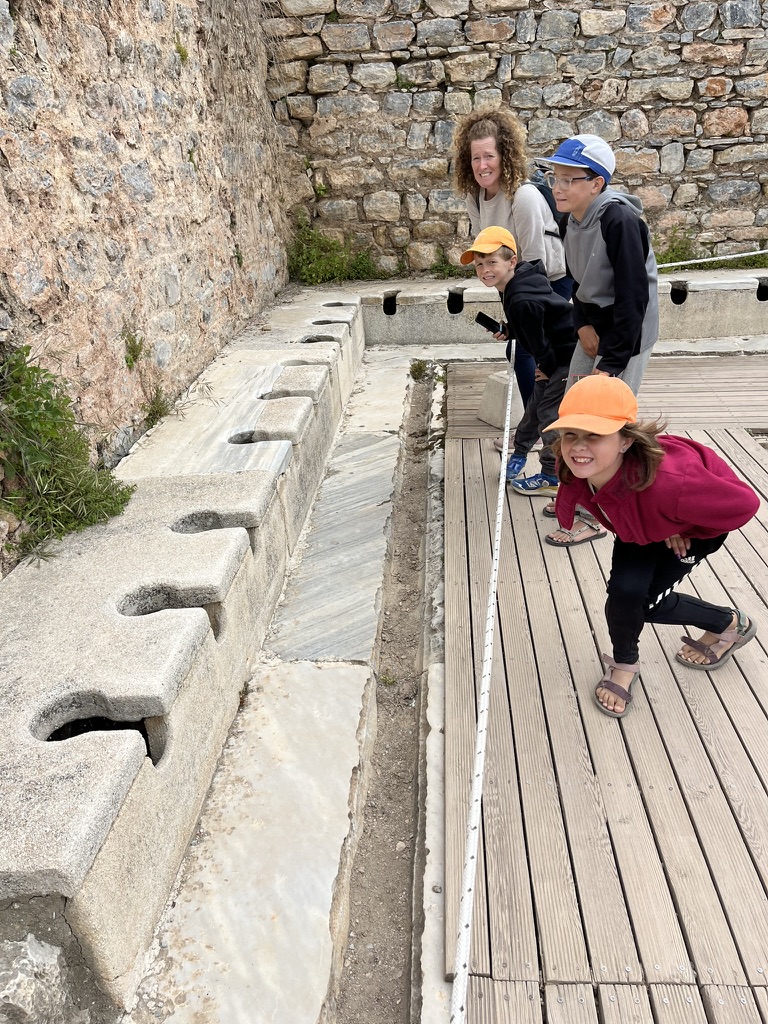
    We can’t resist a little potty humour.

    With visiting all of these historic sites, and with the help of audio guides and Wikipedia, it’s really fun to be giving our kids a broad sense of history. We are having some great conversations about history, empires, and religion. Henri has been reading Percy Jackson, and I’ve been reading Stephen Fry, so we are starting to get decent at our Greek Mythology!

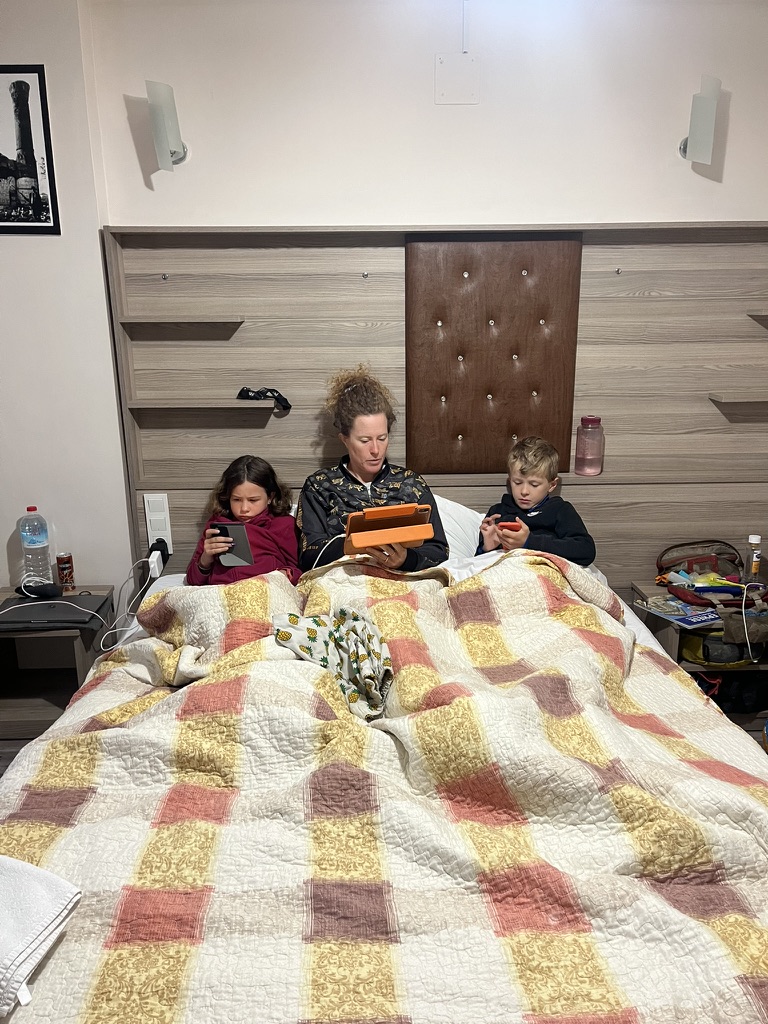
    On our second day in Selçuk it did indeed rain. It was cold. We read, played cards, and wrote blogs!

  • Bursa

    (Elsie)

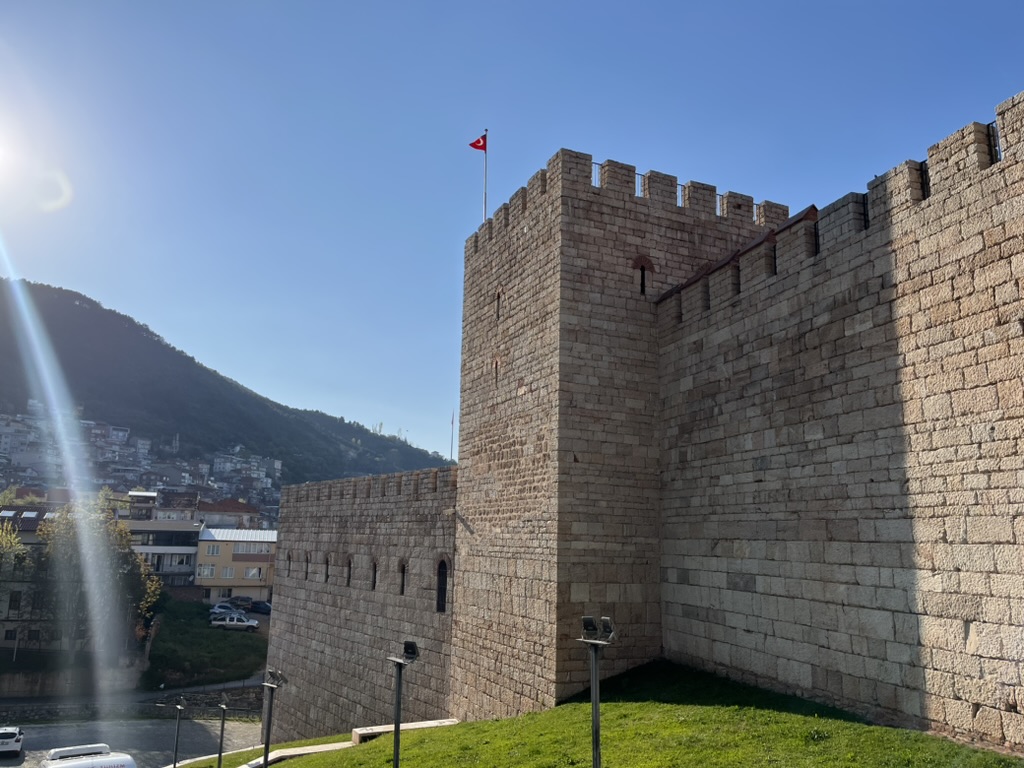
    À Bursa, on a fait beaucoup de choses. Par exemple, il y avait un très beau château. Il était identique à celui que moi je dessinerais si quelqu’un me demandait. C’était le château classique des années médiévales.

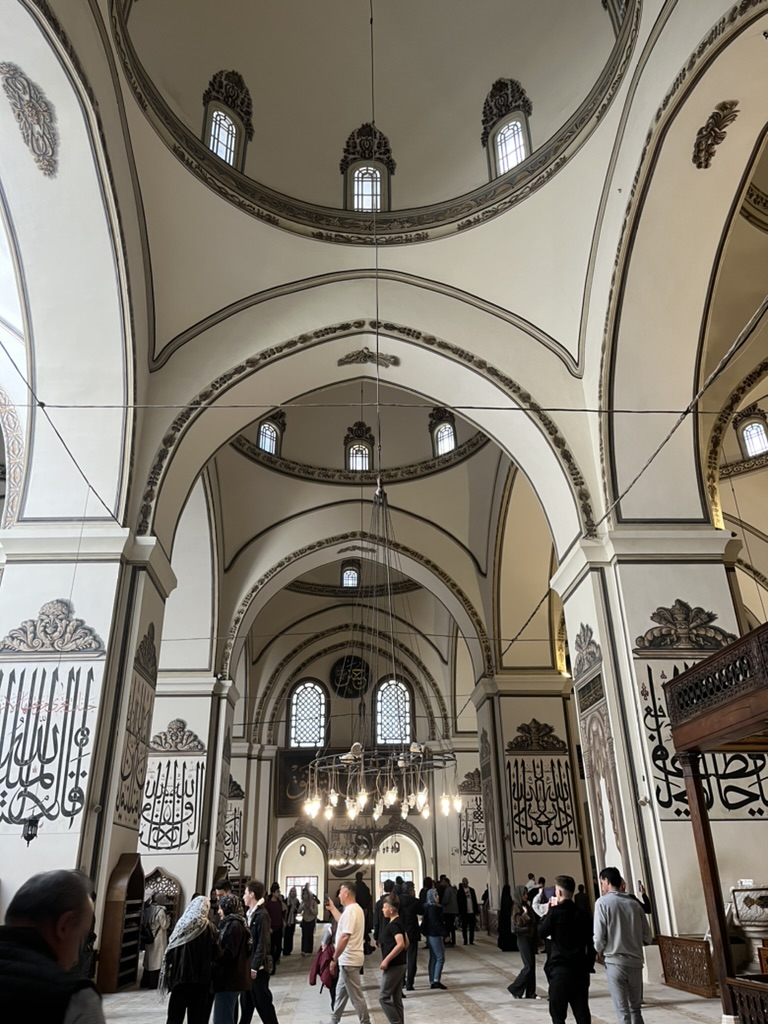
    Dans chaque quartier en Turquie, il y a une mosquée. La mosquée de notre quartier était très belle. Elle contenait une magnifique fontaine et plein d’enfants qui couraient partout.

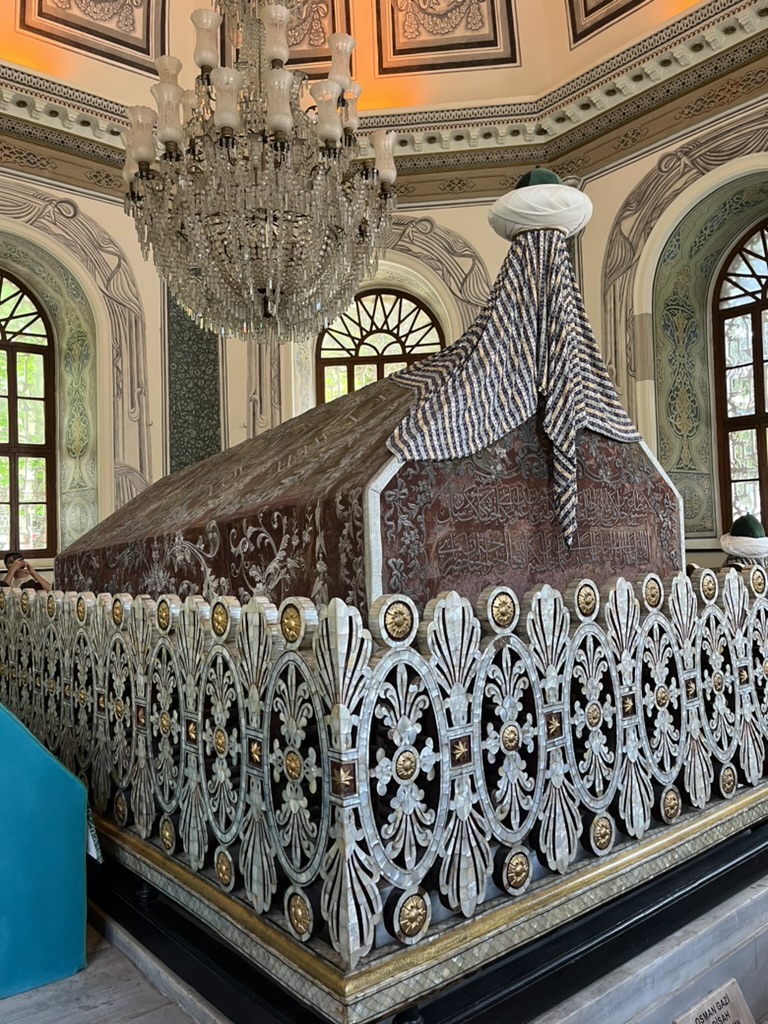
    Un jour, on a monté une côte, puis en haut il avait la tombe d’Osman Gazi et sa famille. C’était Osman qui a commencé l’Empire ottoman, puis “ottoman” vient de son nom.

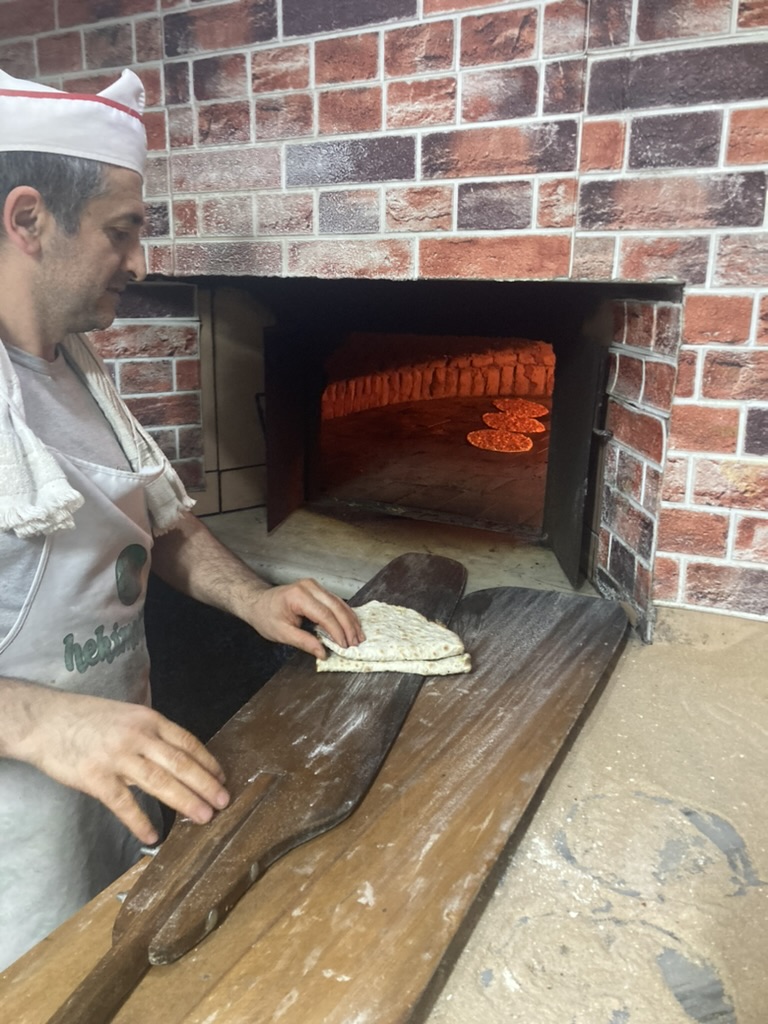
    À notre premier soir, on regardait où manger, puis il y avait une place de pide (la pizza turque) à 4,9 étoiles sur Google. Tellement c’était bon, on a mangé là 2 soirs sur 3. Le cuisiner faisait la pâte devant nous, puis il la mettait dans un four en briques spectaculaire! Après, il mettait de l’huile et les garnitures qu’on avait commandées.

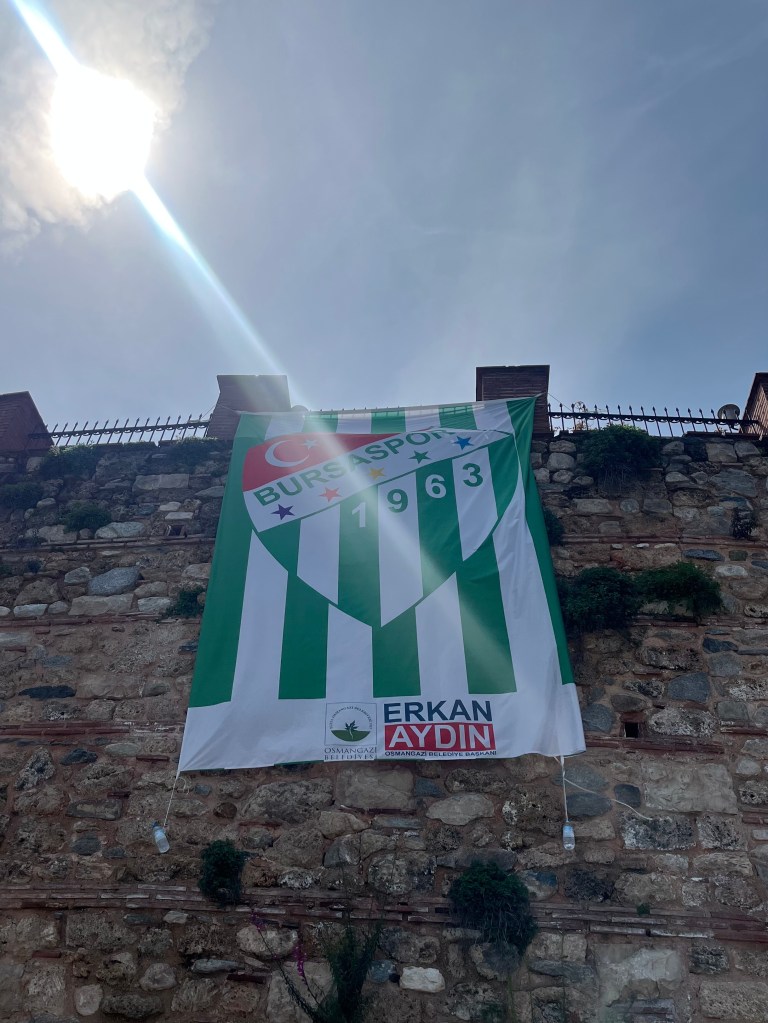
    Bursa a une équipe de soccer qui s’appelle Bursaspor. Il y avait des drapeaux de cette équipe partout. Malheureusement on n’a pas pu aller à un match parce qu’ils jouaient dans une autre ville. Un soir, on marchait, puis il y avait même une parade pour célébrer la victoire de Bursaspor.