Tag: hiking

  • Banaue and the Hapao Rice Terraces

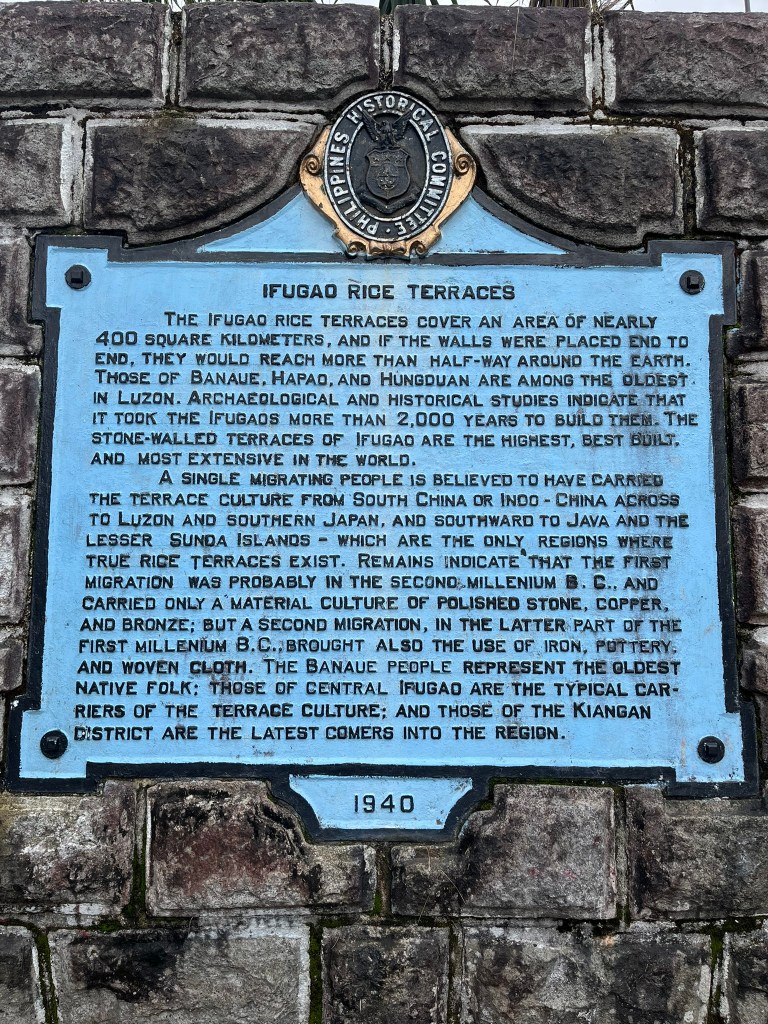
    One of the main reasons we ventured to the north of Luzon was Claire’s desire to see the rice terraces that have been carved into the mountain-side there over the past 2000 years. So, after Sagada we headed to the city of Banaue, which, for tourists like us, serves as a jumping-off point for seeing the surrounding terraces. But how to get there? Well, the easy option would have been to take a coach bus. But Elsie really wanted to ride in a jeepney. We saw tons of these colourful, converted jeeps transporting people around Manila, but were a little too-intimated to try to take one. So we crammed like sardines with a bunch of filipinos into the back of a jeepney in Sagada, headed for Bontoc. Much like a can of sardines, the jeepney had minimal suspension, and the ride along the twisty roads was a little rough on everyone’s stomach. I also hit my head on the roof a few times, to everyone’s amusement. But we made it. From Bontoc, we caught a very comfortable minibus to Banaue, and along the way were wowed by the views as the road twisted and turned. As we approached the city, we caught more and more views of rice terraces.
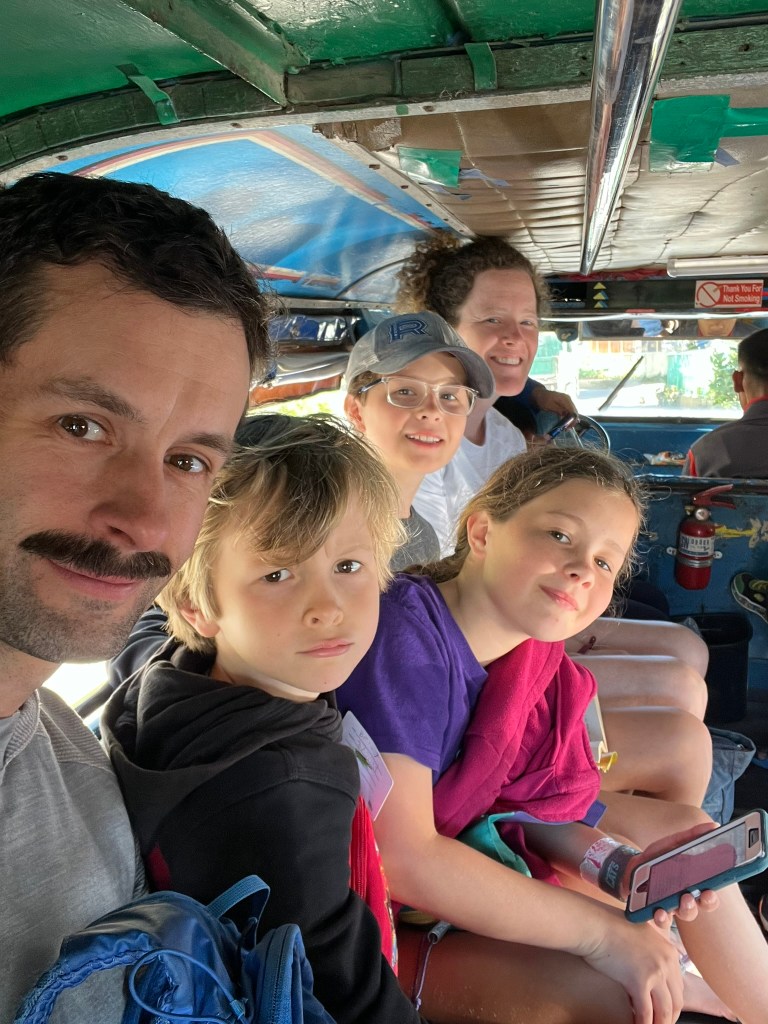
    The family crammed into a jeepney.

    From Banaue, there were a number of possibilites for an excursion to the nearby rice terraces. We opted for just doing one, because we are on a budget and also because have been exhausting the kids! So we headed out on a private jeepney to the Hapao rice terraces, where we met up with a local guide (mandatory) who took us on a trek through the terraces that surround the village, with a well-deserved stop at the local hot-springs.
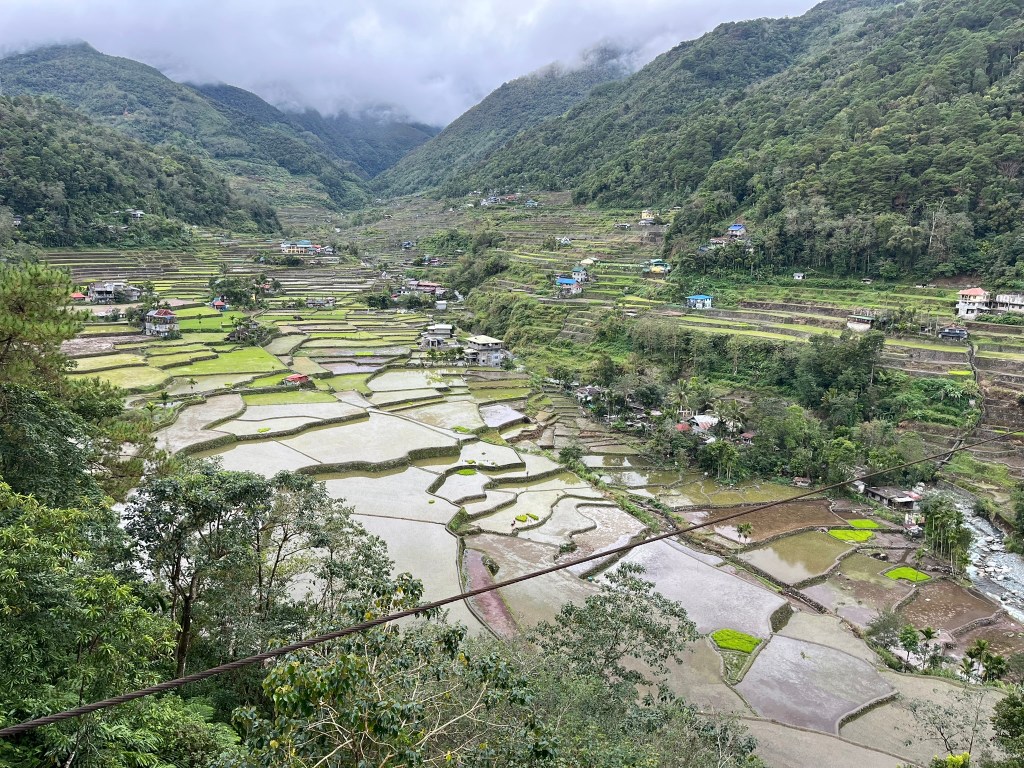
    The Hapao rice terraces, view from above.

    The walk was beautiful, and it was impressive to imagine how much work went into altering the landscape to suit agriculture (and to see the effort it took to work the fields). What made this tour even more amazing was our charming guide Joseph, who told us stories about his ancestors (a house adorned with the skulls from tribal warfare!), local customs, and growing up in the village, and answered all of our questions about how to actually grow rice. It was really fantastic!
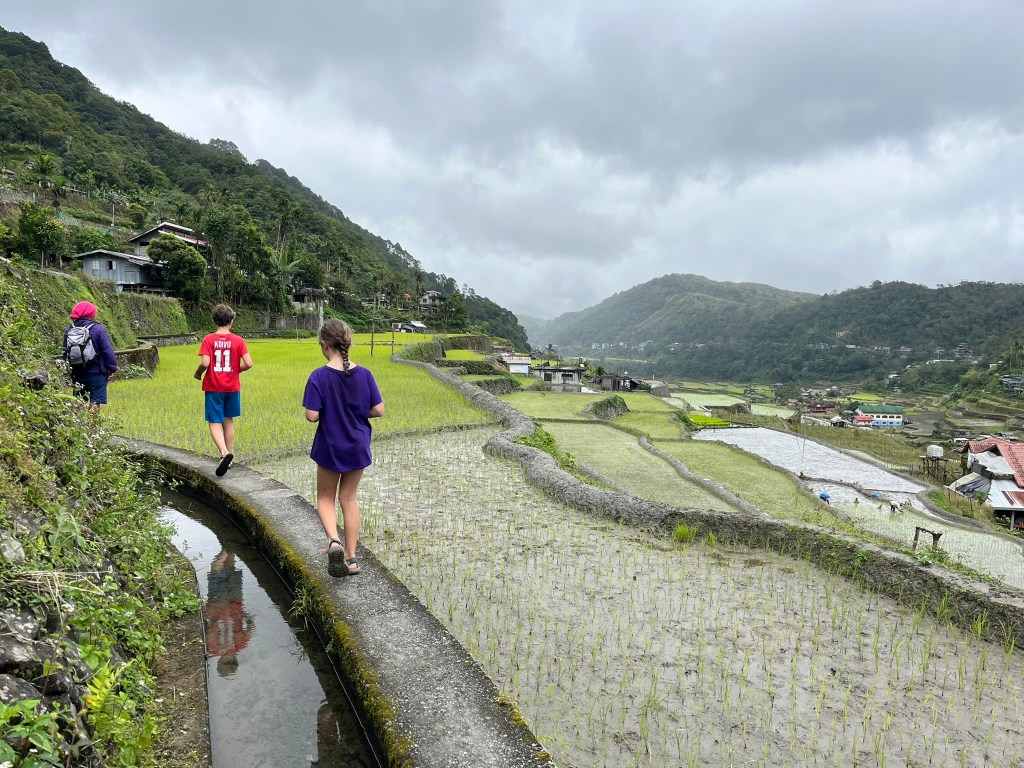
    The Hapao rice terraces.
  • Sagada

    Claire nicely summarized our harrowing escape from Manila in her blog post, and Henri found a way to nicely summarize our subsequent 11 hour bus ride to Sagada by, upon exiting the bus, leaning over to throw up on the side of the road!

    But from that point on, everything picked up!

    Claire had picked Sagada, tucked away in the Cordillera mountains, as a destination, but I admit that I hadn’t really looked into it at all. We will be doing lots beaches, so I just liked the idea of something a little different. After spending a few days here though, I think it will end up on the highlight reel of our trip.

    One of the things I liked most about the town is that it’s certainly set up for tourism, but didn’t feel overly “touristy” in that negative sense of the word. Upon arrival, we registered at the tourist centre, where we paid a fee that goes into keeping up the local infrastructure, and got a pamphlet outlining the main tours, treks, and such. It included the tourist agencies where we could find an accredited guide, and had all of the prices listed clearly. For someone who wasn’t all that prepared, it made things easy!


    We opted for one hike per day while we were here, and they were all fantastic! The kids will go into a bit more detail about each of these in upcoming posts: Day 1 was a hike near town past some the hanging coffins, local coffee plantations, and along a river that passes through a cave; Day 2 was an exploration deep (but not too deep!) into Sumaging Cave; and Day 3 was a trek with 850 m of descent past terraced rice fields to the ice-cold Bomod-Ok falls and then with 850 m of ascent back up. The kids did great on all of these, and had a blast. It may have helped that I promised ice cream at the end of each (I think they teach this in Advanced Parenting).

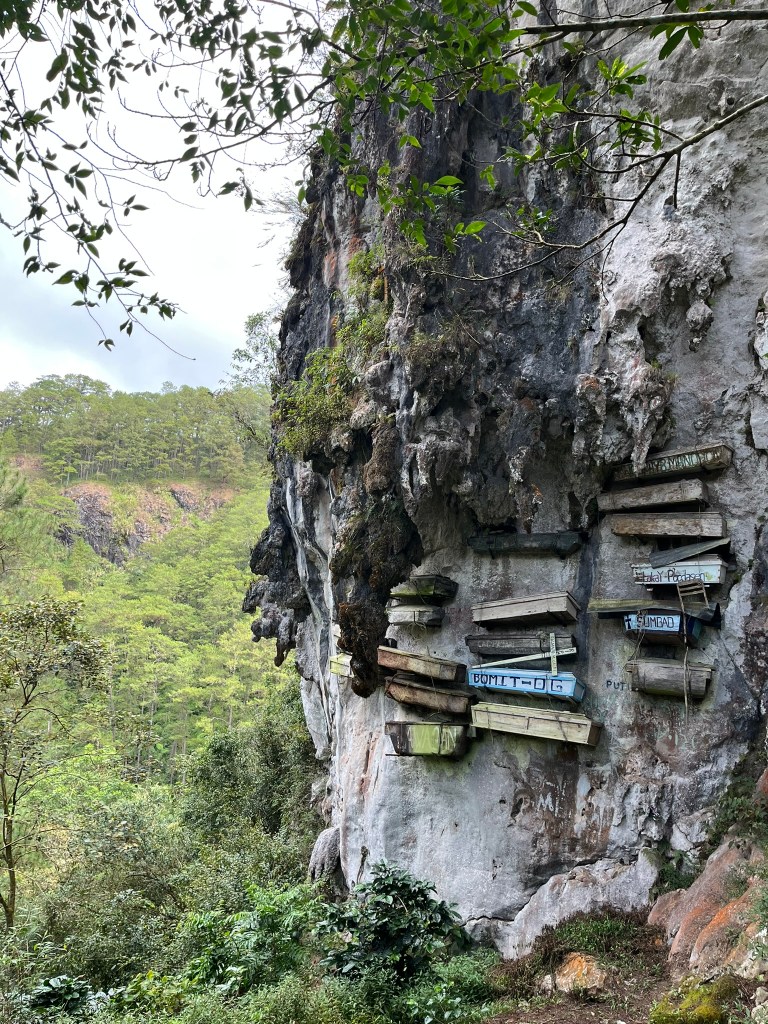
    There are hanging coffins found all over the region. If you live long enough, you get the privilege of carving your own coffin and then being buried in such a spot. I like it.

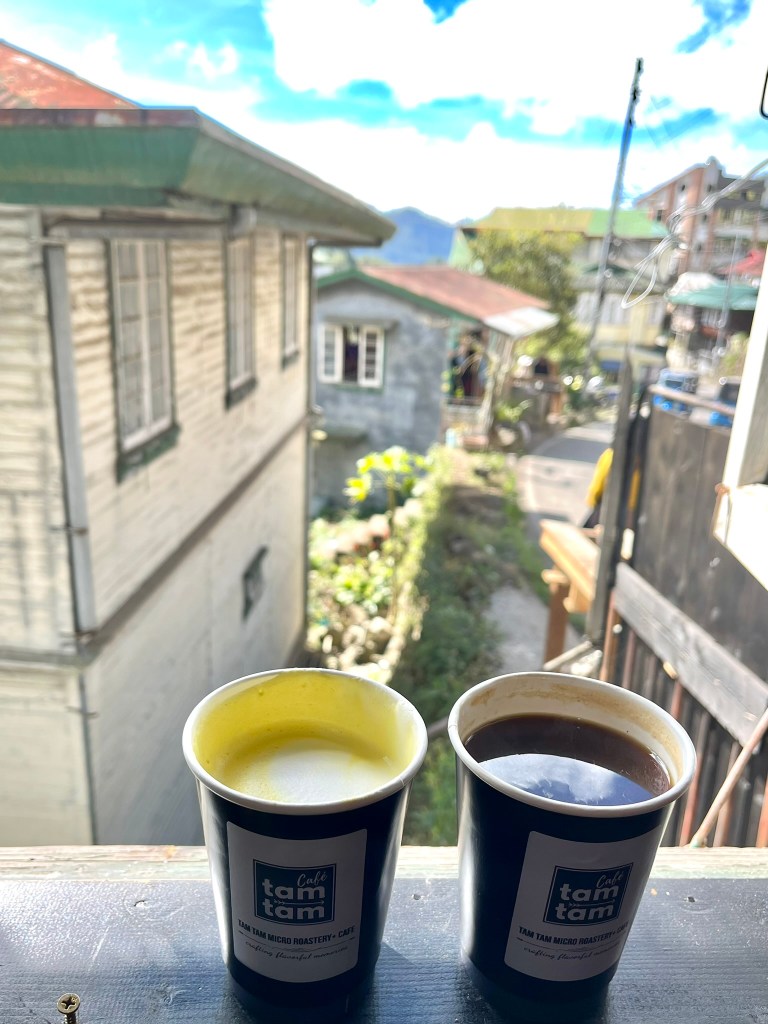
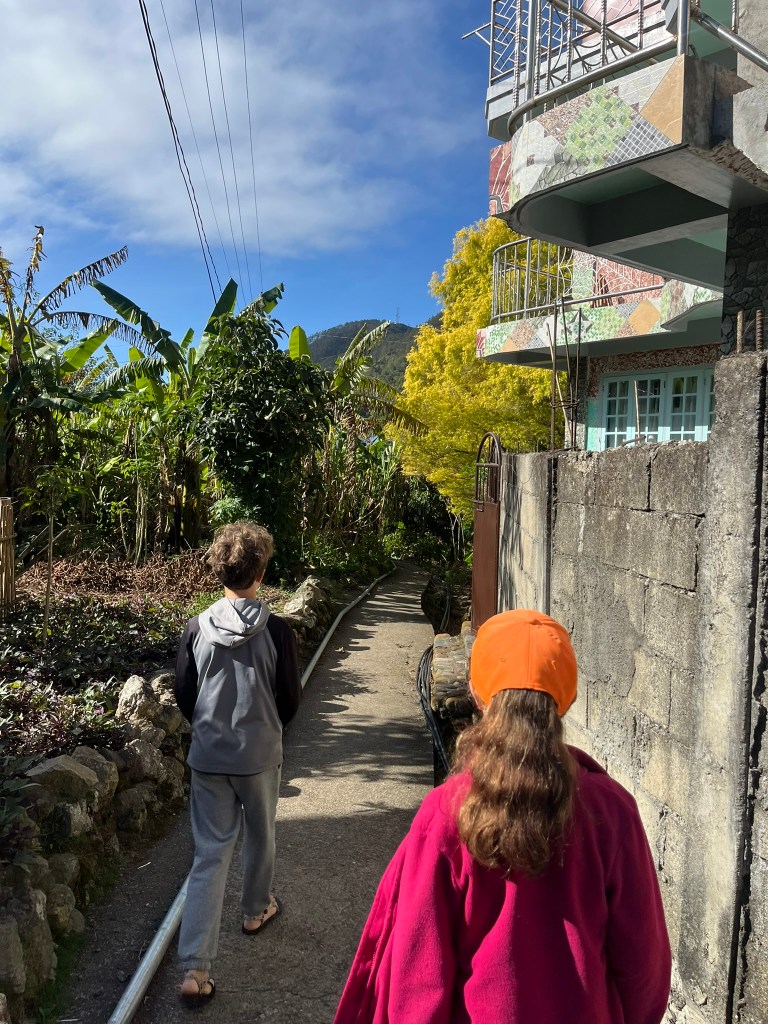
    At first, I felt a little dépaysé-d, but the town itself was also very cool. Being in the mountains, the geography made for an interesting layout and it was easy to find great views. We got used to perusing the shops and restos up and down the main road, which somehow takes two-way car traffic and pedestrians despite being only slightly larger than the sidewalks on our street back in Montreal. I even found a bit of a hipster cafe (Tam Tam) along the main road that served great coffee sourced from right in the hood. One afternoon, we felt adventurous and ventured off the main road, and wandered among some of the narrow walkways that snaked their way through whole neighbourhoods that are disconnected from the road.

    Very local coffee.
    Exploring the backroads.