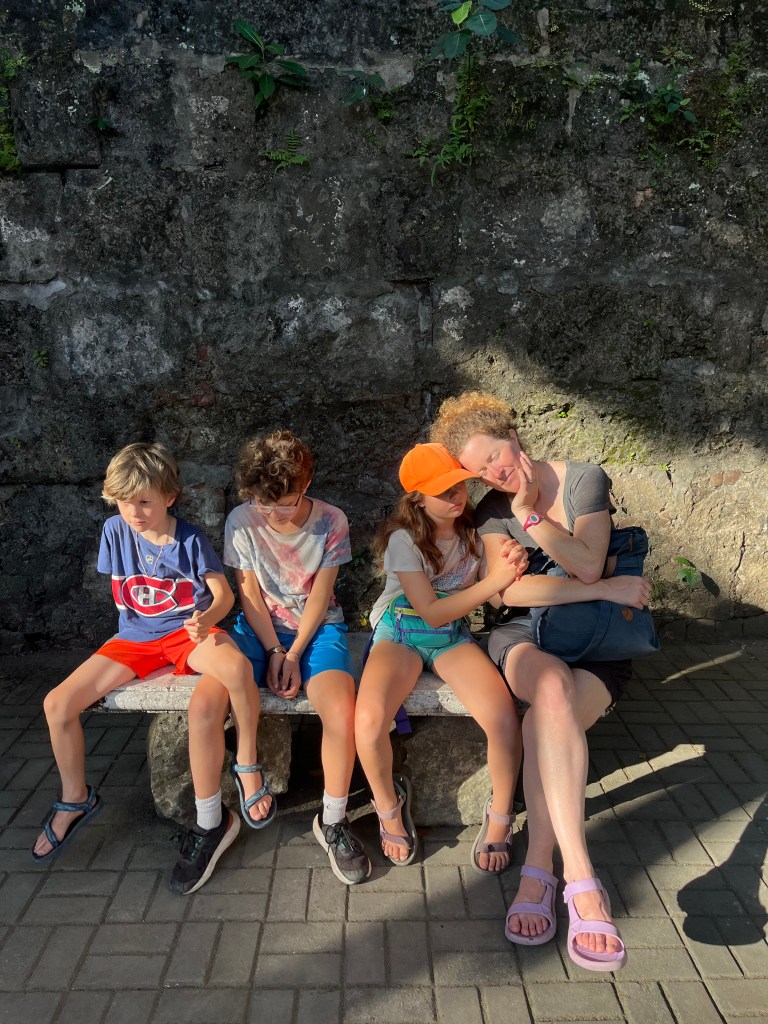
In Port Barton, our first activity was on our last day there. In Puerto Princesa, Ben was wearing a Habs T-shirt. A man saw the Canadiens T-shirt and it turns out he was from Quebec, so he came over to talk to our family. We told him that we were going to El Nido and Port Barton. Alain said that he had a chalet near Port Barton and that we could go there when he was there.
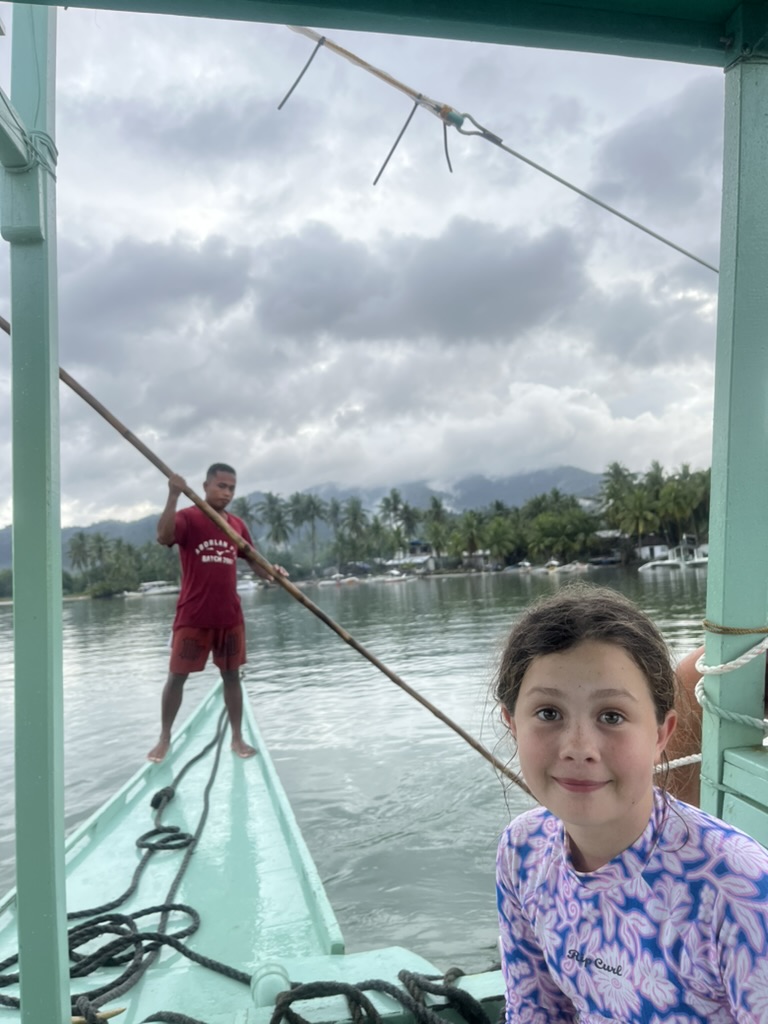
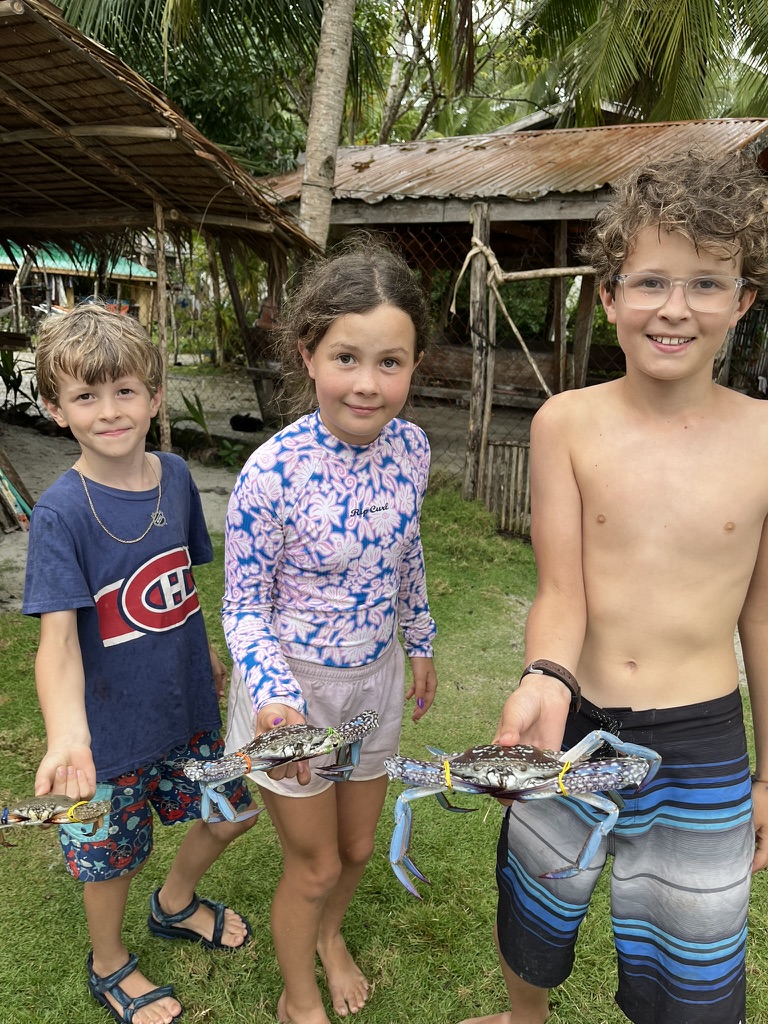
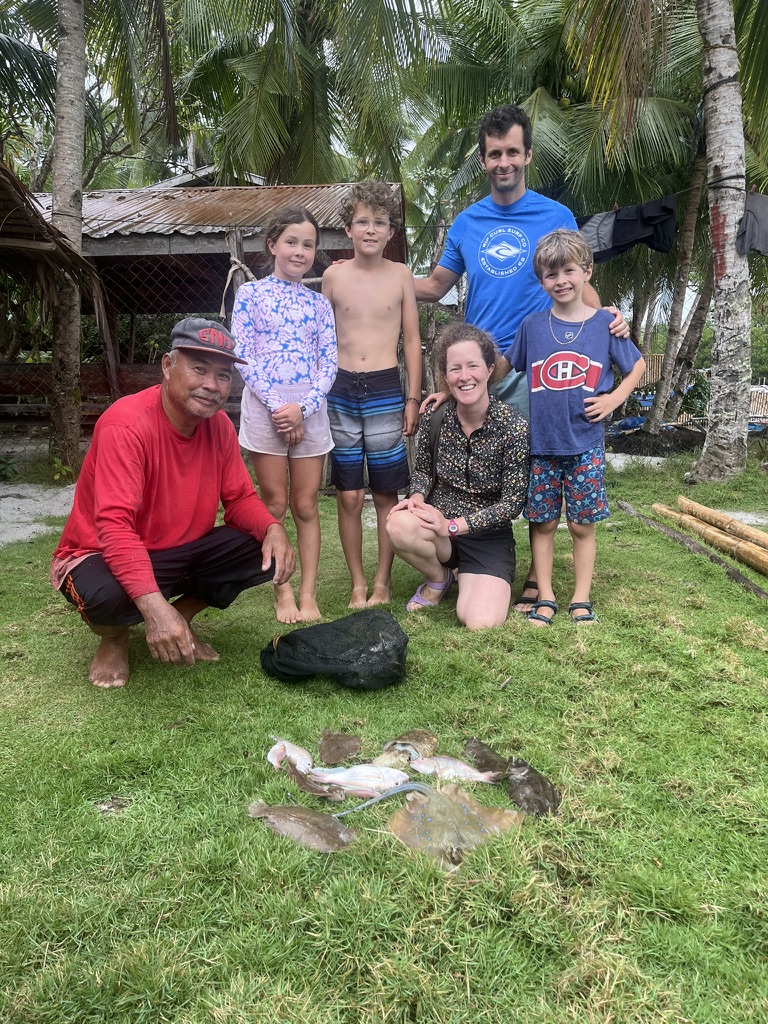
On our last day In Port Barton, we went to Alain’s chalet. That morning we left at 9:45. We went on the beach to look for a boat to bring us to the little village of Bunuangin. A man asked if we wanted to go to White Beach and we said no, but asked how many pisos it would be to go to Bunuangin. He said that his boss would tell us the price. He said 3000. But we found another boat for only 2000. When we arrived, we visited the village. After we went on the neighbour’s boat to go to the net to catch some fish and some crabs for lunch. We caught 6 crabs, 7 fish, one ray, and one squid (he had so much ink). We came back to the chalet to eat. We learned how to eat the crab and left the fish and ray for the neighbour.
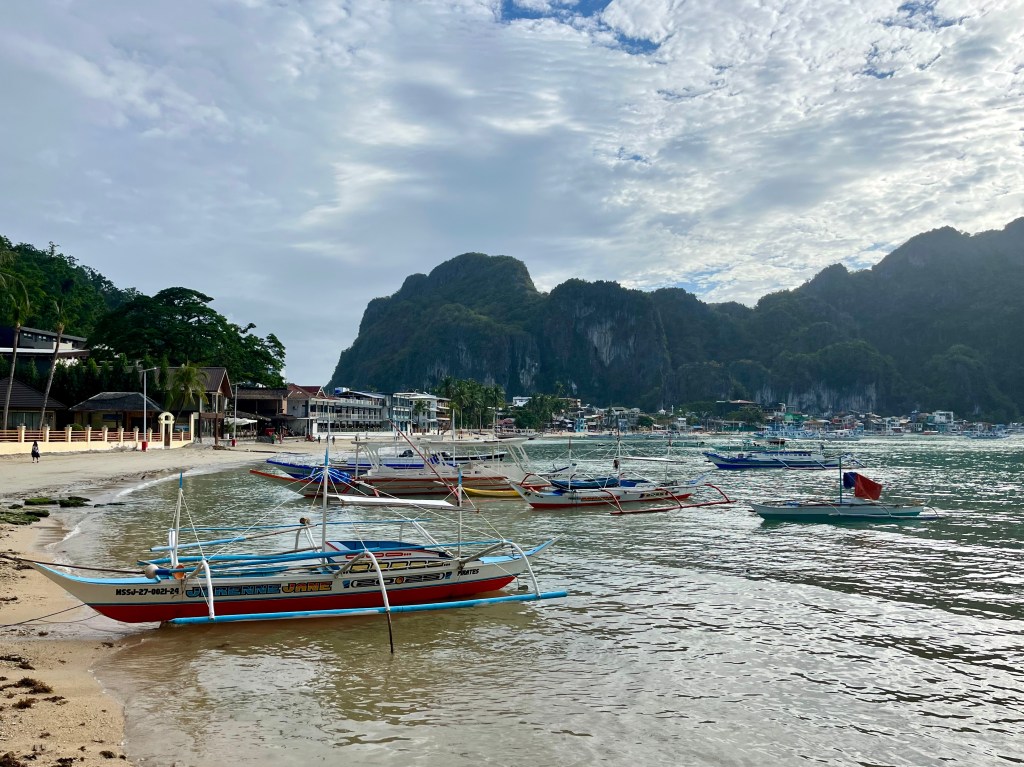
El Nido is the main tourist draw on the island of Palawan, and for good reason: the dramatic landscape is full of beautiful karst mountains and islands rising nearly vertically out of the sea. The town is also set up for tourists, so it’s easy to find an island-hopping tour that will take you to some spectacular spots for swimming and snorkeling. It’s definitely a touristy spot, where pasta restaurants abound, and not some hidden gem, but hey… we are tourists after all!
Beautifully dramatic El-Nido.
Traveling for eight months is sure to have its ups and downs; sometimes those ups and downs all occur within a few days. Henri just posted about the ups of our wonderful day of island-hopping, but let me also describe the downs that book-ended that day.
The day before island-hopping started wonderfully. We headed down to the beach (Corong Corong) to get a little physical activity: a relaxed soccer game on the sand that was the very portrait of family bliss. What better thing to do after the game than to wade into the water to cool off? Well, in hindsight, it would have been better to do practically anything else!
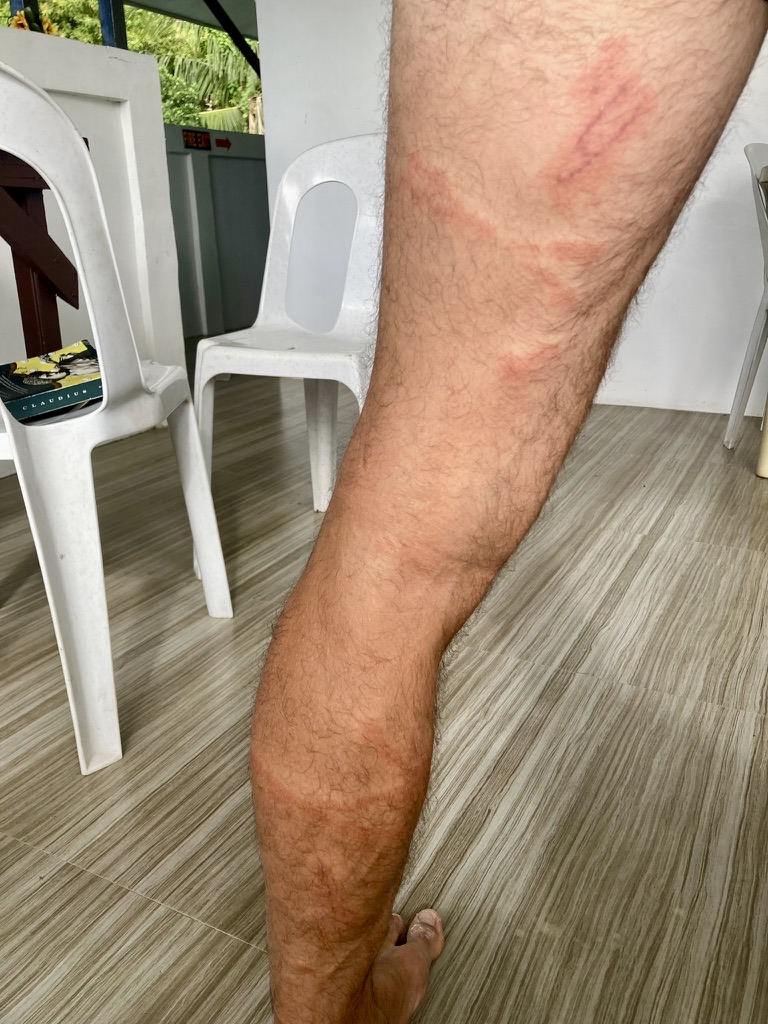
Claire and the kids headed out first into the water, and then I followed. Just as the water reached my thighs, I took a step and put my foot into what could best be described as an electrical outlet. By reflex, I pulled my leg out and my left leg went into the outlet next. I jumped back, cursed a few times, and yelled to the family that I got stung by a jellyfish and started back to shore. Now, I have a pretty decent pain tolerance (I once broke my tibia playing soccer, and then watched the second half of the game before going to the hospital), but this definitely… hurt. This wasn’t the kind of jellyfish you find at Parlee Beach.
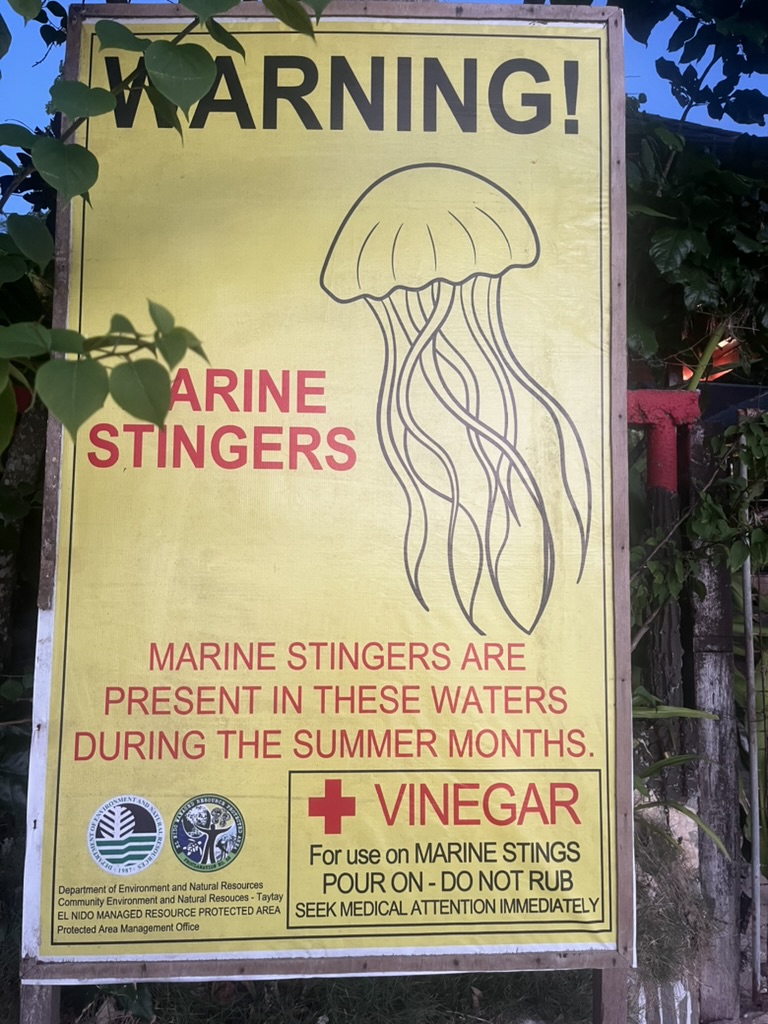
Claire managed to lead the kids back to safety, avoiding a few other stingers that she managed to spot in the water. Once on the beach, I wandered up to the nearest bar to ask them if they had any… vinegar. The nice folks at the bar had a bottle ready just for this, and sprayed my legs (to disactivate the stinging cells) and we removed the tentacles from my burning skin. When I noticed a few locals gathering around to see what was going on, and the barman talking about how it can be dangerous if you get stung near veins I suddenly thought: “wait, are these those tranparent box jellyfish… you know, the kind that sometimes kill people?”
It looks like the answer, after a bit of googling and AI, was “yes!” Fortunately, I was stung (rather than one of the kids) and I didn’t have any worrying symptoms (shortness of breath, heart palpitations, or … death). I just had to deal with my skin burning for the rest of the day, and some sensitivity afterwards.
My hopes of being a leg-model are dashed.
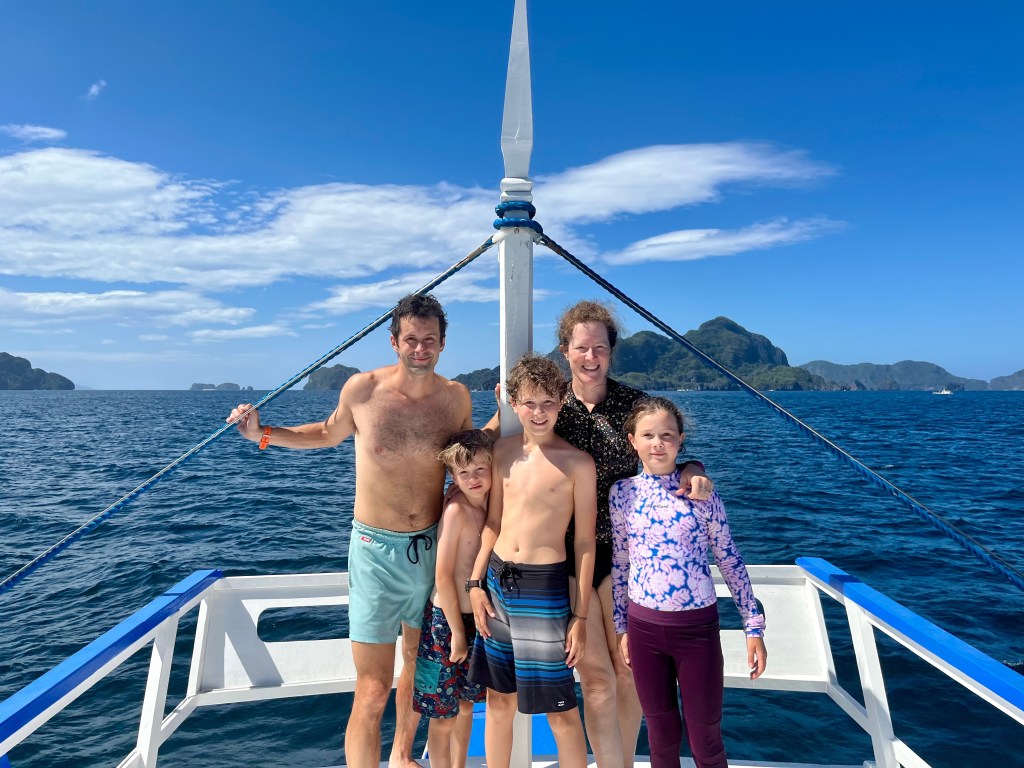
Needless to say, this encounter made us a little anxious for our island-hopping the following day. But, we went ahead, with caution: we put our rashies on, brought a bottle of vinegar, kept our eyes open for jellyfish, and let others go into the water first!
And we never saw a jellyfish! It was a great time.
To be fair, there are warnings about jellyfish. But I’m pretty sure it’s the winter…
And the day after island-hopping? Well, that’s when I got gastro. And then everyone got gastro. No need for further details there…
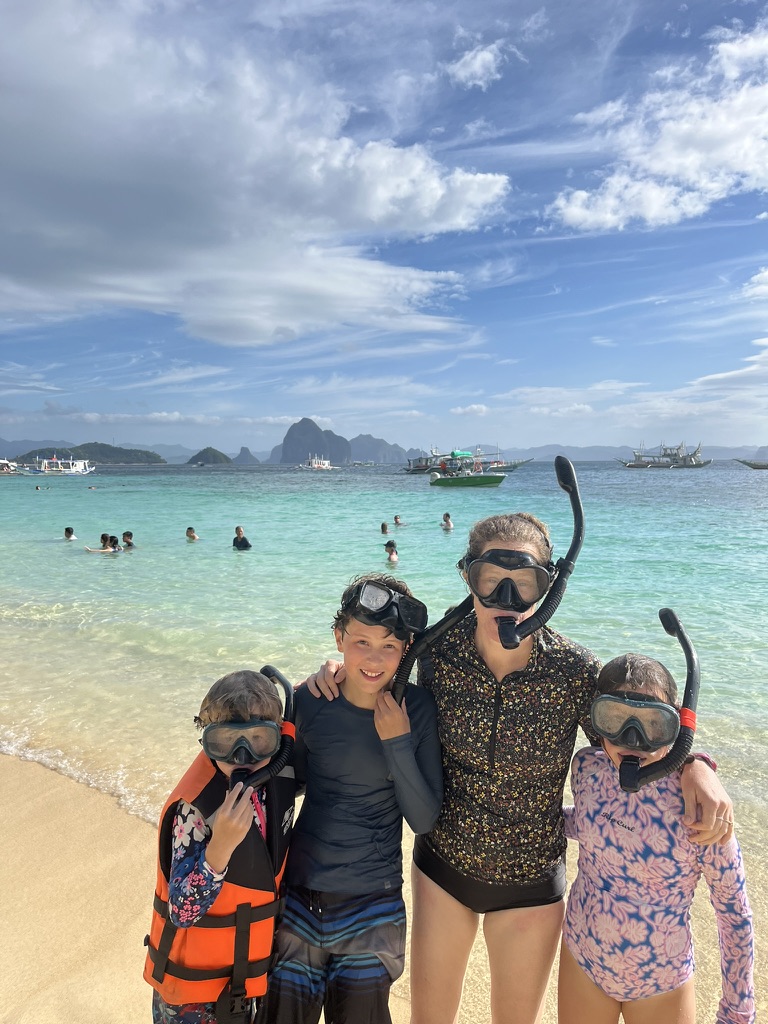
À El Nido on a fait un tour de snorkeling un petit peu comme à Fidji. On est partie tôt le matin pour se rendre à la plage. Il y avait beaucoup de bateaux dans la baie donc on devait se tremper pour se rendre dans le bateau. Une fois dans le bateau, on était tout mouillé. On était trente-deux dans le bateau sans compter l’équipage. Notre première destination était à côté d’une plage. On pouvait faire du snorkeling. On a vu beaucoup de coraux et de poissons. Notre deuxième arrêt était à Big Lagoon où on devait faire du kayak. L’eau était vraiment bleue.
On a mangé à notre troisième arrêt. C’était vraiment un festin. Le bateau avait deux étages: celui d’en bas avait tous les sièges et celui d’en haut n’avait rien dessus donc on profitait du toit.
Dans le Secret Lagoon, il fallait mettre des sandales ou des chaussures d’eau parce qu’on devait marcher sur des roches. On devait nager jusqu’à un passage secret où on est passé par un chemin en dessous des roches. À l’intérieur il s’ouvrait et on voyait le ciel. Pendant que je revenais j’ai vu un long poisson jaune. Le dernier arrêt était à une autre plage. On a encore fait du snorkeling et on a vu des poissons-clowns et un long poisson avec du bleu flashy et du mauve.
Sur la plage il y avait une sorte de balançoire. Tu devais t’accrocher avec tes deux mains à un bout de bois et te balancer. À la fin de la journée on était très fatigué.
Notre autobus de Banaue à Manille est arrivé au centre-ville à 3h du matin. Ouf. Que faire dans une mégapole à cette heure? Notre hôtel, qu’on avait pris près de l’aéroport pour éviter le stress du traffic, le lendemain matin, n’avait pas de chambres disponible quand nous sommes arrivés vers 4h. Alors on s’est changé dans la salle de bain de la réception de l’Hotel, on a brossé nos dents, et on a commencé notre journée! Les enfants ont été encore une fois des vrais champions.
On a visité l’ancienne ville de Manille (Intramuro), puis le Chinatown à la demande d’Elsie (that’s my girl!). Henri était en mission pour nous trouver la meilleure place de dumpling. On s’est ensuite rendu au Mall of Asia, où nous avons acheté quelques trucs chez … Décathlon!
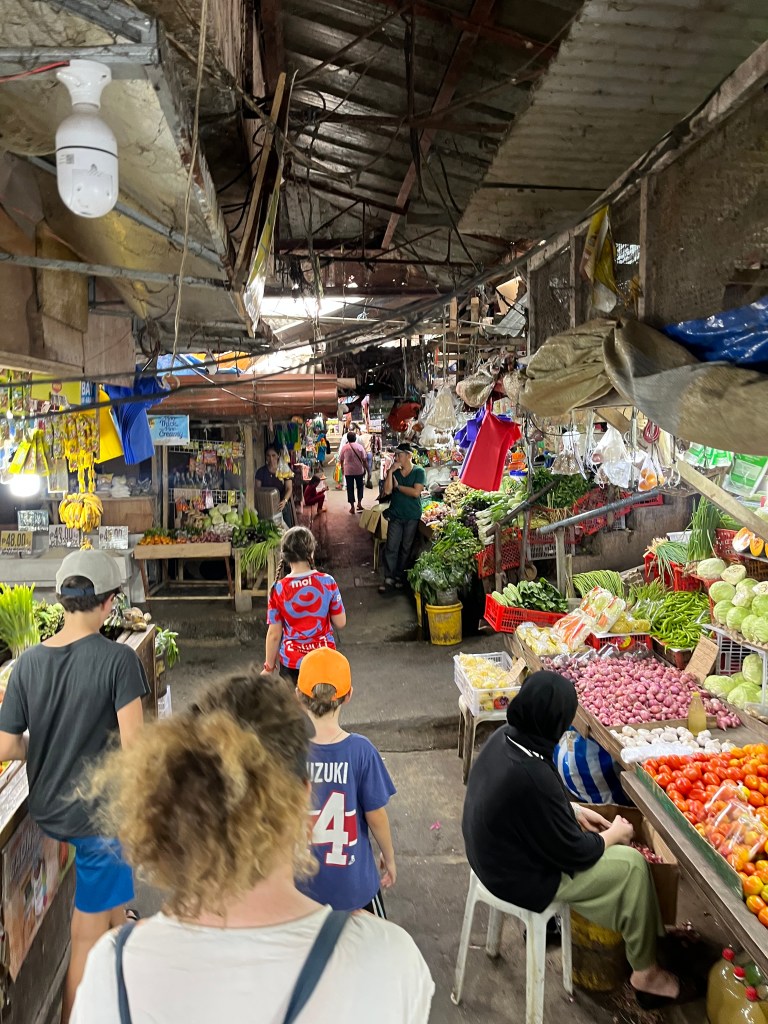
Le lendemain, on a prit l’avion vers Puerto Princesa, sur Palawan. Les guides touristiques indiquent de ne pas passer plus qu’une nuit dans cette ville, ce qui est toujours une indication pour Patrick et moi de rester le double! On aime explorer les endroits réels, où les gens vivent leur quotidien. Comme de fait, nous sommes tombés sur un gros marché à travers lequel Henri et Elsie ont adoré nous guider. Benoît serrait ma main comme si sa vie y dépendait.
Nous sommes maintenant en direction des plages de Palawan, où on essaiera de ralentir le rythme un peu!
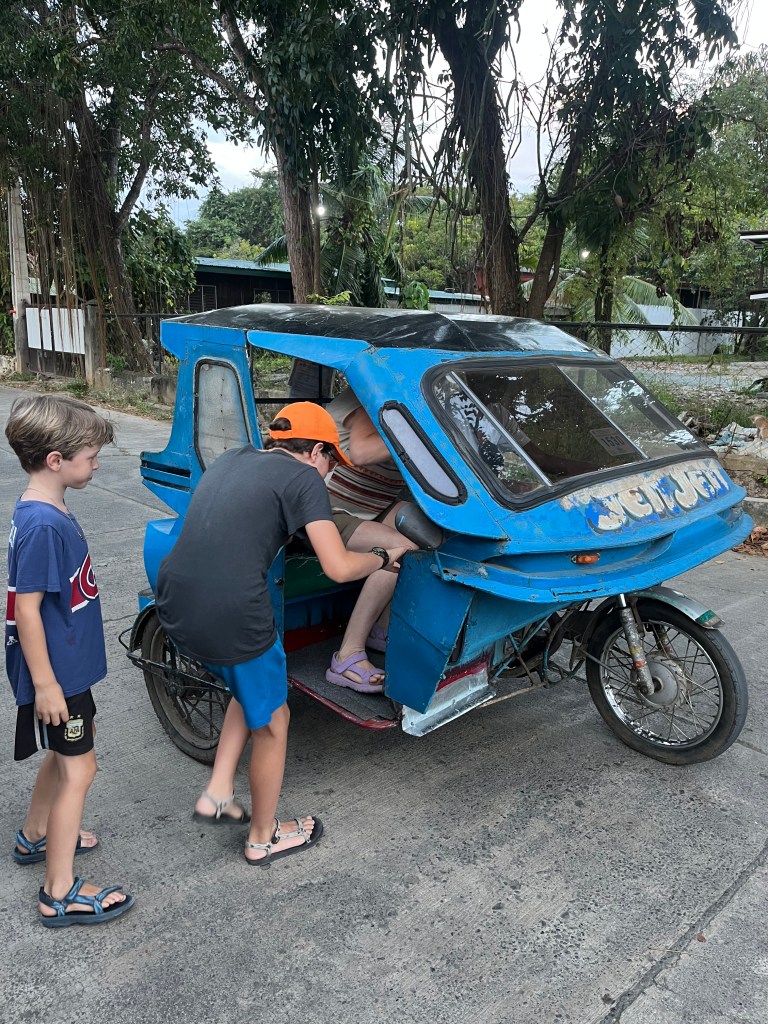
Combien de personnes peuvent s’entasser dans un tricycle (moto avec banquette)? Une famille complète, plus le conducteur!
Once in a while, you find yourself walking down the street, not even realizing how bad you need it. But then you round the corner and you see that stand selling fried banana on a stick. And then, for a few minutes at least, the universe becomes orderly, and everything in life makes sense. All of that for 25 cents.
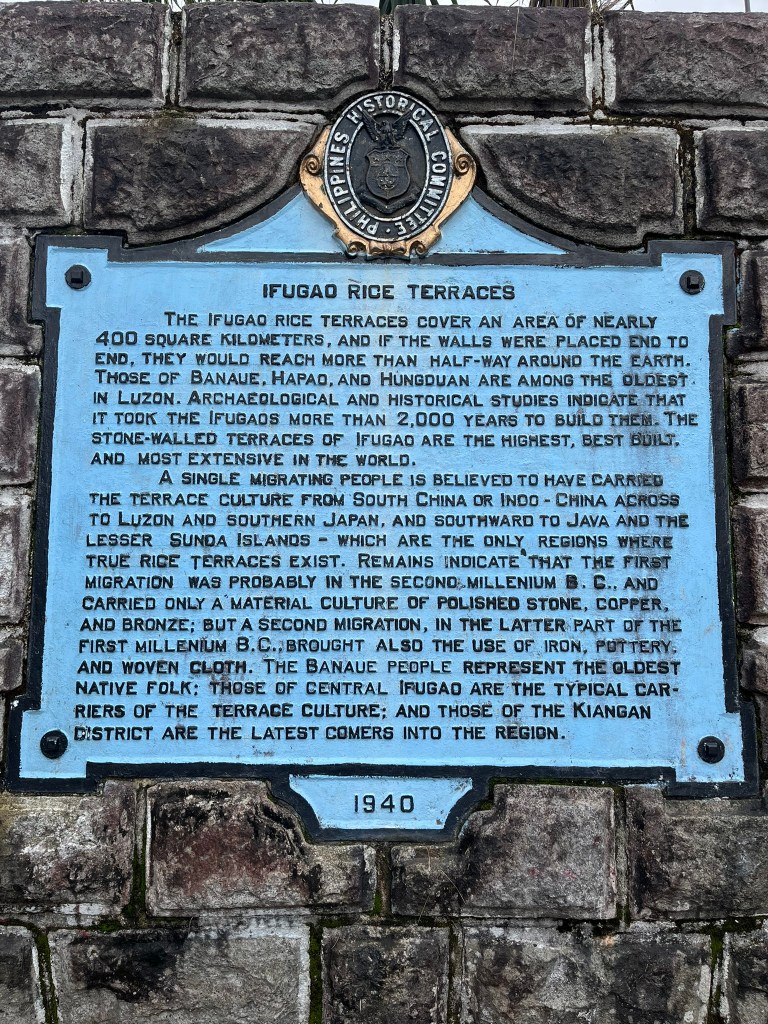
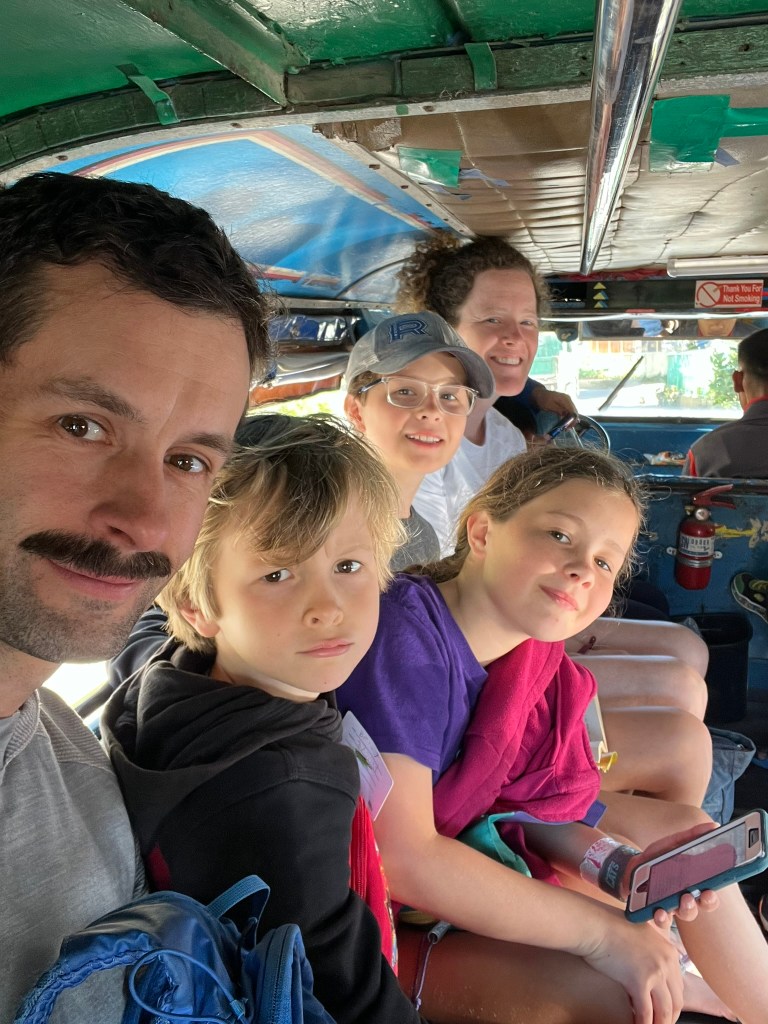
One of the main reasons we ventured to the north of Luzon was Claire’s desire to see the rice terraces that have been carved into the mountain-side there over the past 2000 years. So, after Sagada we headed to the city of Banaue, which, for tourists like us, serves as a jumping-off point for seeing the surrounding terraces. But how to get there? Well, the easy option would have been to take a coach bus. But Elsie really wanted to ride in a jeepney. We saw tons of these colourful, converted jeeps transporting people around Manila, but were a little too-intimated to try to take one. So we crammed like sardines with a bunch of filipinos into the back of a jeepney in Sagada, headed for Bontoc. Much like a can of sardines, the jeepney had minimal suspension, and the ride along the twisty roads was a little rough on everyone’s stomach. I also hit my head on the roof a few times, to everyone’s amusement. But we made it. From Bontoc, we caught a very comfortable minibus to Banaue, and along the way were wowed by the views as the road twisted and turned. As we approached the city, we caught more and more views of rice terraces.
The family crammed into a jeepney.
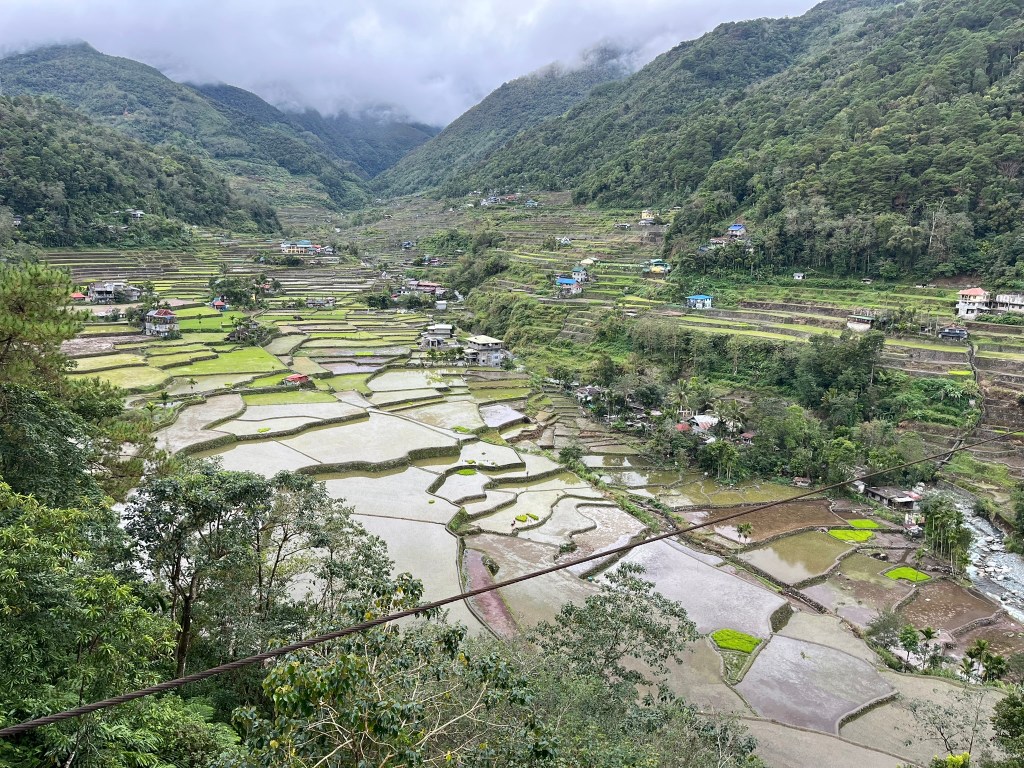
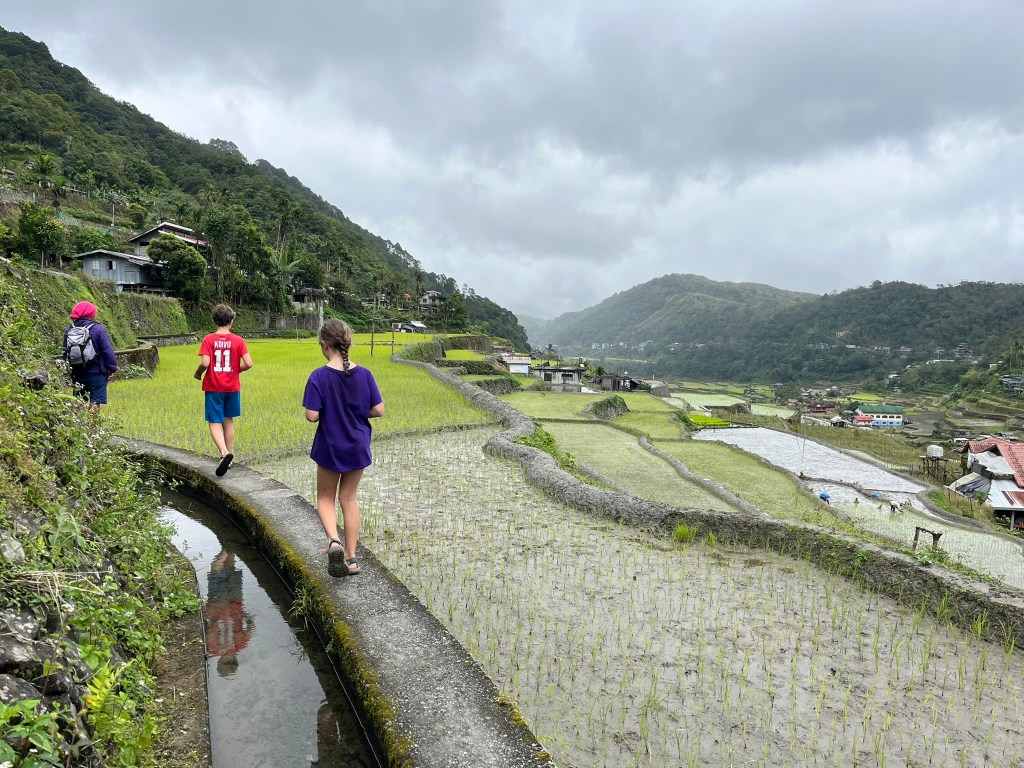
From Banaue, there were a number of possibilites for an excursion to the nearby rice terraces. We opted for just doing one, because we are on a budget and also because have been exhausting the kids! So we headed out on a private jeepney to the Hapao rice terraces, where we met up with a local guide (mandatory) who took us on a trek through the terraces that surround the village, with a well-deserved stop at the local hot-springs.
The Hapao rice terraces, view from above.
The walk was beautiful, and it was impressive to imagine how much work went into altering the landscape to suit agriculture (and to see the effort it took to work the fields). What made this tour even more amazing was our charming guide Joseph, who told us stories about his ancestors (a house adorned with the skulls from tribal warfare!), local customs, and growing up in the village, and answered all of our questions about how to actually grow rice. It was really fantastic!
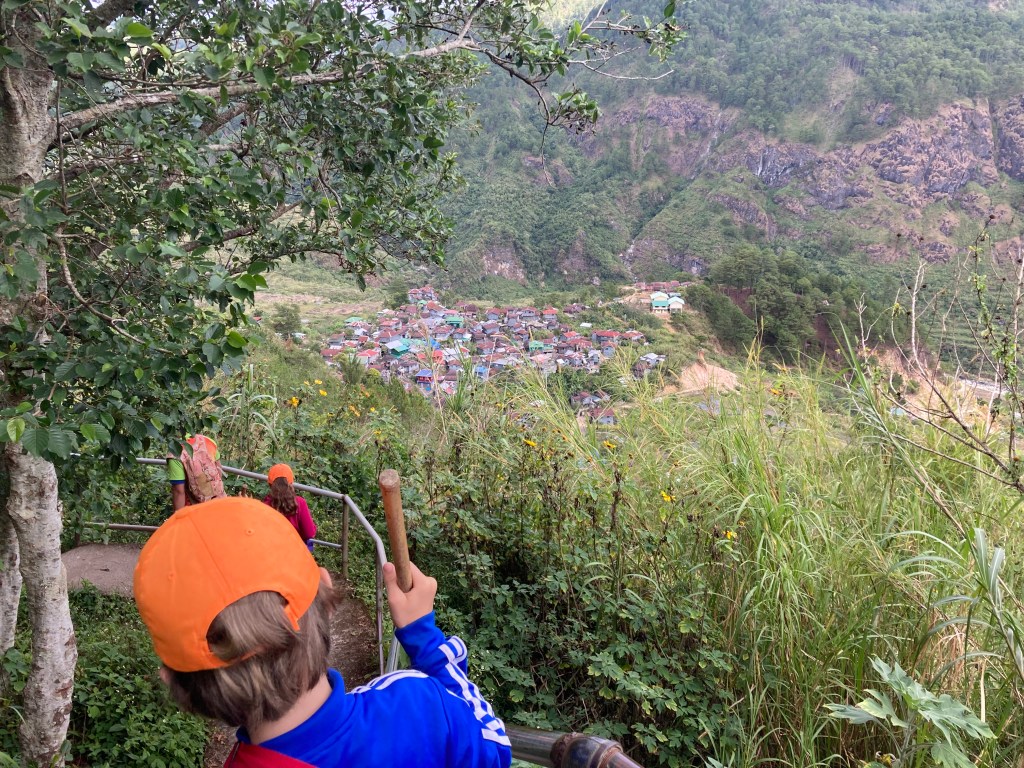
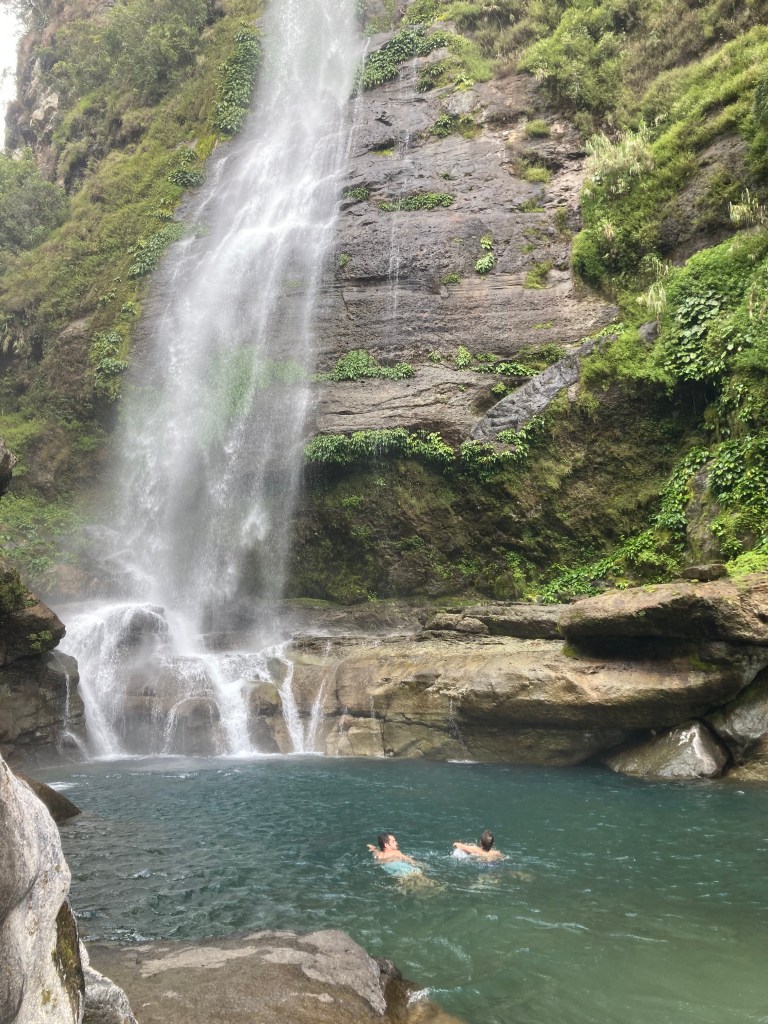
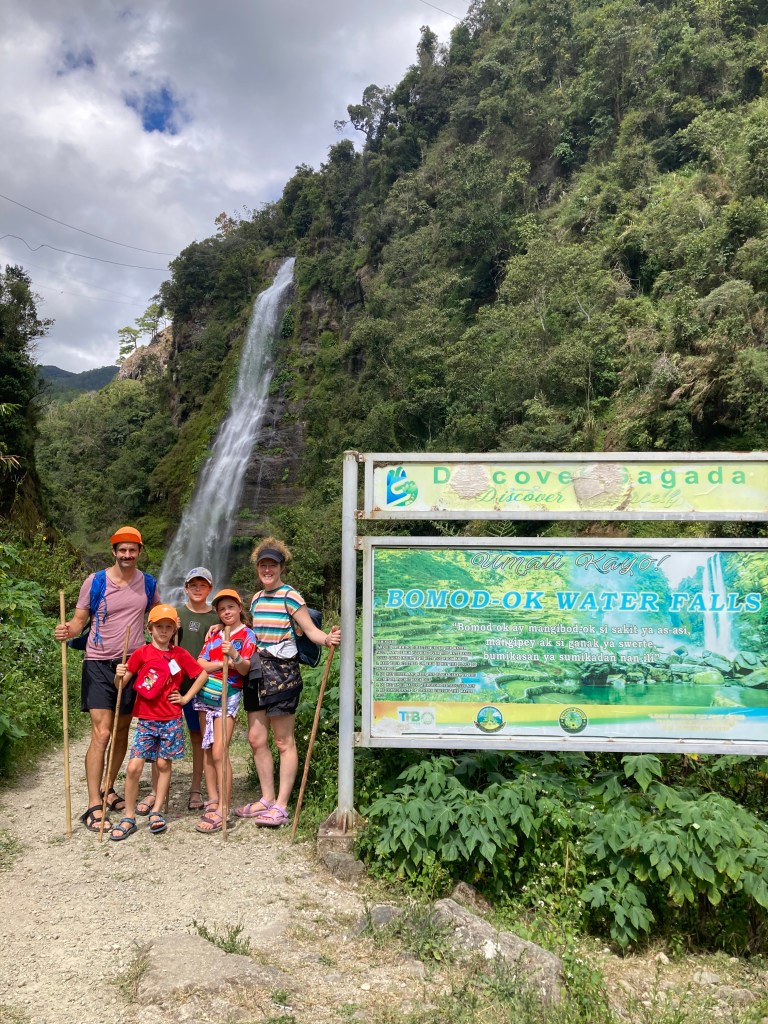
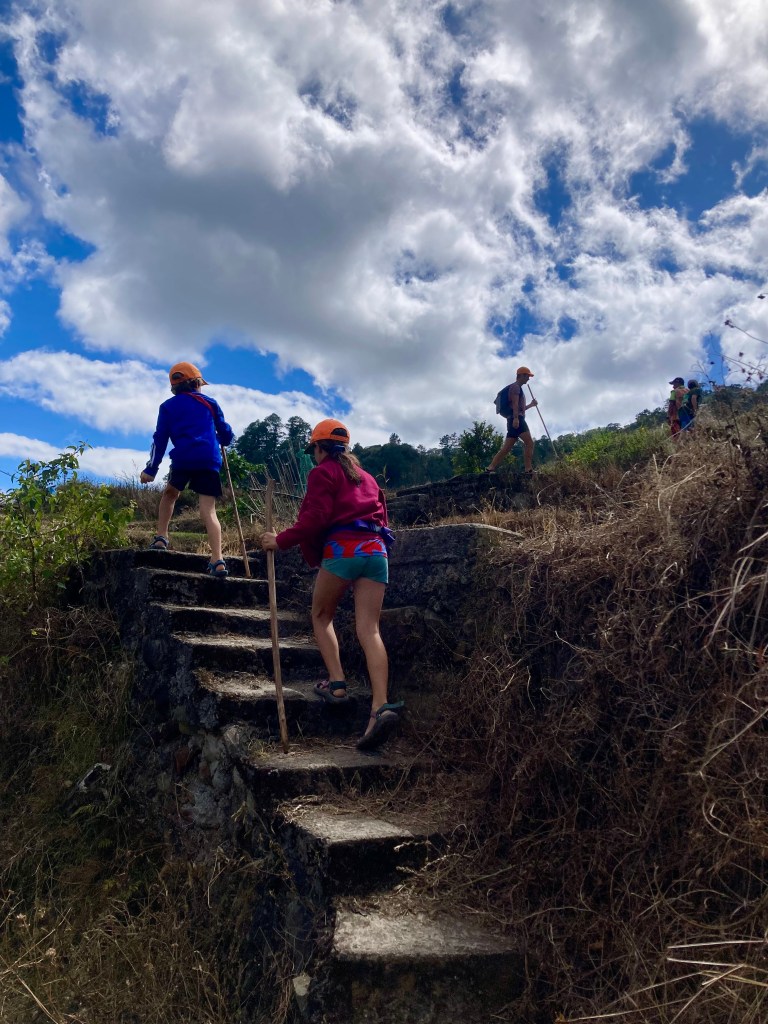
À notre troisième jour à Sagada, on et allé voir les chutes de Bomod-Ok. On a pris une sorte d’autobus pour aller au début de la marche. On a eut un guide pour la marche. La marche était deux kilomètres mais il y avait trois milles marches!À travers la marche il y avait un petit village.
C’était un chemin avec beaucoup de belles vue. Après qu’on ait traversé le village on a marché sur des rizières. Une fois arrivée, on s’est mis en maillot de bain. L’eau était très froide! Mais on est quand même allé dans l’eau. On a nagé un peu plus loin. La chutes était très haute. On c’est sécher et on a remonté les marches. En remontant c’était beaucoup plus dur. A la fin de la journée on a relaxé.
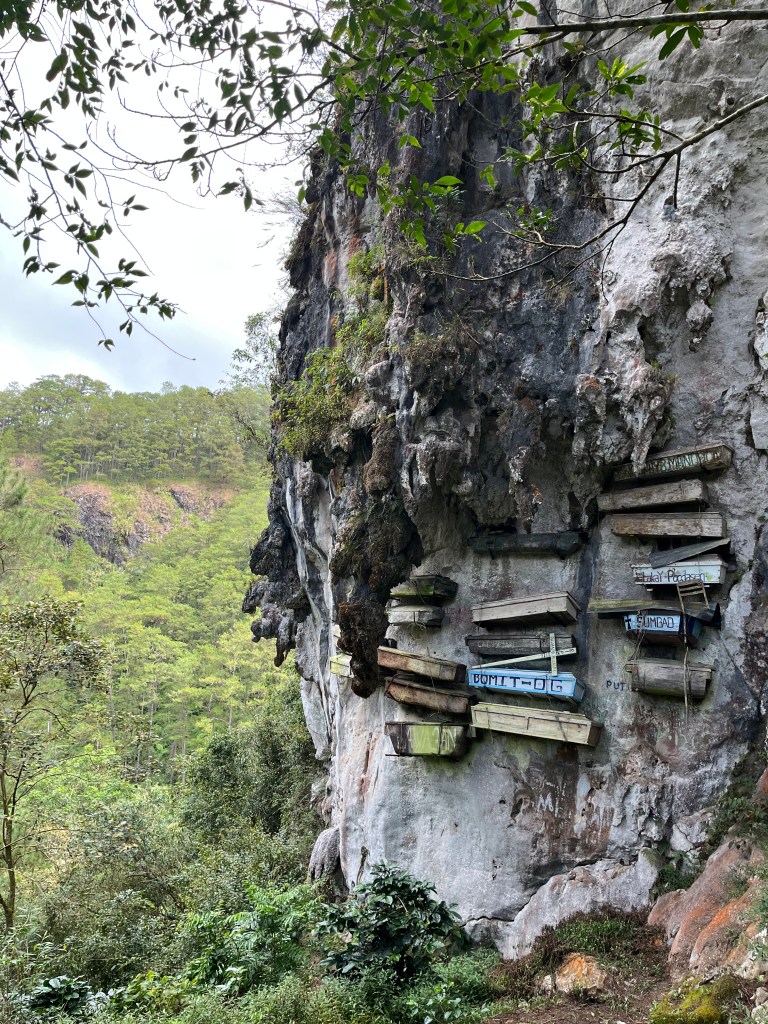
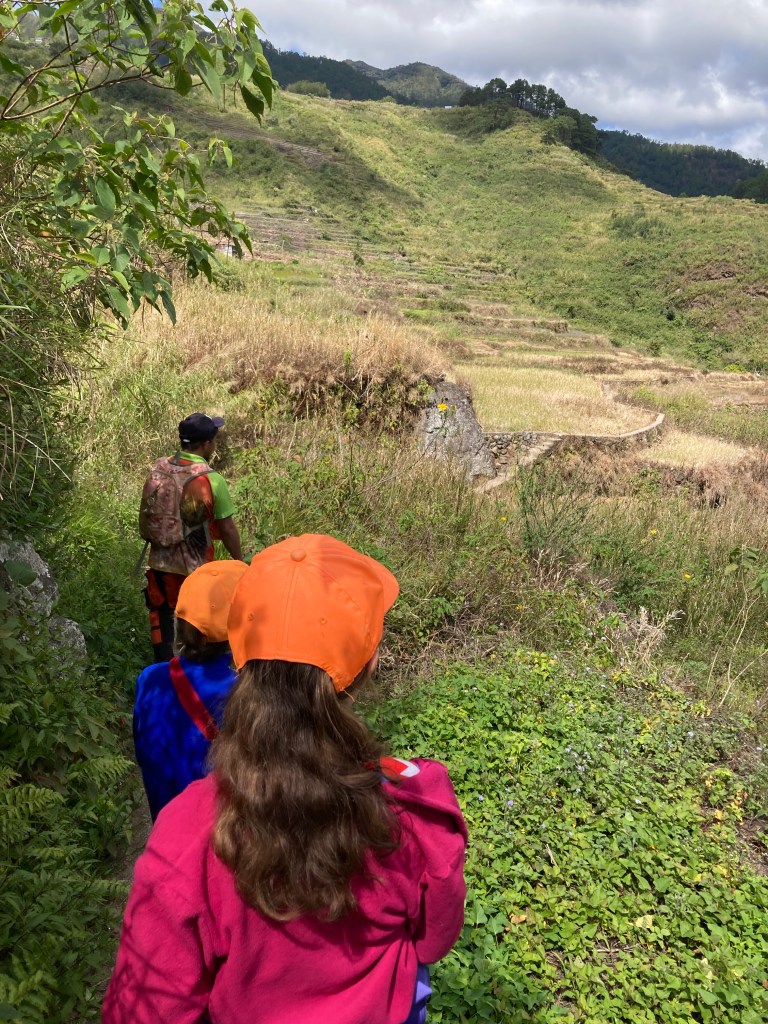
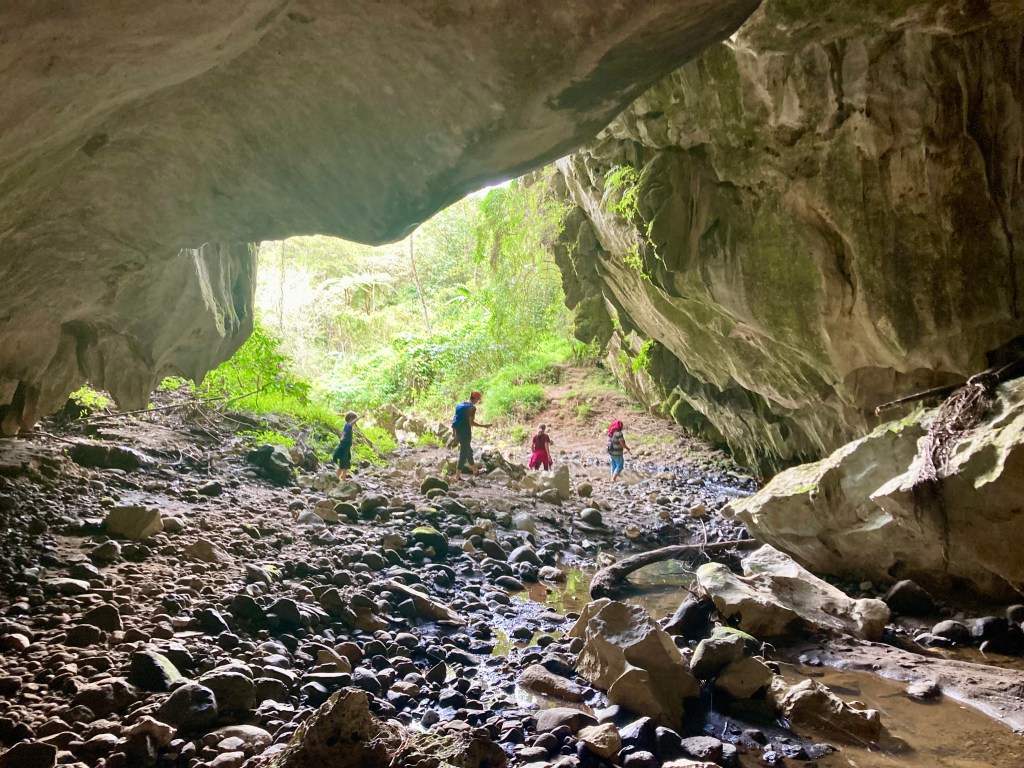
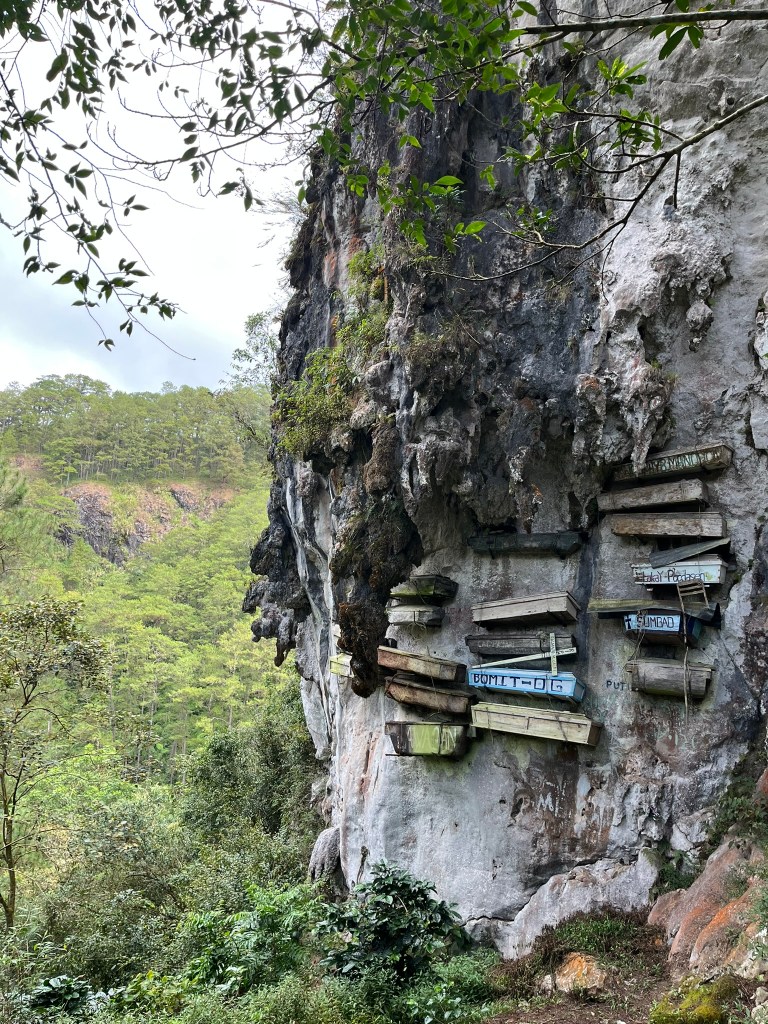
(Elsie) On a fait une belle randonné 🥾 avec trois types différents. Le premier était les cercueils suspendus sur des falaises, le deuxième était les rice paddys et le troisième une grotte.
Les cercueils ⚰️ étaient accrochés dans les roche 🪨 mais pour avoir un cercueil dans les rochers ils fallait que tu le fasses avant que tu meurs.
Il y en avait (mais pas ceux là) qui étaient très haut dans des grottes. Ils les ont fait quand les roches étaient au niveau du sol, puis les roches sont tombées donc maintenant ils sont dans une falaise, c’est incroyable!
On a marché sur un petit trottoir à côté des rice paddy. C’est où le riz pouce en terrasses. On en à vu beaucoup. Les terrasses sont fait sur des grosses montagnes, et ils mettent beaucoup d’eau pour noyer les plantes. Quand ils grandissent le montant d’eau est ajusté.
Le troisième c’était la grotte. Il faisait très noir dedans. On a utilisé des lampes de poches, on a traversé beaucoup de rivières, c’était glissant, on ne voyait pas les roches en bas donc des fois on se faisait mal aux orteils.
On pouvait voir, parfois en traversant la grotte, une petite lumière au plafond, c’était un trou dans la grotte où la lumière du soleil entrait.
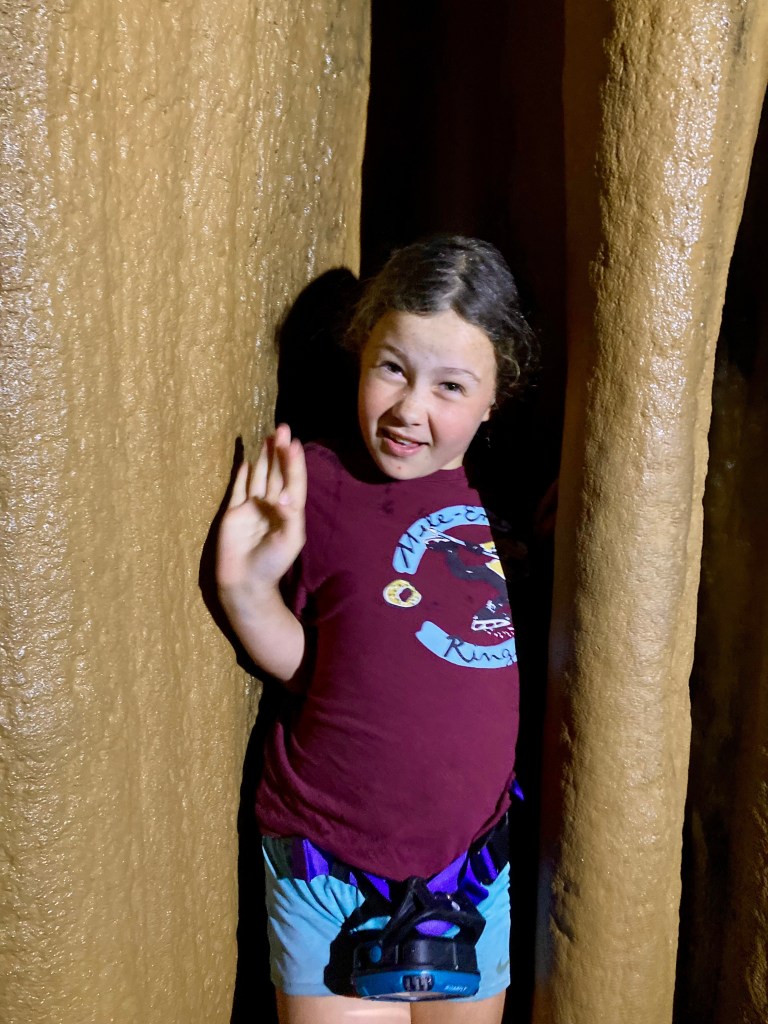
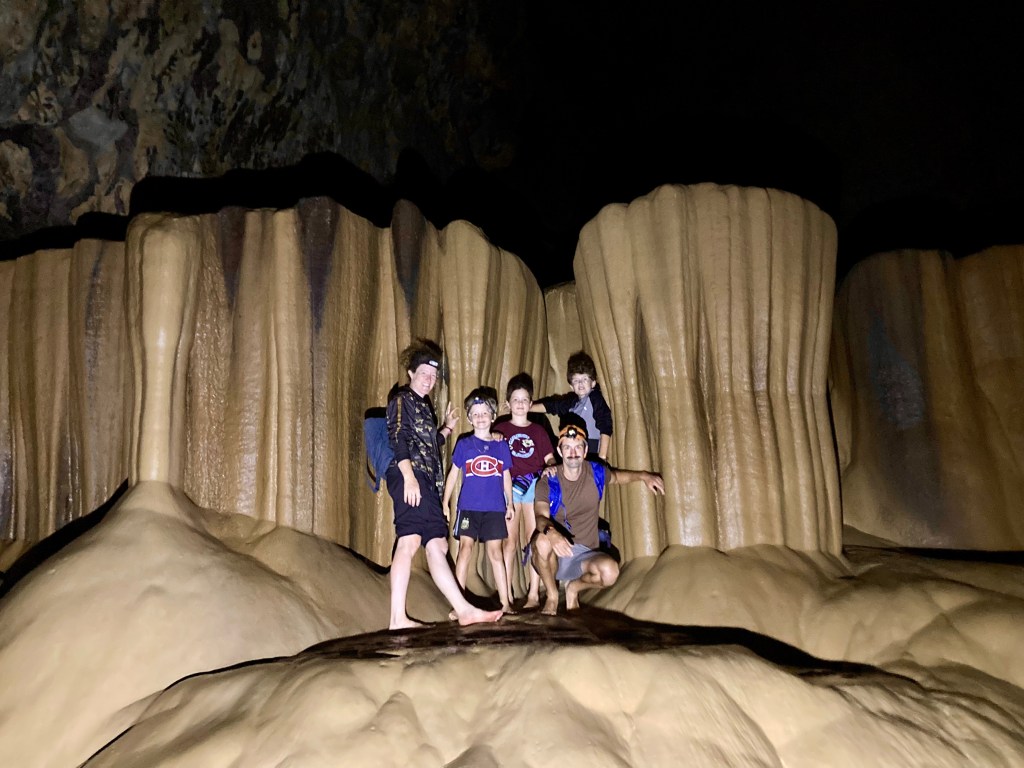
On est allé à la Sumaging Cave. Les roches étaient très glissantes et si on n’avait pas de lampe frontales on serait tombé. Les chauve souris avaient un nid au plafond. Il y avaient des formes dans la roche comme un lion, un gateau, un crocodile, et des dents. On est passé dans des petites rivières, mais on n’avait pas nos maillots. Pour remonter, on a utilisé des cordes à deux endroits. C’était le fun!
Claire nicely summarized our harrowing escape from Manila in her blog post, and Henri found a way to nicely summarize our subsequent 11 hour bus ride to Sagada by, upon exiting the bus, leaning over to throw up on the side of the road!
But from that point on, everything picked up!
Claire had picked Sagada, tucked away in the Cordillera mountains, as a destination, but I admit that I hadn’t really looked into it at all. We will be doing lots beaches, so I just liked the idea of something a little different. After spending a few days here though, I think it will end up on the highlight reel of our trip.
One of the things I liked most about the town is that it’s certainly set up for tourism, but didn’t feel overly “touristy” in that negative sense of the word. Upon arrival, we registered at the tourist centre, where we paid a fee that goes into keeping up the local infrastructure, and got a pamphlet outlining the main tours, treks, and such. It included the tourist agencies where we could find an accredited guide, and had all of the prices listed clearly. For someone who wasn’t all that prepared, it made things easy!
We opted for one hike per day while we were here, and they were all fantastic! The kids will go into a bit more detail about each of these in upcoming posts: Day 1 was a hike near town past some the hanging coffins, local coffee plantations, and along a river that passes through a cave; Day 2 was an exploration deep (but not too deep!) into Sumaging Cave; and Day 3 was a trek with 850 m of descent past terraced rice fields to the ice-cold Bomod-Ok falls and then with 850 m of ascent back up. The kids did great on all of these, and had a blast. It may have helped that I promised ice cream at the end of each (I think they teach this in Advanced Parenting).
There are hanging coffins found all over the region. If you live long enough, you get the privilege of carving your own coffin and then being buried in such a spot. I like it.
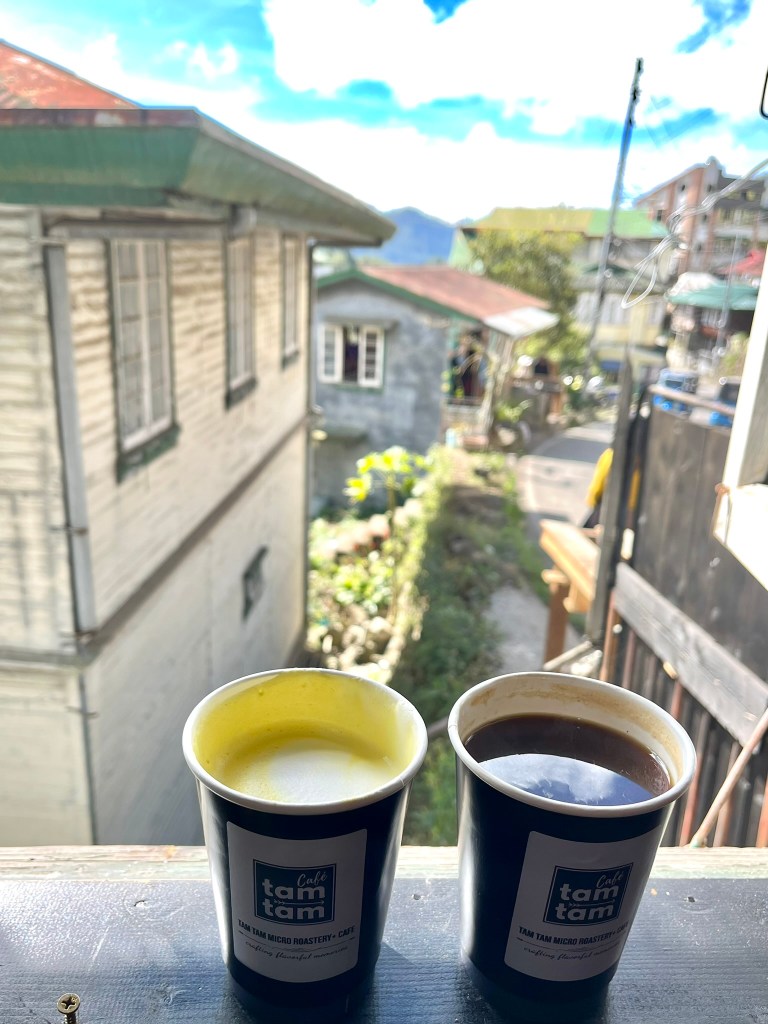
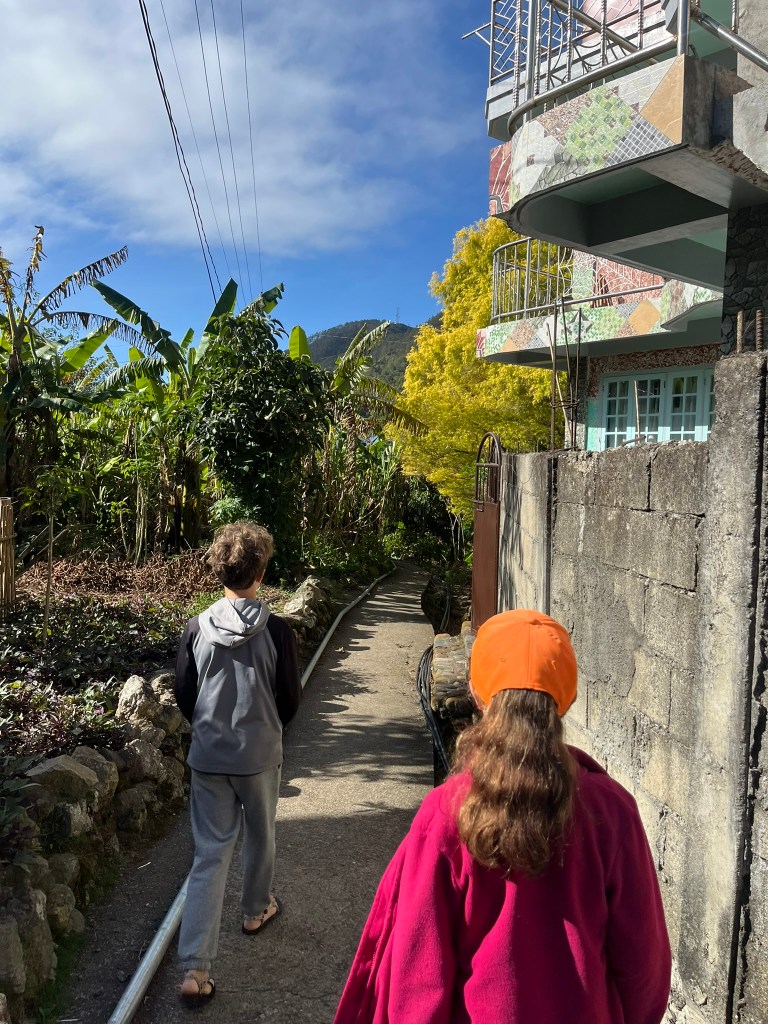
At first, I felt a little dépaysé-d, but the town itself was also very cool. Being in the mountains, the geography made for an interesting layout and it was easy to find great views. We got used to perusing the shops and restos up and down the main road, which somehow takes two-way car traffic and pedestrians despite being only slightly larger than the sidewalks on our street back in Montreal. I even found a bit of a hipster cafe (Tam Tam) along the main road that served great coffee sourced from right in the hood. One afternoon, we felt adventurous and ventured off the main road, and wandered among some of the narrow walkways that snaked their way through whole neighbourhoods that are disconnected from the road.