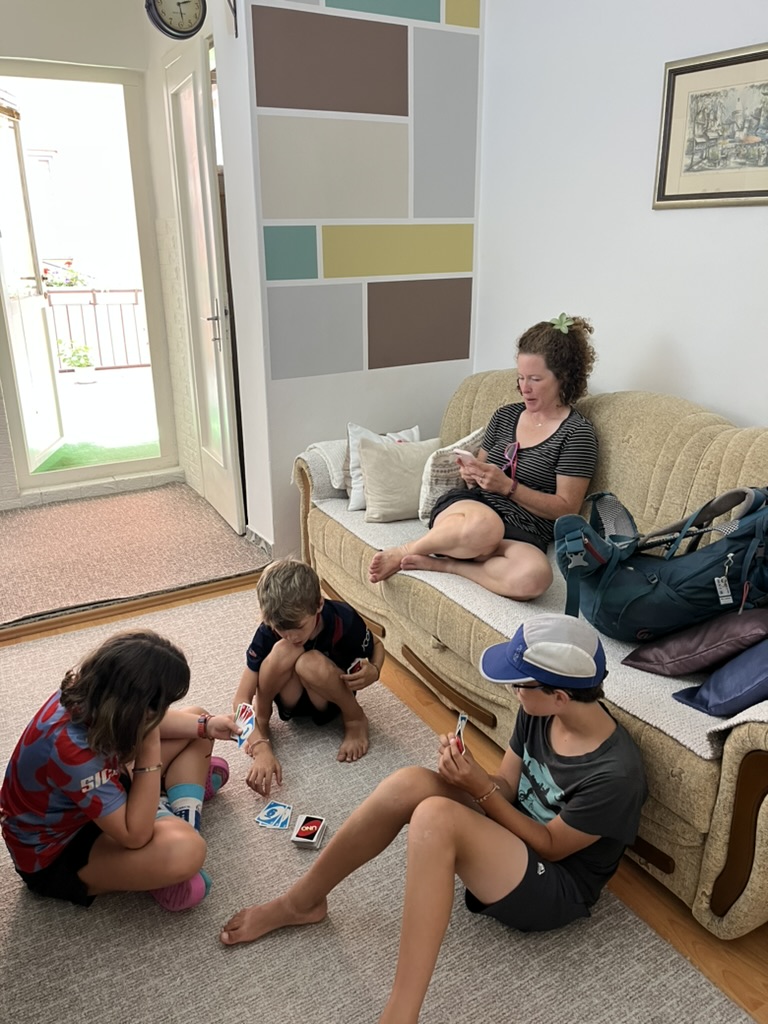
We decided to slow down our pace a bit for our stop in Sarajevo. It helped that Sarajevo isn’t huge (population 350 000), and that our apartment in the old town was in the centre of the action. It also helped that our apartment was extremely cozy. So, we opted to alternate our exploring with some movie nights, suppers on our garden terrasse, as well as a couple of (well-deserved) naps for me.
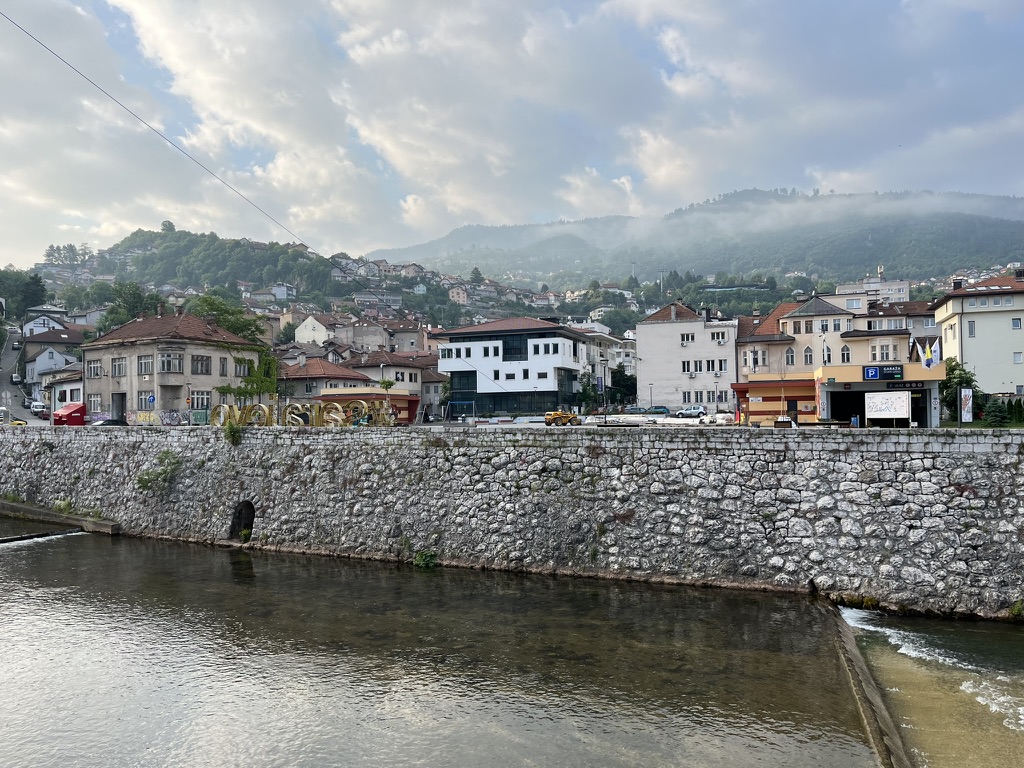
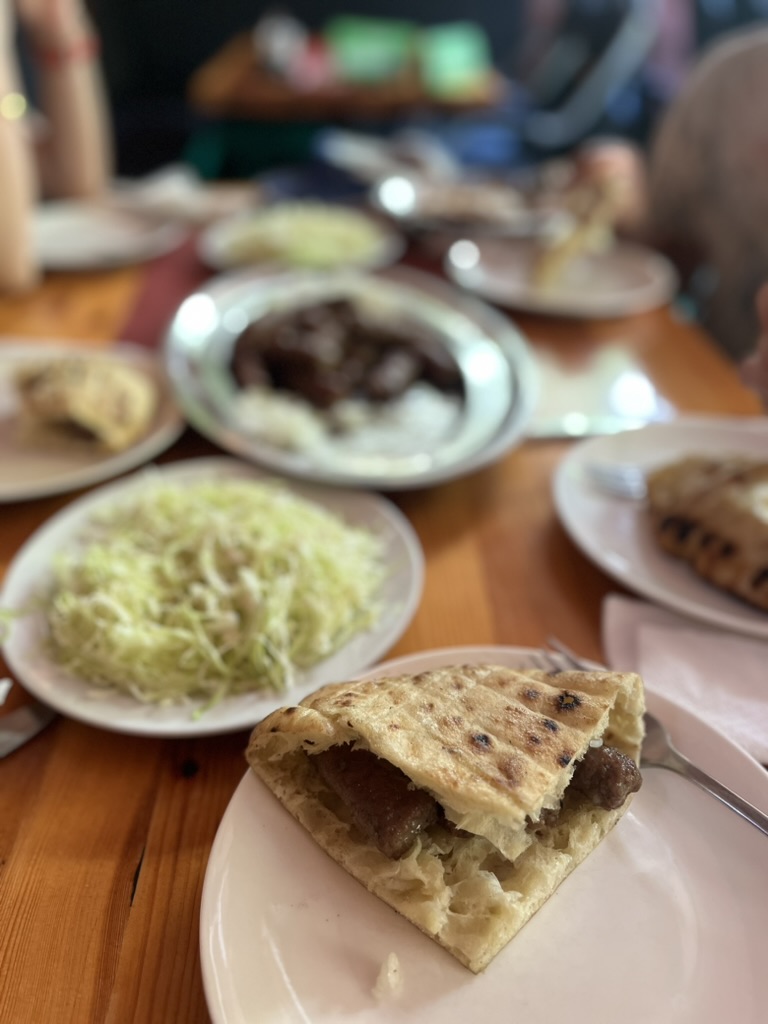
I’m not sure exactly what it was about Sarajevo (Henri dirait sûrement que c’était intangible), but we really loved the vibe. The city’s geography is simple, as it stretches out along the Milajcka river and is beautifully nestled by the surrounding hills. The architecture of the old town jumps interestingly from Austro-Hungarian to Ottoman. It was certainly touristy, but somehow managed to remain relaxed. The food was good as well, from the famous ćevapi (worth trying, but a bit heavy for me) and back to some familiar fare that we had in Turkey (baklava, and manti). It all made for a good, tangible vibe.
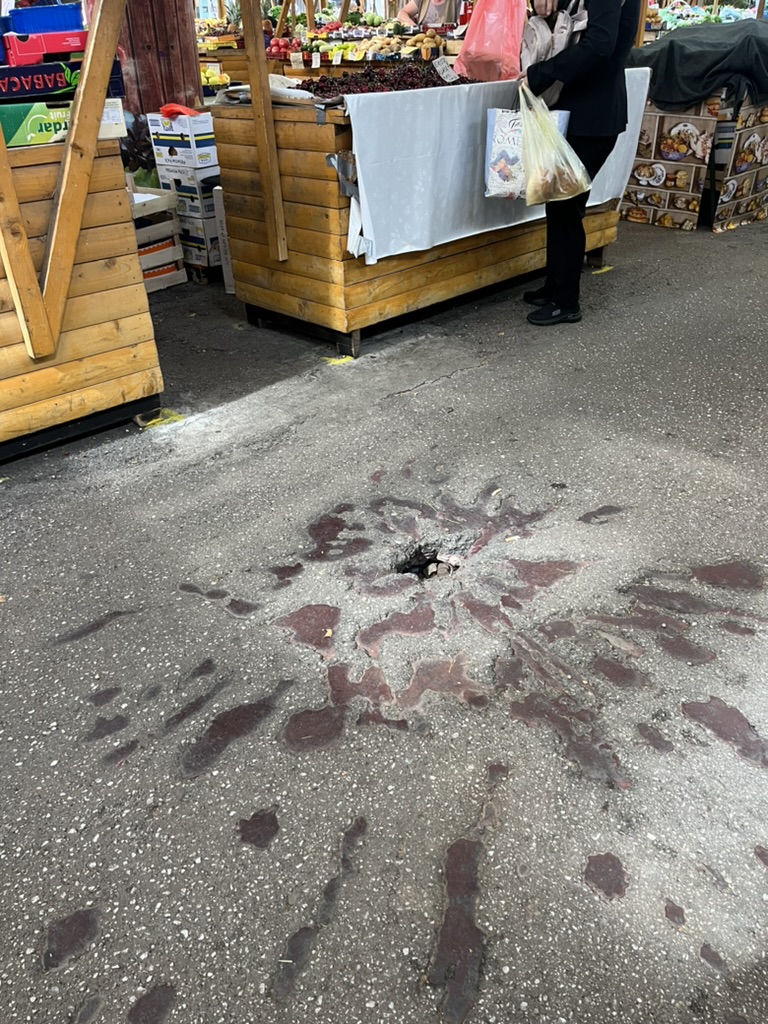
Sarajevo, of course, has had some rather violent history in its recent past. Just a block or so from our apartment was the very spot where the Archduke Franz Ferdinand was assassinated, setting off the chain of events that led to Word War I. We’ve been taking in a lot of history over our trip, and the topic of wars and violence has certainly come up, but most of these have been in the distant past. But Sarajevo was under siege (92-95) recently enough for me to remember seeing it on the news, and that felt different. Many buildings still have visible scars from the war, and there are also the “Sarajevo roses” around town. These are locations in the pavement where the damage from a mortar has been filled in with red resin to mark the spot where at least 3 people were killed. If you look carefully (or check google maps), it’s easy enough to find these around town, in front of a church, in the fruit market where we bought stuff for supper.
There are a number of museums about the war. After spending a bit of time at The Memorial to the Murdered Children of Besieged Sarajevo (1992-1995) in Veliki Park, which commemorates the over 1600 children who died during the siege, we opted to take in the Childhood War Museum. The museum was really well done, and I think it was the right option for our family. It consisted of a collection of objects from the war, each one belonging to a child who survived, along with text describing the accompanying story. Some of the stories were of happier moments, while others were rather dark… I think the presentation left our kids informed, but not traumatized, which was the goal. But as a parent, it wasn’t easy to read through some of the accounts and imagine my own kids living through that.
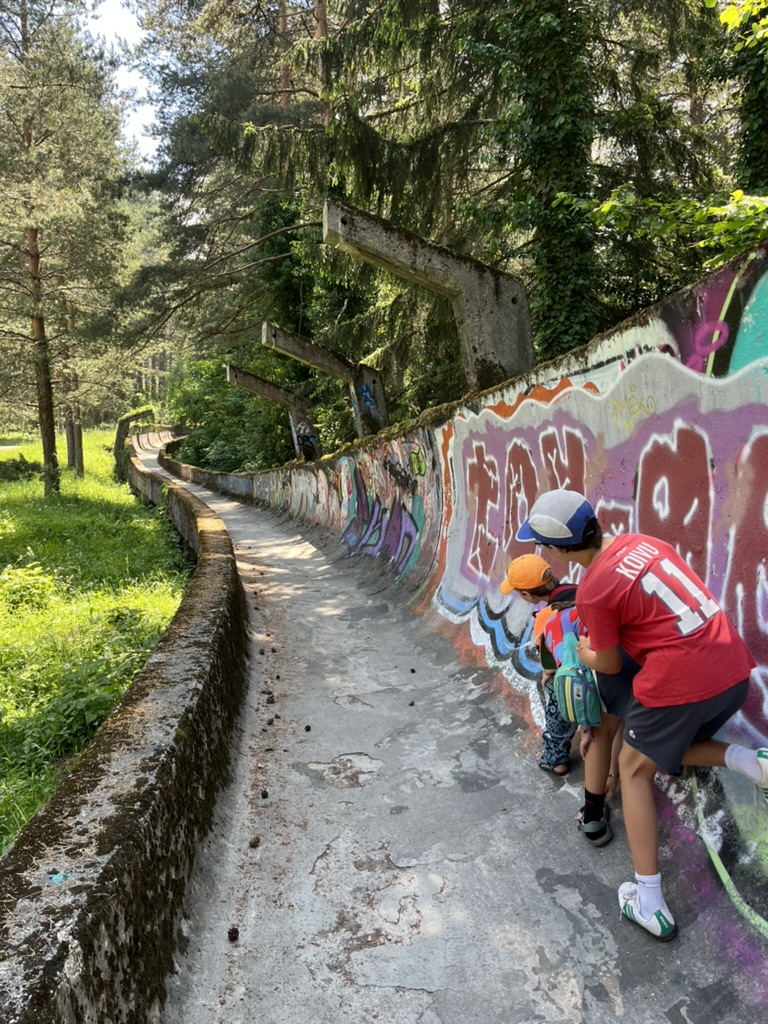
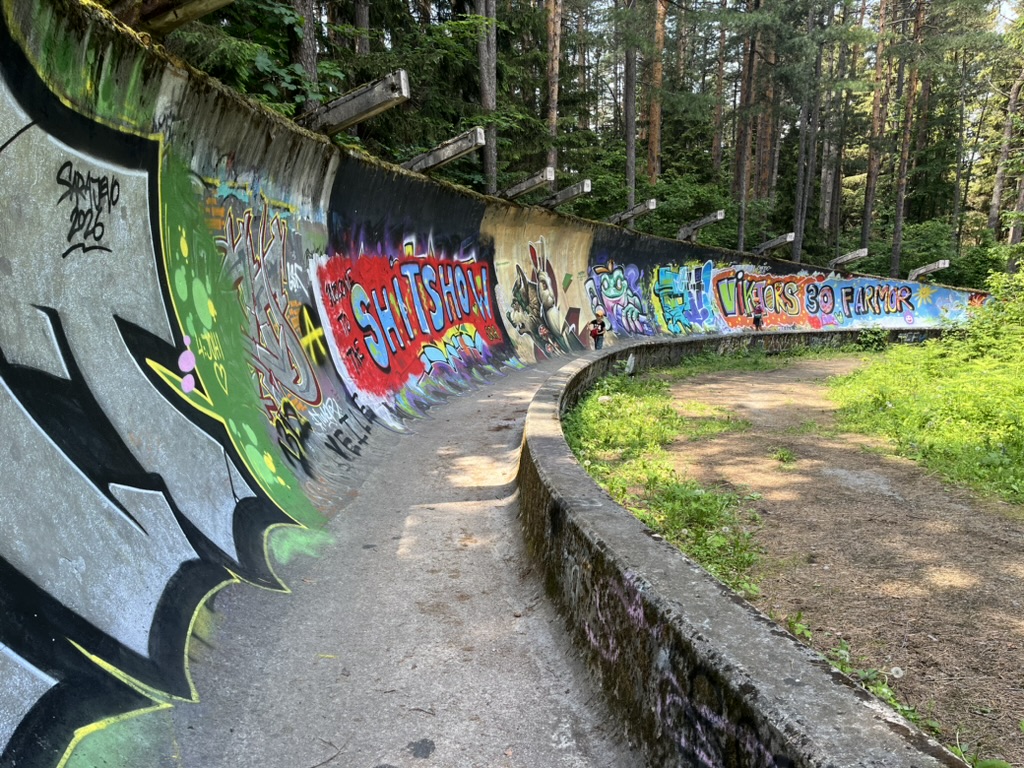
On a lighter note, it’s common knowledge that 1984 was a very good year. Among other historic events that year, Sarajevo hosted the Winter Olympics. We skipped the cable car and hiked from the city up to the top of nearby Trebavić peak. Not only was the view nice, but along the way we got to walk along the Olympic bobsled track. Not beside, but actually on the now graffiti-covered track, which is lined with QR codes linked to stories from the games. The kids loved running along the track, imagining being in the sled. I found walking along thrilling enough. No need for the ice and the high speeds.


Leave a Reply